The Worst Advice I Ever Heard On Making New Business Calls

About eight years ago, a car dealer in my home town of Portland decided to open up on Christmas Day.
sales advice: don't sit by the laptop. make calls
Photo by pathdoc/Adobe Stock

THREE SALES ON THE
“WORST SALES DAY OF THE YEAR”

The dealer was on pace to hit his December number, but it was going to be close. So he came into the store on Christmas Day with his finance manager and one salesperson.

If my memory serves me correctly, the finance manager was estranged from his family, and the salesperson was Jewish.

The store didn’t advertise this anywhere — the dealer and his employees just showed up to see what would happen.

They spent most of the day watching movies in the dealership conference room. But the phone rang seven times — customers wondering if the store was open.

Five of them came in for test drives. On Christmas Day.

Two of them bought cars that day. This, for the salesperson, was the single best day of the month.

Another came back and bought a car a few days later.

I was reminded of this car dealer last year, when I was preparing to work with a TV station in the Midwest. Our week for CNA’s was the week leading into a major holiday weekend.

When he realized that he’d scheduled my arrival for the week before a holiday, the Sales Manager suggested that perhaps I should go home early, because he wasn’t sure there’d be any clients willing to meet with me on Friday.

I suggested that we have the AE’s try to make appointments for Friday, just to see what would happen.

It turned out that the staff scheduled three meetings for me that day, and one of those turned out to be the biggest-dollar sale of our project.

The Worst Sales Advice I’ve Ever Heard
Variations On a Theme

Don’t bother to make new business calls …

  • Monday morning
  • Friday afternoon
  • At lunchtime
  • After 5p,
  • Before 8am
  • The Friday before a holiday weekend
  • The last two weeks of December

It’s possible that there are fewer people at their desks at those times… but there are also fewer of your competitors making calls at those times.

If you’re willing to make the calls, you’ve got a better chance of turning those calls into meetings, and turning those meetings into sales.

The best time to make new business calls is whenever you make the calls.

[reminder]What’s the most unusual time you’ve ever had a sales call?[/reminder]

How Are Your Presentation Skills? The Camera Doesn’t Lie

How good are you at presenting in front of a group? Are you sure?

salespeople can get better at speaking
Photo by Africa Studio/Adobe Stock

During my days as an account executive, my radio station did a trade deal with a public speaking trainer. Our team spent a full day working on presentation skills.

As part of the exercise, the trainer had each salesperson stand in front of the room and give a short presentation, which he recorded on video.

It was a humbling experience. I had thought I was a pretty decent presenter and public speaker – not great, but pretty good. Boy, was I wrong.

In the words of guitarist Bob Brozman,

Recording devices are God’s way of telling you that you suck.

As I watched myself on the monitor, I was mortified to see that I spent most of my five-minute presentation looking at my feet.  I did not make eye contact or any sort of connection with my audience.

[shareable text=”If you’re wondering whether your presentations are compelling put one on camera. The camera doesn’t lie.”]If you’re wondering whether your presentations are as compelling as you think they are, put one on camera. The camera doesn’t lie.[/shareable]

The following week I joined a local Toastmasters club and began working on my public speaking chops.

I was reminded of this by sales trainer Paul Castain’s  blog post, “The Three Minute a Day Phone Workout.” Castain recommends leaving voicemails for yourself so that you know what you are sounding like when you leave a message for a customer.

You can take Castain’s idea a step further. Presenting in a group is one of the most important sales skills you can develop. Why not record yourself on video giving a presentation?

If you have a smart phone, you have most of the equipment you need.

You can have someone hold the phone/camera, or set your phone up on an inexpensive tripod (this is the one I use) in your station conference room. Press Record, and start presenting. It’ll be helpful to have a trusted colleague in the room so that you can check on your eye contact.

Afterwards, take a break to clear your head and then watch the video. Take notes about what you observe.

  • Did you speak clearly?
  • Were you making eye contact?
  • Were there a lot of “um’s”, “uh’s”, “likes”, and “y’knows”?

Watch the video by yourself once, and then have your colleague watch it with you. Did you both notice the same things?

If you’re wondering whether your presentations are as compelling as you think they are, put one on camera. The camera doesn’t lie.

[reminder]What’s the best sales presentation you’ve ever seen? What made it so good?[/reminder]

Find a Toastmasters club in your area: http://www.toastmasters.org/Find-a-Club

How “No” Can Make Your Customers Happy

Seth Godin recently cleared up a years-old mystery for me.

Photo by Innovated Captures

Greg, The Relentless Nibbler

Greg was an advertising agency client when I sold radio. Two or three times a year, he would send me an RFP, I’d respond, and we’d work out a deal. He was a tough negotiator, but he was fair — until the end of the process.

After we agreed to terms, I’d send him the paperwork. A few hours later he’d call and ask me for one more thing. Usually it was some bonus commercials or news sponsorship mentions.

In negotiation, this is called “The Nibble”. Negotiation Trainer Bob Gibson describes the classic version of the tactic this way:

The same way a mouse might nibble at a piece of cheese with small bites until it’s completely gone, ‘nibbling’ is asking for small items, one at a time, and getting agreement on each until you’ve gotten a lot… Nibbling can be particularly effective near the end of the negotiation, when a salesperson is eager to reach a final agreement, and at the beginning when it can set the tone not only for the negotiation – but the relationship as well.

In Greg’s case, the request always came after we’d made the deal. I always said no.  It was a matter of principle for me. As far as I was concerned the negotiation had ended.

He’d push a little and then accept my “no”.

It drove me crazy,  because it never mattered how many times we’d already gone through the dance with the same result. He never actually got anything extra from me, but he was going to ask again the next time regardless.

I could never figure out why he continued to do this with me when it never worked. What did he get out of the exercise?

Years after I left radio, Seth Godin has finally given me the answer.

What’s really happening here is that people are seeking the edges, trying to find something that gets a reaction, a point of failure, proof that your patience, your largesse or your menu isn’t infinite…

They’re not looking for one more thing, they’re looking for a ‘no’, for acknowledgment that they reached the edge. That’s precisely what they’re seeking, and you’re quite able to offer them that edge of finiteness.

I’ve written before about the power of “No” — there are times when it’s necessary to refuse a demand simply to maintain, or regain, control of an interaction.

But Godin has pointed out something that seems counterintuitive: sometimes that “No” can actually make a customer happy by convincing them that they’ve nibbled everything there is to nibble.

In sales, sometimes “No” can really mean “Yes.”

Is A “Broken Ice Machine” Killing Your Sales?

Little things mean a lot when you’re trying to persuade.

Details can kill sales
Photo by StockPhotoPro


Not long ago I met with the administrator of a nursing home and rehabilitation center on the East Coast. The center had received some very bad publicity over the previous year after failing several state inspections.

During our meeting, the administrator told me that most of the problems cited in the inspections had been fixed — staff had been retrained and staffing levels increased, new procedures had been put in place and equipment had been upgraded.

She wanted to launch an advertising campaign to get the public to take another look at the facility.

As she took us around the main building, we walked by a row of vending machines.

The soda machine had a sign that said “Out of Order”.

The candy machine also had an “Out of Order” sign.

The ice machine had a sign that said “Please See a Staff Member for Ice”.

It was pretty clear that these machines had been out of service for quite some time. For a business trying to change public perception, this sent a terrible message.

If they couldn’t even bother to fix the vending machines, what kind of shape was the medical equipment in? Were they paying attention to sanitation and infection control? Could local residents trust this nursing home to take good care of their loved ones?

If you work in sales, everything your customer sees is the equivalent of that ice machine. Your attention to detail… or lack of attention… sends a message.

  • How does your car look inside? What do your clients see when you take them to lunch? What do your managers see when you take them on a call? You may or may not be able to afford a luxury car — but whatever you drive, you can keep it clean.
  • How are your clothes? Are you dressed like a trusted advisor, or like you’re going to the club? Is your suit clean and pressed? Are your shoes shined?
  • Have you proofread your LinkedIn profile? A new customer may check you out before your first meeting. Grammatical errors, misspellings, and poor writing can create a bad first impression. Written English matters.

On the wall by the door of a Syracuse HVAC contractor’s office is a large mirror. Directly above the mirror is a sign:

Would you buy from this person?


The salespeople walk by this mirror on the way to their cars every day. The owner told me that two or three times a week he sees one of them stop, look in the mirror, and go back to their desk to fix something.

The things your customers see willeither support or sabotage your efforts. In sales, it pays to sweat the small stuff.

Does Your Account List Need Some Spring Cleaning?

When the spring sunlight shines on your account list, what do you see? If your list is cluttered with junk, it may be time to clean some of the bad stuff out.

Salespeople should clean out the crap
Photo by djedzura/Adobe Stock

If you’ve been at this for more than a year, you’ve got some junk in your sales trunk.

Clients who love to pick your brain but never buy. High-maintenance accounts who spend small dollars. People who once seemed like great prospects, but turned out to have no money, no authority to buy, or no interest.

As Nellie Akalp points out on Forbes.com, “Not every client is a good one.

The emotional, physical, and mental drain caused by a bad client relationship can keep you from enjoying your job and negatively impact the work you do for other clients. At times, the best way to grow your business is to let go of those clients who are holding you back.

[button href=”http://tvsalescafe.com/forum/how-did-you-get-into-advertising-sales” primary=”true” centered=”true” newwindow=”true”]Read “How I Began My Sales Career” Stories — and Tell Yours — Here![/button]

[button href=”http://tvsalescafe.com/main/authorization/signUp?” primary=”true” centered=”true” newwindow=”true”]Not a TV Sales Cafe Member? Join For Free Here![/button]

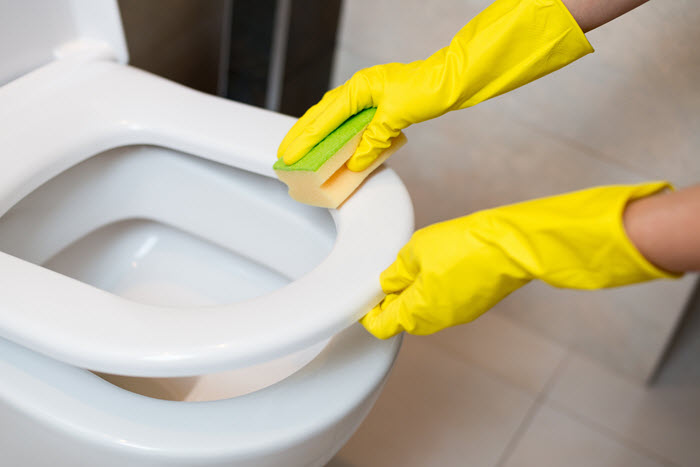
Before the year gets away from you, put the gloves on and grab some shears. It’s time to prune a few things out:

1. That little account that makes you drive out to the store once a month to pick up a check. Yes, they’re nice people — but every time you drive out there, you’re losing money. Wish them well and move on.

2. The rate grinder who plays every station against each other and  is always complaining that your station — out of all the ones he uses — is the only one that doesn’t work. Every time he calls, you have to throw more free spots at him to keep him from cancelling. He’s doing this to everybody. Dump him.

3. The slow payer. If they can’t pay within 90 days, let them be someone else’s chargeback.

4. The client who won’t plan in advance, doesn’t return your calls when you need approval on copy, and is constantly forcing you and your production staff to drop everything and scramble. High maintenance should equal high dollars. Unless they are spending A LOT of money with you, you’re better off without them.

5. Look with a jaundiced eye at any account that hasn’t bought something you in the past 12 months. Why are they still on your list? Unless something significant is about to change over there, consider the possibility that they’re just not that into you.

Here’s your sales advice for the week: pick three from that list and make them go away.

  • Give them to a rookie who will appreciate them.
  • See if your manager has something decent to swap.
  • Quietly take your name off the account in the station CRM and just stop calling. For extra fun, tear up their business card.

Use the time you save to go after new business that makes you happy, and makes you money. It’s addition by subtraction.

[reminder]What’s the worst account you’ve ever had? How did you get rid of it?[/reminder]