How To Grade a Website: Will It Flunk “The Mom Test”?

Have you ever gone to a client’s website and gotten lost? What did you do about it? If you’re a media advertising salesperson, it’s your responsibility.
radio advertising sales tip: radio salespeople should look at client websites

 Photo by iQoncept/dpc

I spent last week on the West Coast meeting with advertisers in partnership with a television station sales department. Preparing for the week, I spent time looking at each client’s website — 25 in all. Here’s what I found:

  • A lawyer’s site had the wrong address and phone number — she had moved to a different office.
  • A real estate agent’s site had no contact information at all.
  • A sporting good store’s site had drop-down menus for a variety of categories. “Baseball”, for example, had links for gloves, bats, balls, and helmets. But there was no information at any of the links.
  • A pet supply store’s website was down. That’s not the bad part. The bad part was that the station Account Executive had looked at it a week earlier, and it had been down then. The odds are good that it had been down for at least a week, and the client had no idea.

IN THIS NEXT PART, I AM BORROWING A CONCEPT FROM A RECENT ARTICLE AIMED AT BLOGGERS.
UNFORTUNATELY, I CAN’T REMEMBER WHO WROTE IT*

Pretend to be your mom — a generation older than you, able to use the Internet but not all that comfortable with it — and take a look at your blog. Could your mom find your subscription sign-up box? Would she know what to do?

If not, fix it. — Name Not Remembered

If you are an advertising salesperson — radio, television, newspaper, or any other media — you are now expected to have a good working knowledge of digital marketing. If you put together a program that drives traffic to your client’s website, and that traffic never turns into money, you have failed.

Don’t just shrug your shoulders and blame the advertiser. You are an Account Executive. Your job is to execute. If the campaign fails and the client cancels, it’s on you.

So give your client’s website The Mom Test.

If your mom  — a generation older than you, and not all that comfortable with the Internet — saw a television commercial, or heard a radio promotion, or read a newspaper ad, or clicked on a banner, and the ad took her to your client’s website, would she know what to do next? Could she figure it out quickly?

If Mom couldn’t figure out how to give your client her money, the website is a barrier that is driving money away from your client. You need to show your client how to fix it. Now.

Fortunately, your company has developed some great digital tools to help you do that. It’s time to find out what they are.

Three Ways An Advertising Salesperson Can Apply This This Today

1.  Pull up the websites of every client you’ll be meeting with in the next couple of days. Give each one The Mom Test. If any of them flunk, show the sites to the head of your digital department, and develop a strategy to fix it. Attach a price tag to the strategy and build a proposal.

2. Bring the proposal to the client. Explain The Mom Test. Show the client exactly what happened when “Mom” went to the website. Demonstrate how your strategy will fix the problem. Get a signature.

3. Share this post on Facebook, LinkedIn and Twitter. You can find the Share buttons at the top and at the bottom of the post. So can Mom.

* This, or something like it, was in somebody’s content marketing blog within the past month. I could have sworn that I’d saved the quote, but it’s not in my records. I thought it was from Ann Handley, but I searched her blog and couldn’t find it. If you know where it came from, let me know and credit will be willingly and cheerfully given.
My #PDXCarpet Moment on NBC Nightly News

How a spur-of-the-moment selfie created a chance encounter that put me on national television.

How a radio advertising sales trainer got on TV
Screenshot by pdxknitterati

I travel a lot on business, training advertising salespeople at television stations across the United States. This means I spend a lot of time at Portland International Airport (PDX), standing and walking on the airport’s carpet.

For reasons difficult to explain to those who don’t live here, our airport’s carpet — known as #pdxcarpet throughout social media — is kind of a big deal around these parts. The airport’s decision to replace the carpet has created a significant local hullaballoo.

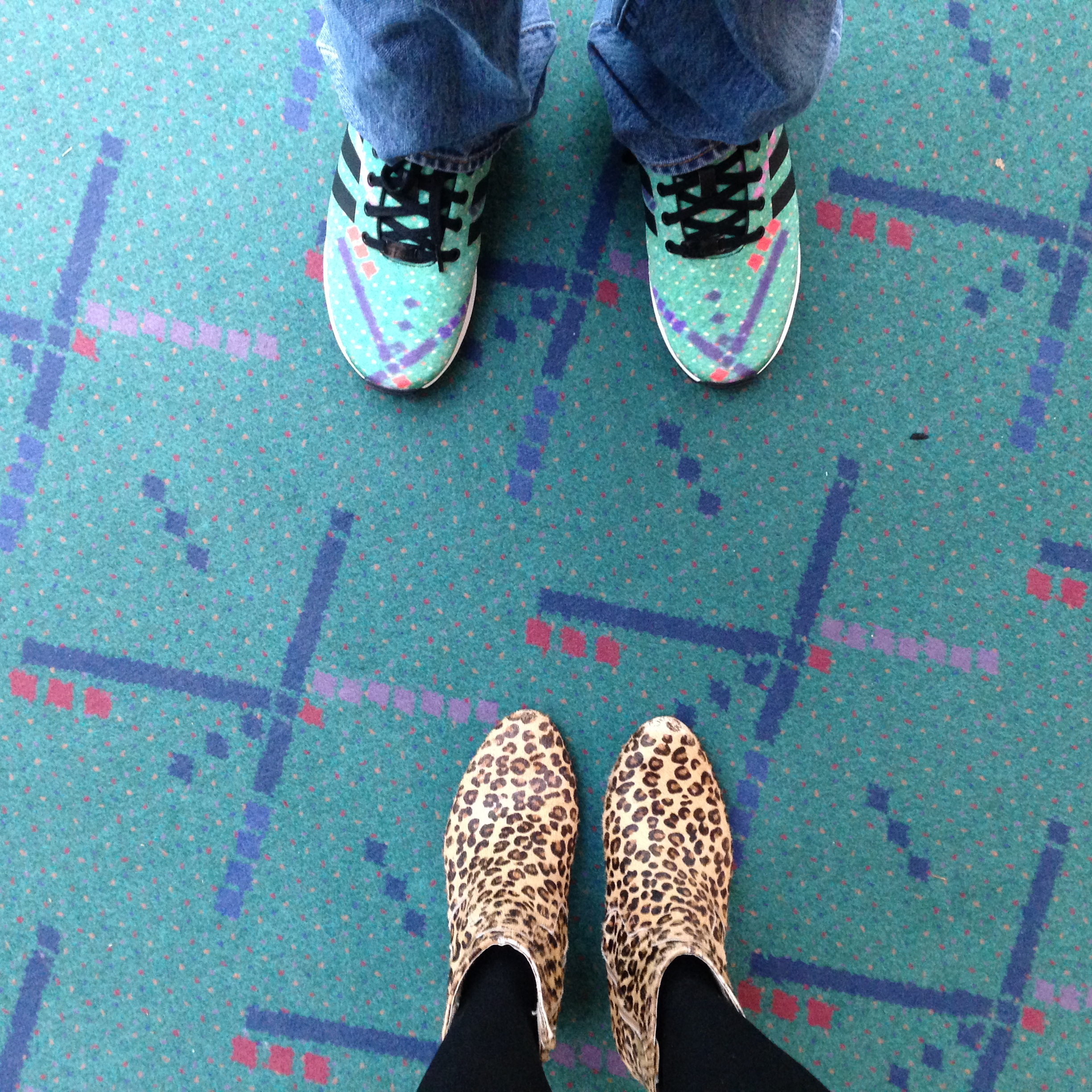
My wife, the lovely and talented pdxknitterati, took a photo of the carpet and used it to custom-design some shoes for my birthday. (You can read about how she did it, using Adidas’ iPad app, here).

On a recent Tuesday afternoon, we went to the airport to take a photo of my new shoes on that old carpet while it was still intact.

Photo by pdxknitterati

After getting the shot, we noticed a television cameraman near the ticket counters. He was on one knee with the camera on his shoulder, panning the carpet. I walked over and stuck my foot in front of his camera. He looked up at me, said, “You’re kidding,” and called his producer over.

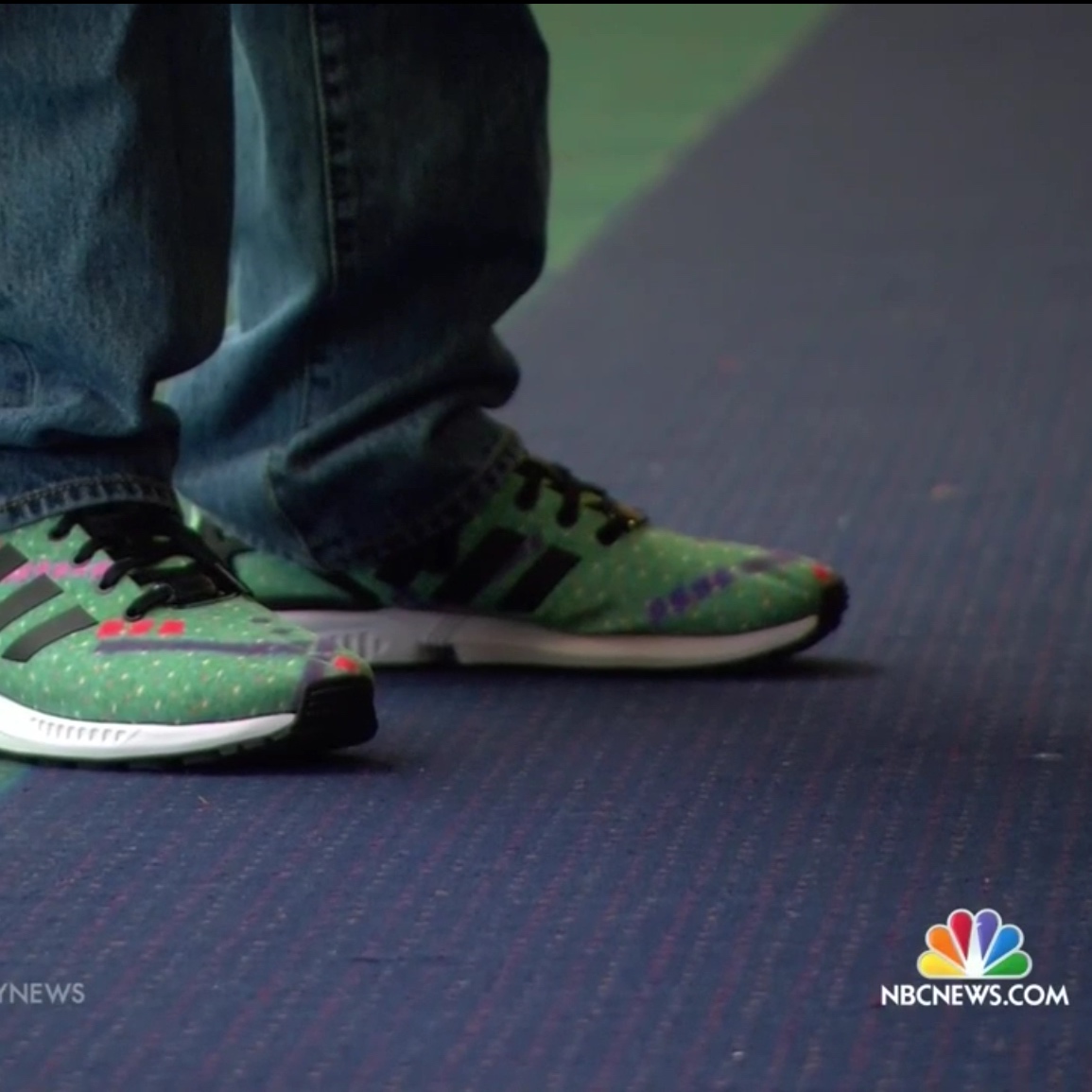
The producer, Kristen Powers, introduced me to Harry Smith. Of  NBC News. NBC Nightly News, it turns out, was in town to do a story on our carpet. Harry liked the shoes and interviewed us. You can see the results below.

Only in Portland Would the Airport’s Carpet Reach Cult Status

As Lefty Gomez almost said, sometimes it’s better to be lucky than good.

The Best Cold Call I Ever Got

“Hi, could I speak to Phil Bernstein?” I braced myself for the sales pitch.


The caller identified himself as Dan from Oregon Premier Real Estate*, and the call took a quick left turn:

Phil, I’m kind of embarrassed here. I have your name and phone number written on a sheet of paper. I know I’m supposed to call you, but I don’t know why.”


Photo by Thomas Leuthard. Creative commons.


This threw me. It was 2006, at the height of the real estate boom, but I didn’t know him or his company. “I’m sorry,” I said. “I don’t recognize your name.”

  • Dan: That’s okay, we’ll figure it out. Are you selling your house?
  • Me: No…
  • Dan: Okay, so that’s not it. Are you looking around for a new home?
  • Me: No, we’re happy where we are.
  • Dan: Wow… what else could it be? Are you shopping for investment property, maybe?
  • Me: Nope, that’s not it.
  • Dan: Is someone in your family selling, or looking?
  • Me: Wow, Dan. I’m drawing a complete blank here. I don’t think so.
  • Dan: Refinancing your mortgage?
  • Me: Already did that.
  • Dan: Well, gee, Phil. I’ve hit a brick wall. Sorry to bother you. Here’s my number — if you think of something later, give me a call.

We hung up, and I spent the next few minutes trying to figure out how I could help the poor guy. Then the light bulb went on.

I’d been cold called by a pro. As I sat on my couch, I gave him a golf clap.

I can’t justify the dishonesty — once I realized that he’d misled me, it disqualified him from ever representing me in a transaction. But there’s a lot to be learned from the way he politely qualified me with a series of questions, determined that I wasn’t a prospect — I wasn’t buying, selling, or refinancing, and didn’t know anyone who was — and politely ended the call so that he could move on to the next call.

*Names have been changed.

Question: What’s the best cold call you’ve ever made, or received? Who impressed you with professionalism, good questions, or sheer chutzpah?

Leave your answer in the Comments below.


A Sales Prospecting Parable: Phone Beats Keyboard

If you’ve been selling for any length of time, you’ve been tempted to contact your prospects by digital means — email or text — instead of the phone. Phil Bernstein is here to tell you that the phone still beats the keyboard.

One evening not long ago I boarded a flight from El Paso to Denver. I was supposed to change planes in Denver and continue on my way back home to Portland, Oregon. Instead, bad weather in the Denver area forced us to circle aimlessly for more than an hour before landing in Cheyenne, Wyoming to refuel. Eventually we took off again, but by the time we landed in Denver I’d missed my connecting flight, which was the last one of the day.

Photo by Thomas Leuthard

Phil Bernstein needed a hotel for the night.

An airline customer service agent booked me on a flight out the next morning, and handed me a list of airport-area hotels. The first thing I did was fire up my iPad, figuring I’d book a room online. Every website showed a sellout for the night. Hampton Inn, Hilton Garden Inn, Fairmont Inn, Embassy Suites, Doubletree, La Quinta… on and on it went, with each site showing nothing available.

Eventually I ran out of websites to look at, so I decided to go old-school… the telephone. I started calling the local front desks of the same hotels that had rejected me digitally. I was suddenly back to my radio AE days… prospecting, dialing for dollars. Only this time, I was dialing for shelter.

The first two clerks I talked to were sympathetic, but couldn’t help me – they were truly sold out. But the third call connected me to a very nice woman at the Fairmont who had one room open. I gave her my credit card over the phone; 20 minutes later I was in the room, and ten minutes after that I was asleep.

At some point during the process I realized that this was a pretty good prospecting lesson. In three words, the lesson is this:

Phone beats keyboard.

I had started my room search with a computer for the same reason that salespeople try to sell with email… it’s easier, it’s faster, and you don’t have to deal with messy conversation and personal interaction. What I learned (or, more accurately, re-learned) is that it’s messy conversation and personal interaction that gets things done.

The next time you’ve got something to discuss with a client or prospect, put the keyboard away. No matter what day of the week it is, pretend it’s “Throwback Thursday”. Even in 2014, the most effective prospecting tool on the planet is still the good old telephone.


Worst Sales Call Ever: My Ace Greenberg Story

I’ve made thousands of sales calls in my career, and not all of them went well. Reading of the death of Alan “Ace” Greenberg brought back memories of the worst call I ever had.

It was in the early 90’s. I working for the New York Mets, in charge of the Diamond View Suites, the skyboxes at Shea Stadium. Word came down from my boss that Fred Wilpon, the owner of the team, wanted me to sell a suite to Bear Stearns. I was to call Ace Greenberg’s office and use Fred’s name to get an appointment.

The phone call secured the meeting, and on the appointed day and time I was ushered into a private elevator and delivered to Ace Greenberg’s desk. Not a private office… a desk in the middle of the trading floor. We shook hands and he said, “So what’s on your mind?”

I told him I handled the Diamond View Suites at Shea, and began to ask him a question about Bear Stearns’ corporate entertaining. His phone rang, and I stopped mid-sentence as he answered it. He spoke for a minute or so, hung up and gestured for me to continue.

I started again, and his assistant showed up with some papers to sign. Once that was over, I managed to get a question out and he started to answer it… and the phone rang again.

This pattern continued until his assistant came back, Greenberg stood up and said, “Thanks, Phil, I’ll think about it.” Less than 20 minutes after I’d first set foot in the private elevator I was exiting that same elevator and standing on the street, with no idea what had just hit me.

Bear Stearns did not sign up for a Diamond View Suite that year.

I spent a long time trying to figure out what I could have done differently, and finally concluded that it was a pointless exercise. I called because Fred Wilpon told me to call. Ace Greenberg really wasn’t interested, but met with me as a favor to his friend Fred. We went through the motions because we had to, and then both got back to more productive activities.

RIP, Ace.