A Waitress, a Bowl of Oatmeal, and An Advertising Lesson

An Iowa waitress taught me the value of frequency.
Advertising lesson from a waitress
Photo by Sergey Nivens. Adobe Stock

It was a Monday morning in a Cedar Rapids hotel. I was in town to work with a group of TV station salespeople.

I went down to the hotel restaurant for breakfast. I don’t always eat properly on the road, but I can usually get in a healthy breakfast before my self-discipline breaks down.

Glancing at the menu, I decided to order oatmeal.

When the oatmeal arrived, it was anything but healthy. The top layer had some sortof custard; the rest of it was loaded with sugar and other stuff. It was delicious, but it did not mean good things for my cholesterol-control efforts.

I asked the waitress whether the restaurant offered just plain oatmeal. She told me that this was the way the restaurant always served it. Then she paused, and asked me how long I was staying at the hotel.

I told her I would be there all week.

“My name’s Jackie,” she said. “When you come down tomorrow, ask for me. I’ll have the chef make you a bowl of regular oatmeal.”

Tuesday morning I came down to the restaurant and asked for Jackie. “Yesterday you mentioned you might be able to get me some regular oatmeal,” I said. “Let me see what I can do,” she replied. 10 minutes later she delivered a bowl of plain oatmeal to my table.

Wednesday morning, I waved to her as I sat down. “Oatmeal, and a to-go cup of coffee with the check?” she asked. “Yes,” I replied. She had remembered my standard morning coffee request.

Thursday and Friday, we didn’t even have to discuss it. As soon as I arrived, she put the order in with the kitchen. And when she brought the check, the to-go cup of coffee was right there with it.

Three weeks later, I was back in Cedar Rapids at the same hotel. Monday morning, when Jackie saw me she said, “Welcome back, Mr. Bernstein! Plain oatmeal, right?”

That first day, I had to remind her about the coffee-to-go; the rest of the week it all went like clockwork.

Why did I get recognition and special treatment? Because I stayed in the same place for an extended period of time.

I ate at the same restaurant every morning. Seeing the same faces every day, I got to know them and they got to know me. Over time, one of the waitresses learned exactly what I wanted, and I didn’t have to start over each morning.

While I was at the hotel, I met another business traveler who was in Cedar Rapids for a couple of days.

From Cedar Rapids, he was going to Des Moines for two days, and then to St. Louis. He was also having his breakfasts in a hotel restaurant – but every couple of days it would be a different restaurant.

He had to take whatever was on the menu.


Here’s the advertising lesson


With limited resources, you have a choice when you decide to advertise:

You can spread your budget out, and try to reach as many people as possible by doing a little bit of a lot of things. You will be advertising frequently. Lots of people will see you, but they won’t remember you.

Or you can focus your limited resources into a small number of places. You will be advertising with frequency. You’ll reach fewer people — but the people you reach will respond.

The other business traveler — with a couple of days in Cedar Rapids, a couple of days in Des Moines, and a brief stop in St. Louis — had the equivalent of a “media mix.” A little TV, a little radio, a couple of billboards.

He was seen by more people than I was, but he didn’t get to know them and they didn’t get to know him. When he sat down for breakfast, he got what everyone else got.

I had the same resources — five days — but I spent them all in one place. The same people saw me again and again, and by the end of those five days the wait staff knew me.

The other guy ate out frequently; I was eating out with frequency.

Which one of us did better?

They Won’t Buy What They Don’t Want

How do you sell ice to an Eskimo?

Sales Tip: You can't sell ice to an eskimo
Photo by hakat

The answer: you don’t.

Early in my radio sales career, I met with a window dealer who was actually interested in talking to me about advertising. This was a rarity at the time.

The conversation, as I recall, took place in November.

I asked him when his busy and slow seasons were. He said,

I’ve got one absolutely dead month every year — January. Sometimes I think we should just close the shop down then. It’s too cold and rainy, nobody’s thinking about their windows, and nobody wants a big hole cut in their house during the rainy season. They don’t even want to talk about it.

If you can get people to call us in January, I’ll be your customer for a long time.

That got me excited. I didn’t have a whole lot of customers, and  definitely needed the January billing. He was willing to spend $5,000 for a one-month trial.

I got to work.

[button href=”http://tvsalescafe.com/forum/how-did-you-get-into-advertising-sales” primary=”true” centered=”true” newwindow=”true”]Read “How I Began My Sales Career” Stories — and Tell Yours — Here![/button]

[button href=”http://tvsalescafe.com/main/authorization/signUp?” primary=”true” centered=”true” newwindow=”true”]Not a TV Sales Cafe Member? Join For Free Here![/button]

I got the shop owner to agree to a January installation discount. I convinced our sales manager to agree to our lowest rates and a bunch of bonus spots on KEX, a station that’s perfect for window dealers. I wrote and re-wrote the script until it was brilliant.

We launched the campaign on the first Monday in January. Nobody called that week.

Nobody called during the second week.

Two people called during the third week, but neither of them bought anything.

One person called during the fourth week. He didn’t buy, either.

For $5,000, the window dealer got three phone calls and no sales. At the end of the month the owner thanked me for my efforts, paid the bill, and told me that radio just didn’t work.  He wasn’t interested in renewing.

Nobody wanted a hole cut into their house in January. They didn’t even want to talk about it.

Lesson learned.

This sort of thing is pretty common with business owners. They hope that if they just find the right advertising venue, they can convince someone who’s not interested to be interested.

[shareable]Sales tip: People buy when they want to buy — not when you want to sell.[/shareable]

If they’re not interested, advertising won’t make them interested.

  • A credit union, whose membership was primarily over 50, launched a campaign aimed at millennials. When these smartphone-happy prospects learned that the credit union didn’t have a mobile app, their enthusiasm cooled quickly.
  • An aesthetic medicine clinic, whose practice was 89% women, decided to go after men. They learned that men were much less likely to respond to a Botox or laser hair removal message.
  • A restaurant whose slowest night of the week was Monday put all of its advertising money toward a campaign to drive Monday business. They found out that their customers, as a group, just didn’t want to eat out on Monday.

I remembered the lesson of the window dealer when I met recently with the Marketing Director for a chain of candy stores in the Midwest. She told me that her “selling season” started in late September as Halloween approached, and continued through the end of March.

“After Easter,” she said, “our business drops like a stone.”

When we got back to the television station, the Account Executive suggested a big “summer sale” promotion — he needed some May and June billing. I told him to wait.

“We could probably talk her into it,” I told him. “But this is her first experience with your station. She’s testing you. If people don’t want candy in the summer, your promotion’s going to bomb. You may never get her back on the air.”

We’re starting the campaign in September, when people start thinking about candy.

Don’t try to advertise ice to Eskimos. Find people who want the ice.

Copywriting Tip: Is There a Story?

I recently drank a $12 bottle of water. It was pretty good.

Mahalo water

I learned of MaHaLo Hawaii Deep Sea Water in December during a tour of the Natural Energy Laboratory of Hawaii (NELHA). MaHaLo uses one of NELHA’s pipes to draw the water out of the Pacific Ocean, and then runs it through a desalinization process.

Candee Ellsworth, the Executive Director of Friends of NELHA, told us that the water is marketed primarily in Japan, where it sells for 12 bucks a bottle.

What do you get for 12 bucks? From the MaHaLo website:

The Deep Sea Water used for MaHaLo bottled drinking water is very old.  It takes between 1,200 and 2,000 years for the water to travel from the North Atlantic Ocean through the freezing Arctic currents, under the vast glaciers of Greenland, where it gathers ancient minerals that leach down from the ice.

Then it flows around and back down toward the deep channels of the Pacific Ocean.  It is there, at the Water Rejuvenation Zone just off the coast of Kona, Hawaii, that the water is at its very purest.  This is why Koyo USA placed its processing and bottling plants on the Kona coast of the Big Island of Hawaii…

MaHaLo Hawaii Deep Sea® Water is drawn from 3,000 feet below the surface of the Pacific Ocean.  At this depth the water is very cold, about 43° F (6°C), and is safe from surface pollutants caused by industry, farming, chemicals or human waste.

Ellsworth poured us some of this precious water, and it tasted like… water. Good water, and a huge step up from Kona tap water… but water. Although the company has gotten into some trouble for its manufacturing process, Ellsworth told us that Mahalo sells every bottle it can manufacture.

Why do people pay $12 a bottle when there is much cheaper bottled water available? Because a host who serves Mahalo water can tell a story.

For similar reasons,

  •  a collector in Greece paid $23,000 for a saltine cracker. It wasn’t just any saltine cracker — it came from the Titanic.
  • some people will pay $66 for a 35-gram package of coffee made from elephant poop. When it comes from an elephant’s butt, it ain’t just coffee.
  • I once ordered, and consumed, a plate of “Sauteed Ox Pennis” from a restaurant in Vietnam. It was spelled that way on the menu.

Copywriting Tip: Look For the Story

advertising copy should use stories

Seth Godin put it this way:

The story we tell ourselves is actually what is being sold. The challenge is not how to be successful, but how do we figure out how to matter. And the way we matter is by connecting people with a story. A story that resonates, a story they care about and a story they’ll tell other people.

When you are looking for a way to set a client apart from the competition, look for a story.

  • How was the business founded?
  • How is the product made?
  • Is there anything compellingly different that can capture the audience’s imagination?

A few years ago I met with the owner of a restaurant in Nevada. The food was good, and the family that ran the restaurant was very nice. I was struggling to find a hook until I asked the owner what dish meant the most to him. It was the quiche.

Why the quiche?

Because the family that owned the restaurant had a farm. With chickens. And every egg that went into the restaurant’s quiche came from the family chickens.

Sometimes the commercials write themselves. It did not take me long to write this one after I got back to the hotel. The ad ran for almost two years.

https://www.youtube.com/watch?v=qaQUClnSYrI&feature=youtu.be

Consumers will go out of their way, and pay more, if they hear the right story.

Does your client have a story to tell?

Coming very soon: a new networking site for television/digital sales professionals. Be looking for information about TV Sales Cafe™ later this month!

Why You Can’t Wait For the Shmoo in 2016

At a recent holiday gathering, a group of us landed on the subject of the Shmoo, and how it relates to advertising sales in 2016.

Card

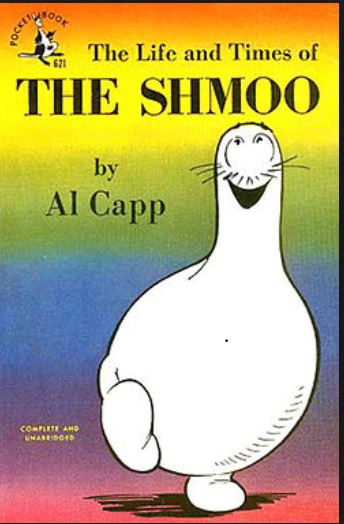
The Shmoo was a character in the 1940s and 1950s comic strip Li’l Abner. It’s a little hard to explain, but here’s a description from the Wikipedia entry on the subject:

  • Shmoos are delicious to eat, and are eager to be eaten. If a human looks at one hungrily, it will happily immolate itself — either by jumping into a frying pan, after which they taste like chicken, or into a broiling pan, after which they taste like steak. When roasted they taste like pork, and when baked they taste like catfish. (Raw, they taste like oysters on the half-shell.)

  • They also produce eggs (neatly packaged), milk (bottled, grade-A), and butter—no churning required. Their pelts make perfect bootleather or house timber, depending on how thick you slice it.

  • They have no bones, so there’s absolutely no waste. Their eyes make the best suspender buttons, and their whiskers make perfect toothpicks. In short, they are simply the perfect ideal of a subsistence agricultural herd animal.

  • Naturally gentle, they require minimal care, and are ideal playmates for young children. The frolicking of shmoon is so entertaining (such as their staged “shmoosical comedies”) that people no longer feel the need to watch television or go to the movies.

By its very existence, The Shmoon (this is the plural) appeared to provide for just about all of humanity’s needs. But rather than making people happy, Shmoon  created as many problems as they solved, and were ultimately set upon and destroyed by society.

The Shmoo in Advertising Sales

In broadcast sales, the Schmoo is the big agency account. A few times a year, the Schmoo issues an RFP, and you submit. Hit the cost per point, throw in some added value along with some concert tickets for the buyer, and you get the money.

For decades, many media reps made a good living on Shmoon. Young AE’s waited for veterans to leave, eventually inherited big agency accounts, and soaked up the money as the RFP’s came in. It was a good ride while it lasted, butthe Shmoo Ride is over.

As businesses bought each other, consolidation made some of the big local accounts disappear. Other agency accounts went national. Now agencies, often with station help, are automating the process. Soon that RFP will go from one computer to another, and the buy will happen automatically, untouched by human hands.

If you’ve been making your living by riding the Shmoo, you’re going to have to find another way to do it. The easy, automatic money is just about gone. The Schmoo isn’t coming anymore.

That’s the bad news. The good news is that there is still plenty of opportunity to make money. with local direct. Local direct, alas, is a Shmoo-free zone.

The money is there, but it’s not coming to you – you have to go get it. That means looking for leads, interrupting strangers on the phone and convincing them to meet with you. Doing thorough needs analysis calls, coming back with great ideas, and asking for the business.

It’s the kind of selling I teach every day.

It’s not easy. In fact, it looks a whole lot like work. But if you’re willing to make the effort, study the techniques, and skip the shortcuts, there is still great money to be made.

Stop waiting for the Shmoo, and go call a customer.


Coming in early 2016: a new networking site for television/digital sales professionals. Be looking for information about TV Sales Cafe™ in the next few weeks!

When the Client Won’t Listen

I’d love to say that clients always accept my advice and do exactly what I tell them.

sales tip: sometimes the client won't listen
Photo by pathdoc/pdc

There are some furniture store owners and auto dealers who think they know more about advertising than I do.

Sometimes they’re right. But not often.

Let’s make a deal. If you don’t tell me how to write your ad copy, I won’t show up at your funeral home and tell you how to embalm the bodies.” — Something I once thought about saying, but did not, to a client.

This is a topic of much conversation among well-trained advertising salespeople. You are held accountable for results — if the advertising doesn’t deliver, you be blamed. But you are on commission — if the client doesn’t run with you, you don’t get paid.

How do you handle it?

As Dan O’Day points out, much depends on how your customers perceive you:

If you want to provide your clients the most for their money, you need to:

1. Educate yourself to the point where you do have genuine expertise in radio advertising.

2. Make that expertise clear to the client at the beginning of and throughout your entire relationship.

As an Account Executive, I made a point of talking about the books I’d read, the CD’s I’d listened to, and the seminars I attended. I sent a monthly email newsletter to my clients that talked about marketing, not about my stations.

I started a blog in 2008 — the one you’re reading now.

In spite of the credentials I built up and trumpeted at every opportunity, I would sometimes find myself sitting across the desk from a business owner who was determined to write his own laundry-list commercial and run it on my competitor if I didn’t like it.

If you run into a situation like that, you have two choices:

1. Refuse the business. Tell the client that you would love to have the business, but cannot accept the order when you don’t think it will accomplish the client’s goals.

2. Give the client the best advice you can, and then take the money.

Here’s the approach I settled on:

  • If the order was a little one, I’d refuse it. I set a minimum dollar figure (my “Evangelista Number“) below which the business wasn’t worth my time. If it was below the Evangelista Line, I was happy to let my competitor suffer.
  • If the dollar figure was substantial, and the only way to get the order was to run the ad my the customer insisted on running, I’d accept it — but only after saying this:

Advertising Sales Tip:
The “Two Responsibilities” Gambit

Mr. (or Ms.) Client, I have two responsibilities. The first one is to my station and my own checking account, and it’s this: if you want to give me your money, I am prepared to take it.

But I also have a responsibility to you to tell you if I think your plan isn’t going to work. And I don’t think it’ll work. If you still want to go ahead and do it, let go ahead.

Sometimes the campaign failed and the client ultimately agreed to try it my way. Results, and the customer’s perception of my expertise, generally improved when that happened.

Sometimes the campaign failed and the client just stopped advertising. In that case, I’d shrug and move on to someone else who was willing to listen to me.

Occasionally customer was right and the campaign worked after all. As Joaquin Andujar was fond of saying, you never know.

In a perfect world, you could walk away every time a client wanted to advertise the wrong way.

Alas, the world ain’t perfect.

You have bills to pay, and a budget to hit.  Winning the argument might feel good, but allowing your competition to cash your commission check does not.

Under the right circumstances, using the “two responsibilities” gambit will allow you to cash the check and still sleep at night.

[reminder]What’s your best strategy for dealing with a client who won’t listen?[/reminder]