How to Unlock Sales Possibilities With This Magic Question

I have no idea who came up with this idea. I only know it works.
Sales skills: the magic wand question
Photo by Elnur/dpc

A Sales Call Surprise

A few years ago a television advertising salesperson on the West Coast took me to meet the marketing director of a medical practice. The practice covered a lot of ground — among their divisions was OBGYN, aesthetic medicine, ear/nose/throat, hearing, plastic surgery, and sleep medicine.

Our conversation quickly focused on the aesthetic medicine department, and we spent 50 minutes talking about botox, fillers, laser hair removal, and chemical peels. In my mind, I had a pretty good idea of the creative strategy I was going to work on; it was time to wrap the meeting up.

So I asked her the “Magic Wand” question:

“Let’s say you had a magic marketing wand. You can wave it and make your advertising accomplish one thing for you that it’s not doing now… what would you use that wand to do?”

I assumed that she’d use the wand to increase Botox sales, or bring in more hair removal customers. Boy, was I wrong.

“I’d use it to sell more hearing aids.”

This sales question can bring a surprising answer
Photo by Ana Blazic Pavlovic/dpc

We’d been talking for more than an hour, and she had not said a single word about hearing aids. But it turned out that the practice owner had been complaining about sales in the hearing division, and she was going to have to do something about it.

Instead of one idea to bring back, I now had two. Instead of one division’s budget to work with, we now had two.

Instead of the $3,500 per month we’d been planning to ask for when we came back, we proposed $7,000 per month. We didn’t get all of it, but we got close.

Sales Skills: Why The Magic Wand Technique Works

In Close More Sales! Persuasion Skills That Boost Your Selling Power, Mike Stewart says that the Magic Wand Technique

…can start the creative juices flowing in your prospect and increase his involvement in the sales process…Encourage your customer to explore different possibilities. You never know what he might come up with, and you never know where he will find a solution that you can provide and that will be the emotional trigger needed to close the sale.

Don Fitzgibbons, author of The Guru’s Rules for Local Advertising, has this advice for making the question most effective:

The wish has to be very specific. A wish for “more customers” is not specific. A wish for “more customers who will buy four wheel drive trucks” is very specific.

The wish must also be realistic. “I want more people to buy air conditioning in December.” Sorry, not gonna happen.

I learned the Magic Wand Question almost two decades ago as a radio Account Executive, and have been using it ever since. It works because it makes clients stop and think about what they really want. There is often a long pause, as the customer gazes at the ceiling and ponders.

How often does the Magic Wand Question elicit a big surprise? Not that often. In a typical week of needs analysis calls with a television station, I might meet with 20 clients and get three genuinely surprising answers.

But those three can be big ones — and I never know which three it’ll be — so I ask the question every time.

[reminder]What’s the most surprising answer you ever got to a sales question?[/reminder]

Why Don’t Your Prospects Want to Meet With You?

What does “I’m not interested” really mean?

Photo by Konstantin Pelykh/dpc

A subscriber recently wrote to me about her struggle to turn cold calls into appointments. She is new to the radio sales business, and has been surprised and a bit disheartened at the rejection she’s faced.

I have never done sales before and while I have no issues with being assertive, I keep finding myself struggling to assure the clients that our radio station is where they want to be before that irritating phrase, “We’re not interested… click[phone hanging up!].”

I believe in this station and the amount of ears we reach with just one broadcast/advertisement, but I am not a rude person by any means and almost feel… well rude when I try to push past that initial turn down! How do I overcome this feeling and open myself up in the sales world?

It’s tough to tell what’s happening when it’s reported in an email, but I’ve made and witnessed enough cold calls to take some educated guesses.

What “Not Interested” Actually Means

One possibility you should not discount: they are genuinely not interested, and nothing you can say will convince them to meet with you. You have zero chance with these people, and your best bet is to move on to someone else as quickly as possible.

More likely, this is what phone sales expert Art Sobczak calls the Triple-R: Resistant Reflex Responses. “They are attempts to get salespeople off the phone. And they usually work. So prospects keep using them.”

How do you tell the difference? Sometimes you can smoke out the answer with a couple of well-placed questions.

In his book Smart Calling: Eliminate the Fear, Failure, and Rejection from Cold Calling, Sobczak talks about an approach that’s worked well for one salesperson:

Inside Sales Rep Jeff Wirsling responds, “That’s fine, Mr. Client. In the event something changes with your current service/supplier, would it be all right if I stay in touch?” Then he questions what would need to change, placing him into a sales conversation.

This won’t work every time. It might fail most of the time.  But if it works on, say, a third of your “not interesteds”, it can significantly increase the number of productive sales conversations you have.

Obviously, if the customer hangs up or won’t give you permission to stay in touch, you have your answer and can move on without guilt. It’s worth a shot to see if the client is… worth a shot.

Sales Skills: Preventing “Not Interested”

A very good, experienced seller once told me that 20% of the people he called weren’t going to interested no matter what he said, and 10% were interested enough to give him an appointment even if his approach wasn’t very good. The other 70% might be interested… if he said the right things when he called.

How do you increase the odds of convincing that 70% in the middle?

It helps to open the conversation with something that gives them a reason to be interested.

Take a good look at your initial approach on the phone. If you are telling people you want to come out and talk about your radio or television station, or that you want to talk to them about advertising, you increase the odds of hitting a brick wall. Most businesspeople aren’t going to care about your radio station, and they aren’t interested in “advertising”.

[shareable]Bernstein’s Postulate: Nobody cares about your station. Talk about what THEY care about[/shareable]

What do they care about? Here are some topics that are more likely to get them interested

  • More traffic to their website
  • More customers walking in the door
  • More sales

Look at scripting an opening that tells them that you have some ideas to help them find more customers and make more sales. An effective opening quickly communicates three things to the prospect:

  1. There’s a reason you’ve decided to call them. Examples include learning of a new product or location. Perhaps you saw or heard their ad on a competitor. Or you were in their store and saw something that caught their attention.
  2. You have something that could be valuable to them — and that’s not your “First Quarter Fire Sale Package”. It’s an idea to help them accomplish something important to them.
  3. You know something about them already, but need to know more.

Here are some examples of the form, with calls made by a fictional Account Executive at my old employer:


“Mr. Swanson, this is Margaret Dumont with KEX Radio. I read about your upcoming expansion in The Business Journal, and have some ideas that can bring more customers to your new location. I’d like to meet with you early next week to find out a little more about what direction you’re heading.”

or ”

“This is Margaret Dumont with KEX Radio. I saw your ad in the newspaper this morning, and think you may be missing an opportunity to generate more leads, and more qualified leads. I’d like to meet with you next week to find out a little more about where you’re trying to go with the campaign.”

or

“This is Margaret Dumont with KEX Radio. I read your press release online the other day, and have some ideas to turn the excitement about your new product into sales and revenue. I’d like to meet with you next week to find out a little more about the problem the product is designed to solve.”


In three sentences, the caller  identifies herself and then quickly turns the focus of the call to the customer and how the customer might benefit from meeting with her. It sounds different from what most of the other salespeople say, and can buy you a few seconds to convince the prospect that you are different.

Will this work on everyone? Emphatically not. “Not Interested” has always been part of sales and always will be. And there is more rejection in Year One of a sales career than in any other — a big reason why so many sales rookies never make it to Year Two.

The best way to reduce the number of “Not Interesteds” is to open the conversation with something with something your prospect will find interesting.

[reminder]How have you turned “Not Interested” into a productive sales conversation?[/reminder]

The Crucial Deflategate Lesson You Probably Missed

Want to keep your private thoughts private? Keep them off company property.

sales tip: be careful with company property
photo by pzphotos/dpc

One Thursday evening about fifteen years ago, I walked over to my radio station’s printer to retrieve a proposal, and found a co-worker’s resume. Along with the resume was a cover letter addressed to another’s company’s sales manager – my colleague was applying for another job.

I looked around. He had already gone home for the day. I quietly tucked his resume and cover letter into a manila envelope, sealed it, and left it on desk.

I was reminded of this event last week when National Football League Commissioner Roger Goodell reaffirmed his 4-game suspension of Patriots Quarterback Tom Brady in the “Deflategate” case.

For those who don’t follow the NFL, here’s the short version: The New England Patriots were accused of illegally lowering the air pressure in their footballs to make them easier to throw and catch. The league conducted an investigation.

NFL Investigator Ted Wells concluded in his report that it was “more probable than not” that the Patriots had deliberately broken the rules, and that Brady was at the very least aware of it. Brady received a severe suspension, appealed, and lost his appeal.

The matter is now in court.

Here’s what these two events – a salesperson looking for work, and a couple of locker room employees illegally manipulating equipment – have in common: reckless use of company property.

The most damning evidence against the Patriots came from a series of text messages that part-time employees Jim McNally and John Jastremski sent each other on team-owned cellphones.

When NFL investigators asked to to examine the phones, McNally and Jastremski had to turn them over – they were company property. Brady’s phone, by contrast, was his own, and he kept it.

In addition to incriminating information (at one point, McNally referred to himself in a text as “The Deflator”), the messages on McNally and Jastremski’s phones contained their unvarnished opinions of Tom Brady. Those opinions were not complimentary.

The public airing of thoughts they had presumed to be private  irreparably harmed their reputations, and their relationship with the team. Both lost their jobs.

If you are a salesperson or manager, this is the big lesson of DeflateGate. Before you start typing, ask yourself who owns the device you’re using.

If you write an email using a company computer… send a text on a cellphone issued to you by your station… or print your resume on a company printer…it is “more probable than not” that others in your company can and will see what you wrote.

Heed The Deflategate Rule. Keep your private thoughts on your private property.

[reminder]


A Beautiful Ad That Didn’t Work… and An Ugly One That Did

“They kind of forgot to sell the car.”

The Dog Strikes Back_ 2012 Volkswagen Game Day Commercial

Remember this commercial from the 2012 Super Bowl? Watch the ad and then answer the one-question quiz below.

Volkswagen, like many advertisers that year, released the ad on the Internet a week early to get people talking. The reviews in the media after the game were extremely positive.

The ad ranked #2 on the USA Today Ad Meter. Shirley Brady of Brandchannel called it “Another big win for Volkswagen” in the Washington Post, and predicted greater recall for the featured model than VW had accomplished the previous year in the same slot.

Here’s the quiz:  without going back and watching it again, which model is the ad about?

I’ll Give You a Hint: It Was The Beetle

A few days after the game, I met with a Volkswagen dealer in Hawaii. I asked him what he thought of the ad.

He wasn’t impressed.

He told me that several days before the Super Bowl, Volkswagen had sent out an email blast offering Volkwagen owners special incentives to come in and test-drive a Beetle. The dealership also sent out its own email to its database making the same offer.

“How many people have responded to the offer?” I asked.”So far… zero,” replied the dealer.

I asked him if anyone had mentioned the ad in the showroom that day. “If you mean any customers… no. I think Volkswagen kind of forgot to sell the car.”

If the advertiser’s aim was to entertain, the ad was a success. But if they wanted to generate customer interest in the new Beetle, that dealer’s evidence pointed to failure.

What about sales overall? In February, 2012 Volkswagen sold 1,303 Beetles. An ad in the 2012 Super Bowl cost $3.5 million. Setting aside production costs and any other advertising VW did for the car, this works out to $2686 per Beetle sold.

If you think about it, there’s generally no correlation between how much something cost to make and how interesting it is. — Seth Godin

If the ad works, it is a great ad no matter how many rules are broken or how bad it may look, smell or taste. If the ad is not working, it is wretchedly bad no matter how clever the production. — Don FitzgibbonsThe Guru’s Rules for Local Advertising

Here’s The Ugly Ad that Worked

This one’s from a group of fast food restaurants in the Southeast. All it did was work.

https://youtu.be/H5x1CGUHbgE

This commercial would not do well on the USA Today ad meter.  But that’s not how the advertiser kept score.

This ad had one job — to move more hot dogs during the middle of the week. It performed magnificently, delivering an almost-immediate double-digit lift in hot dog sales on Tuesday, Wednesday, and Thursday.

The restaurants gave up some margin on the hot dogs and made plenty back on all the fries, sodas and custard people bought with their dogs.

ph/dpcoto by Simone van den Berg

You can go after awards if you want, but don’t forget to sell the product.

[reminder]


How to Give Yourself a Quick and Easy Raise

“There are two reasons why customers don’t buy more product from you:


sales skills: make more money byn upselling
Photo by thinglass/dpc

A few days ago I got an email from Terry Douglas, who reads my “Sales Doctor” column in Paint Dealer/Paint Contractor Magazine. Terry sells a product called Envirobrush — a paint brush with replaceable bristles.

He lamented the lack of upselling at the dealer level:

Many dealers are missing out on profitable sales because they do not try to sell sundry items. Many years ago I had a paint store with a talented lady who paid her wages on the extra profit earned by her sales of paint sundries.

It reminded me of a story from my distant past — a sales lesson I never forgot:

My First Upsell: A Sales Skills Acquisition Story

Long ago and far away, I worked for a record store — Everybody’s Records, Tapes, and Video, to be exact. My long-haired, bearded colleagues and I stood behind the counter and rang up sales on the cash register when people approached. Occasionally, we directed customers to the Grateful Dead section.

It didn’t pay well, but we didn’t work all that hard, either.

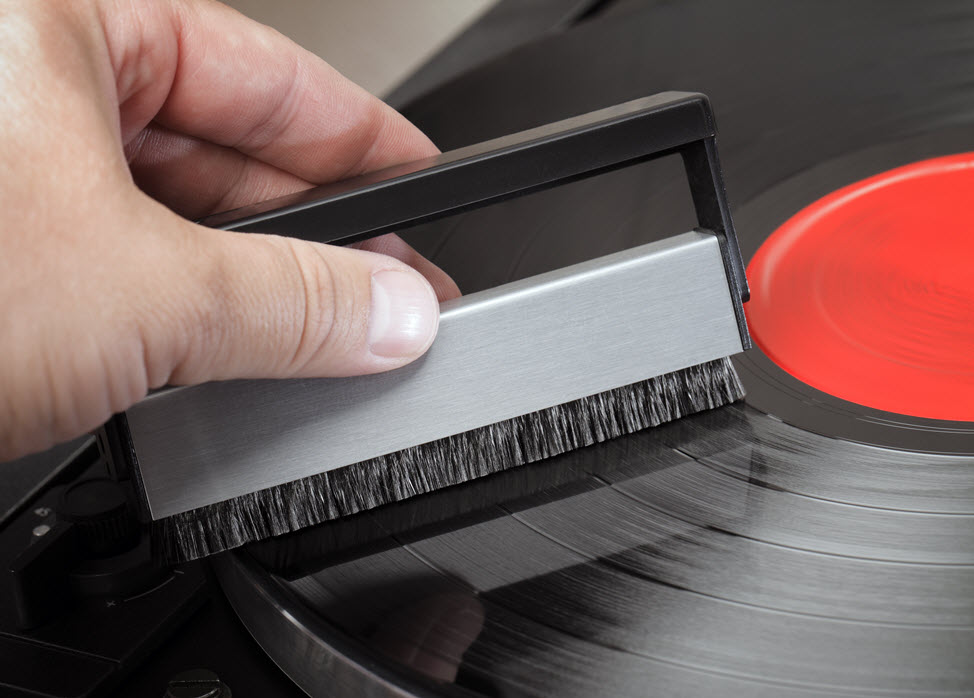
One day our manager told us that Corporate wanted us to sell more accessories — in particular, record cleaners. A record cleaner, for you youngsters, was a brush that would clean the dirt off a record before we played it.

record brush for upselling
Photo from Stocksnapper /dpc

Corporate wanted us to offer a record cleaner to each customer as they made their purchase.

Our initial reaction was negative — we weren’t going to let THE MAN tell us how to act behind the counter. But I got curious, and wondered what would happen if I tried it.

One day a woman walked up and laid an Al Jarreau album on the counter. I steeled myself, and spoke.

Me: Do you need a record cleaner to go with that?

Her: What’s a record cleaner?

I took one out of the box and showed her how it worked. She bought it, more than doubling the $7.99 transaction.

She bought it! 

I was so excited I asked the next patron. He declined. The one after that told me to shut up and bag his album. But the next one bought one.

Over time, I learned that one out of every four or five customers would buy a record cleaner — but only if I asked.

Terry Douglas of EnviroBrush concurs. People buy his product when someone shows it to them… sometimes even if they don’t have an immediate need.

Dealers report that when a customer replies that they do not require a paint brush with their paint purchase about 50% buy when shown the Envirobrush.  We even have consumers buying even when they are not painting yet.

If you sell on commission, the fastest way to give yourself a raise is by selling more to the folks who are already buying from you. You’ve already sold them on you, and on your station — all you have to do is convince them to buy one more thing.

When I sold radio, I  found that many customers — not all, but many — would consider an additional purchase priced at around 10% of what they’d just agreed to buy.

How can this work for you? A $5,000 per month radio or television schedule could easily be supplemented by an additional $500 per month digital plan.

If the relationship  is  already “tradigital” — your client is already using your traditional and online tools — you might enhance the plan by adding one more show to the mix.

“After all the toil and trouble to get to the target market, we do nothing more to leverage it. Here you are, finally, one-to-one with your target market and you do nothing more with it. In that call you have any number of opportunities to maximize the relationship.” Jim Domanski, Add-On Selling: How to Squeeze Every Last Ounce of Sales Potential From Your Calls

There’s money to  be made in add-on selling, but only if you ask.

Can you ask?

Will you?

[reminder]