
How You Can (Still) Get Free Advertising on Facebook

As Facebook’s organic reach – the free publicity a business used to be able to get on its “fan page” – drops to near zero, a technique I wrote about a couple of years ago becomes even more powerful.
photo by vladimirfloyd/dpc


In 2013 I met with with the owner of an upscale ladies boutique in the southeast. Although the store sold all manner of women’s clothing, the largest revenue driver was shoes.

The conversation had just turned to social media, and I asked the owner how effective the store Facebook page was as a marketing tool. “It’s okay, I guess,” he said. “But I found a much better way to use Facebook.”

He had my attention.

“How do you do that?” I asked.

“Most of my customers have smartphones. Whenever a customer tries on a pair of shoes and decides to buy them, we ask if they’d like us to take their picture… using their phone. Women like to show off their new shoes, so most of them say yes.”

“Do they let you post those pictures on your Facebook page?” I asked. “Some do, but I don’t really care about that,” he replied.

What makes this work is that as soon as they go home, they post that picture on their own Facebook page. And they usually mention that they got the shoes at my store.

That means that we just got a free Facebook ad, and it gets seen by 500 of my customer’s friends. Two or three times a week, someone will walk into my store and ask to try on a pair of shoes that their friend posted on Facebook. All of this costs us nothing – we don’t even pay for the camera!”

The store owner had stumbled on a great way to use Facebook in its most effective form – to accelerate word-of-mouth.

Here’s what’s happened in the two years since we had a conversation:

  • Facebook has made it harder and harder for a business to reach its fans without paying for advertising.
  • Americans’ love affair with the selfie has grown stronger.

Happy customers love to show off the things they just bought… on social media. The boutique owner I spoke to uses this to get free Facebook exposure. So can you.

It’s a technique that can be used in a variety of retail settings:

  • A window company can take pictures of a homeowner posing in front of her newly‐installed windows.
  • A car dealer can shoot a photo of a happy couple standing next to the new SUV they just bought.
  • A furniture store can take pictures of a customer’s new couch, in the customer’s home.

The key is to take the picture with the customer’s phone, not yours.

Jay Baer put it this way on the Convince and Convert blog:

If you want free reach, you need to do extraordinary, useful things…

You can’t fully replace your corporate Facebook program with this approach, but with reach evaporating for business pages, aren’t your employees and current customers and advocates now the very best way for you to distribute your message on Facebook?

As someone who has sold advertising and trained advertising salespeople for most of my adult life, I’m not about to condemn Facebook for doing what’s best for the company. They’ve got a business to run, and stockholders to serve.

Your best bet is to accept the reality, pay for advertising when you must, and use existing human behavior to your advantage.

[reminder]

How to Keep Your Clients Out Of Legal Trouble

It helps to ask the right questions before you work on an advertising campaign. Ignorance of the law has a way of coming back to haunt you.


Bad advertising advice can put you in handcuffs


 Today’s Sales Training Lesson: How I Got Burned in a Presentation


Five years ago, I had a great promotion idea for an auto dealer in San Diego. The dealer was a baseball fan, his brand had a great fit with the sport, and I had a concept that was going to bring it all together.

The presentation got off to a great start, and I went through the details of the promotion flawlessly. I got to the end and asked for the commitment.

That’s when he dropped the bomb: “Nice idea, Phil. But it’s against the law to do a gift-with-purchase on a car sale in California.” Presentation over. Sale denied. It took me a while to get over that one.

It was embarrassing for me, but as an out-of-town consultant I wouldn’t necessarily be expected to know the laws of the state of California. But the account executive – a California resident – didn’t know the rules. And the sales manager – a California resident – didn’t know.

Frankly, we were lucky — somebody knew the law.  It would’ve been much worse if the client had agreed to do the promotion, run a heavy advertising schedule on the station,  and then gotten fined by California regulators.

Traveling the country, I frequently run into account executives and managers who don’t know the rules. In big picture terms, there are three common categories of pitfalls:

  1. Financing Offers: the federal Truth in Lending Act has specific rules governing what you can and cannot say in a finance offer. The most common examples are credit offers for things like automobile and furniture sales. There are specific “TILA Trigger Terms” that require specific disclosures in an ad. In addition to the federal requirements, many states have their own laws regarding this.
  2. Use of Copyrighted Material: It certainly sounds like a great idea to use one of today’s hit songs, or a classic rock tune, as the music bed for your commercial. Unfortunately, you can’t do that unless you have permission, and that permission involves paperwork and often an exchange of money. I ran into this all the time when I was a radio account executive, and it was easy for me then – I just wouldn’t let the client do it. In my current work I see this all the time. While I’m not surprised that, say, a furniture store owner doesn’t know what the rules are, I’m distressed at how many account executives, sales managers, and even production directors have no idea that they can’t do this… or don’t care.
  3. Local Quirks: Dentists in the state of Texas are not allowed to do testimonial advertising. For other doctors this is okay, but not for dentists. As I mentioned earlier, auto dealers in some states can do a “gift-with-purchase” offer, while in other states they can’t. Each locality has its own goofy way of doing business, and you need to know your home states quirks.

[bctt tweet=”Know the rules. The right information can keep your client out of legal hot water.”]

Dan O’Day recently told the story of a radio market manager who knew it was against the law to use a hit song in an ad, and decided to “take his chances”. As O’Day pointed out: “That guy wasn’t taking just his chances. Everyone involved in a violation of someone’s copyright can be held liable — including the huge radio company that owned this guy’s cluster…and that had very deep pockets.”

 Help Your Clients Keep The Advertising Legal

There are places you can go to learn the most important rules:

1. Local or state industry association or trade groups. Ask your client what groups he or she belongs to. Examples: for auto dealers, there may be someone you can talk to it at the New Car Dealers Association for your area. Most states also have a Real Estate Association.

2. Media organizations. For example, if you work in radio or TV, there is usually a state Association of Broadcasting.

3. Your own company’s legal department. This, of course, assumes that your company has one. But most of the big ones do, and they would prefer not to be sued. Talk to your manager and see if there is someone at Corporate who can help you.

4. Government regulators. There is probably someone at the state or local level in charge of consumer fraud issues. Your client may know who that is. Sometimes it’s as simple as asking.

A radio, TV, or digital sales rep is not an attorney, and no one expects you to be one. But you want to avoid nasty surprises whenever possible. A little knowledge can go a long way.

UPDATE 4-10-15: It is important to point  out that I am not an attorney, and I’m not qualified to give legal advice. This is not legal advice. It is just… advice. If you want actual legal advice, the best thing to do is talk to an actual attorney.

 [reminder]What’s the oddest legal quirk in your market?[/reminder]

5 Awesome Must-Read Blogs For Ambitious Media Salespeople

The best salespeople read constantly. Books, newspapers, newsletters, online courses… and blogs. We live in an age where there is an enormous amount of great information available for free about business, marketing, advertising, and sales.

Here is some required smartphone reading for anyone who works in media sales or advertising:

guy reading a sales training blog on mobie

Photo courtesy Hubspot

 Great Advertising, Marketing and Sales Blogs

  1. Dan O’Day Talks about Radio  — The ostensible subject is radio, but about 50% of the time he is talking about advertising, and what he says can apply to television, Internet, and other media just as well as radio. His Commercial Smackdowns, in which he gleefully dismantles a radio ad, are both instructive and a great deal of fun.
  2. Jeffrey Gitomer’s Sales Caffeine — not technically a blog (he has one of those, too but rarely posts). You have to subscribe by email to get this. Gitomer, the author of dozens of sales books including Little Red Book of Selling: 12.5 Principles of Sales Greatness, has been sending out these emails since 2001. He has been known to repeat himself, which is not surprising when you think about having to write 52 of these a year for 15 years. But he lives and breathes sales, has strong opinions, and knows what the heck he’s talking about.
  3. The Jim Doyle & Associates Blog: In the interest of full disclosure, let me point out that my day job is as a consultant and sales trainer for Jim Doyle & Associates. But I was a paying customer of this company before they hired me – when I was a radio account executive, I paid out of my pocket to be part of Jim’s sales coaching program. Jim himself wrote Don’t Just Make A Sale… Make A Difference: How Top Achievers Approach Advertising Sales. He, Tom Ray, Pat Norris and John Hannon all provide content to the blog. If you sell radio, television, print, online, billboards, or any other media, this stuff works. 
  4. Monday Morning Memo Every Monday, Roy Williams (the Wizard of Ads, not the basketball coach) pontificates about advertising, marketing, persuasion, and anything else that he wants the world to know. Sometimes, he wants the world to know how smart he is, so his blog does occasionally go off in the weeds. But more often than not, he has excellent advice on how to enter somebody’s mind and convince them to do or think something. His book Secret Formulas of the Wizard of Ads: Turning Paupers into Princes and Lead into Gold  is required reading for anyone who works in advertising, or wants to.
  5. Sam Richter’s Know More Blog  Richter is the author of Take the Cold Out of Cold Calling, a terrific book on how to research prospects online. He offers a variety resources, some for free and some for money. He is a blog tackles a variety of topics, from sales techniques to to search for information to the value of social media.

 [reminder]What’s your favorite advertising, marketing, or sales blog?[/reminder]

How Can You Make It Easier to Buy From You?

Sales Training From Amazon

Because of the date of the announcement, it seemed like an April Fools joke. But Amazon was serious… and inspired.

Dash is a sales training lesson from Amazon
Photo: Amazon

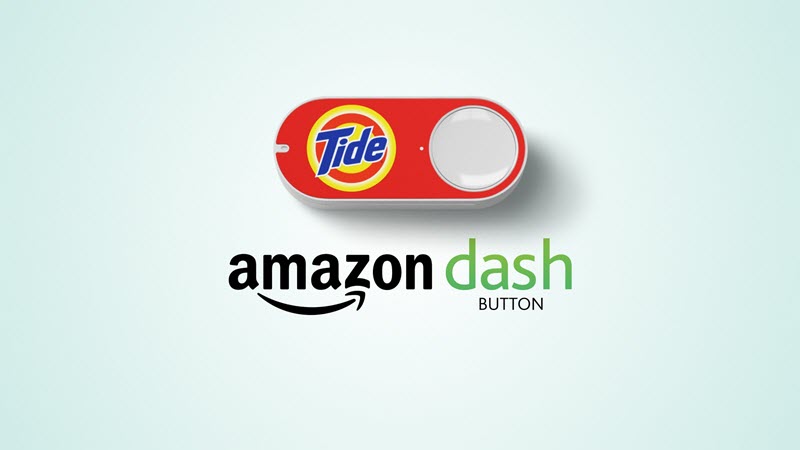
Amazon Dash is a pack-of-gum-sized button with an adhesive strip. It connects to your Amazon mobile app, and allows you to order a pre-chosen product in a predetermined quantity, just by pushing a button. While it might seem to be a solution to a problem we don’t actually have, the genius of Dash is that it makes doing business with Amazon significantly easier.

How much easier? As Mary Nahorniak of USA Today explains:

Parents, imagine changing a dirty diaper at 2 a.m. and realizing you’re dangerously low on diapers. You may already use Amazon services to get a pallet (yep, buy enough of them, and they come in pallets) of diapers at regular intervals. But if you don’t already subscribe, or you’re going through them faster than you planned, all you have to do is hit the Dash button on the changing table when you notice there are only a few left, and they’ll be on your doorstep in two days. No further thought or energy required.

Sure, it’s not that hard to pull out your phone, open the Amazon app, search for the item, add it to your cart and check out — but that’s already four more steps than simply pushing a single, physical button. And that’s assuming you’re already an Amazon member with your credit card information and address saved — if not, add “hunting down your wallet” to the list of steps. If you’re not already an Amazon customer or ordering from another online service, you’re headed for the store, a trip you might not have otherwise been making.

I will let others ponder the significance, positive or negative, of this development (although I share Ian Crouch‘s disappointment that there is no Cheetos button). 

As a sales trainer, I look for sales lessons, and there’s one here. Amazon Dash gives us a dandy question to ask: how can we make it easier for our customers to do business with us?

[bctt tweet=”When you deliver a bound proposal, give the client an extra, loose copy of the signature page.”]

Sales Tip
3 Ways for Media Salespeople to Make It Easier

1.  Make it easier to sign. Kimberly Alexandre of the Center For Sales Strategy laments that many proposals don’t have an obvious place to sign, and recommends making sure there’s a dotted line. Great advice, but I’ll go her one better: When you deliver a bound proposal, give the client an extra, loose copy of the signature page. That way they don’t have to tear the whole thing apart to give you the John Hancock.

2. Make it easier to communicate. Listen to your voice mail messages before returning a client’s call. Seriously. Many clients over 40 (and that’s likely most of yours) still leave messages because they want you to hear them. Getting a return call from an AE who hasn’t bothered to listen forces them to repeat the whole thing. They don’t like this.

3. Make it easier to decide. Skip the “Good, Better, Best” 3-option proposal and give the prospect one well-thought-out recommendation. As Jill Konrath points out, “the more decisions a prospect has to make, the tougher it is to get them to move.” Your overwhelmed, time-deprived clients will appreciate the fact that you did the thinking for them.

These are small steps, but little hinges can swing big doors.

[reminder]What are some ways you’ve made it easier for your customers to buy from you?[/reminder]

h/t pdxknitterati

Does Relentless Advertising Work?

One answer to this question comes from a study conducted a few years ago by the Stanford University School of Medicine and Packard Children’s Hospital.

child and fast food -- result of relentless advertising
Photo by Andrey Armyagov/dpc

According to AdAge.com, kids 3 to 5 years old were fed two sets of identical foods — some in McDonald’s wrappers and some wrapped in plain paper.

They overwhelmingly preferred the stuff when it came with a Mickey-D’s logo.

“Each child was given chicken nuggets, a hamburger and french fries from McDonald’s, and baby carrots and milk from the grocery store… With one exception, significantly more children said the McDonald’s-labeled product tasted better.”

McDonald’s spends an enormous amount of money to advertise to children, and apparently they have purchased brand loyalty beginning at a very early age. If you’ve ever driven past a McDonald’s at lunchtime with a car full of kids, you’ve seen brand loyalty translate into sales. And although they’ve hit some bumps in the road recently, they’ve got a 60-year track record of sales dominance — without question, they belong in the advertising training textbook.

McDonald’s has enough money to be seen and heard just about everywhere; the rest of us have to be more selective in choosing market segments and media opportunities we can afford to dominate. But even without a huge marketing budget, you can still follow the basic principles that have kept McDonald’s at the top of their category:

1. Have a consistent theme and spokesperson — the Golden Arches logo has been there forever, and Ronald McDonald has been a significant part of the marketing effort for decades.

2. Establish a long-term plan, and stick with it. The most successful markets map out a year at a time, and they don’t cancel their ads after a bad weekend.

3. Make an offer. A small portion of McDonald’s advertising is for image, but most of it gives the target consumer a specific benefit — a coupon, a new product, a movie tie-in — for doing business with them today.

[bctt tweet=”The basic techniques for generating action haven’t changed. Start early, keep going.”]

It takes careful planning, patience, and money to establish a dominant position in your market. Attention spans are shorter than they’ve ever been.

But the basic techniques for gaining the consumer’s attention, interest, desire, and action haven’t changed. Start early, keep going.

[reminder]