Bad Advertising Advice From the Wall Street Journal

How assertive should your advertising be?  

 

Your advertising should be as assertive as a drill sergeant
Photo by Christos Georghiou

According to Alina Dizik of the Wall Street Journal*, not very assertive at all.

Dizik’s recent column* points to a study conducted by three researchers at the University of Central Florida. 

The researchers showed magazine advertisements to a total of more than 1,000 participants in a series of seven studies; 72% of the advertisements used assertive language. Responses measured how much people enjoyed the ads, their opinion of the brand and their spending intentions. The participants included consumers who felt committed to liking particular brands and others who didn’t.

In one experiment, participants were asked how much of a $25 gift card they would spend on a brand in one of the ads. Those who saw an assertive ad chose to allocate $7 of the gift card to the brand on average, compared with $14 for those who saw a nonassertive ad.

The best purchasing results came from ads that were “informative and hint at action” by the consumer, Dr. Zemack-Rugar says.

From these experiments, UCF Assistant Professor Yael Zemack-Rugar concludes that consumers don’t like to be told what to do. She recommends softening assertive language. “Now is a good time to buy,” she says, is likely to work better than “Buy now.”

The problem here is that the research measured what a pre-selected panel in artificial circumstances told the researcher they liked and intended to do — not what consumers actually do in real life. 

People being interviewed often say they want one thing and then buy or do the complete opposite.

Example? Compare the polls before the 2016 Presidential Election to the actual result. 

How does a strong call-to-action affect real-life consumer behavior? 

Google recently tested the results of TV advertising with and without a call-to-action end tag. Working with the manufacturers JBL and Dyson, they ran A/B tests in which some ads gave explicit instructions (such as “search Dyson V6 on Google”) and others had no CTA.

Result?

In the TV ads we tested, both Dyson and JBL saw a significant increase in search queries as a direct result of the custom CTAs prompting viewers to search for their products. Twenty-seven percent of all JBL Xtreme queries that happened in the five minutes after the spots aired can be attributed to the custom TV end tag, which generated 1.27x more searches than control ads.

In the case of Dyson, 24% of all queries that occurred in the five minutes following the spots can be attributed to the custom “Search Dyson V6 on Google” messaging, generating 1.4x more searches than control ads. “The 24% lift was much higher than we would have thought given that the only thing we were doing was adding the CTA to the end of the ad. Knowing that as a best practice was surprising and really helpful moving forward,” said Rachel Kaplan, associate marketing manager at Dyson.

Is it possible that an assertive message will offend some consumers? Sure. But there’s a long history of customers complaining about the advertising as they hand money to the merchant. 

Ultimately, you need to decide if you want good feelings or tangible results. As David Ogilvy once said, “Don’t tell me you liked the ad. Tell me you bought the product.”

If you want your customers to take action, tell ’em what to do.

[reminder]

*A tip of the hat to Brandon Miles of WBKO in Bowling Green for alerting me to this article.
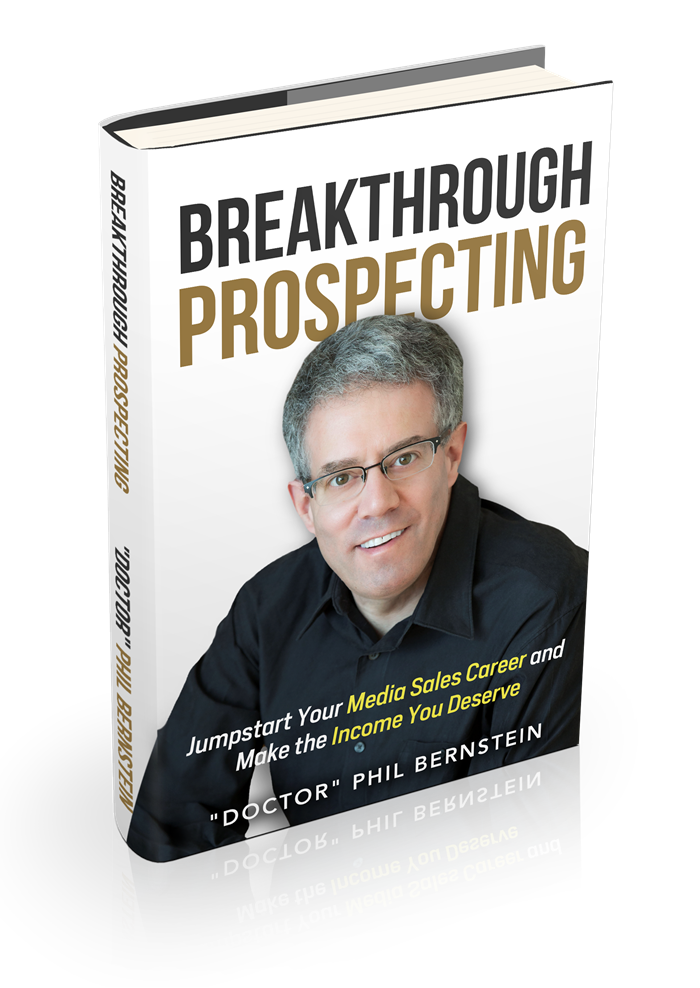
And the Winner Is…

For those who missed the announcement, I’ve got a sales book coming out in a few weeks. The folks on my email list had a chance to vote for three possible covers. And the winner is…

Radio TV Advertising Sales Book Beyond Prospecting

I got lots of votes by email, and on Facebook, Instagram and LinkedIn. All three finalists had their fans. In a three-way race, Cover #1 (above) got well over 50% of the votes. 

Breakthrough Prospecting: Jumpstart Your Media Sales Career and Make the Income You Deserve will be a digital-only release for $14.95. I’ll make it available to my mailing list first, and at an insider’s discount price of $9.95, for one week only.

If you’re reading this as a blog post online and aren’t yet on my email list, you can sign up on this page — look down below for the signup form. I’ll let you know when it goes on sale and what the deadline is for the discount.

Thanks to everyone who voted. Stay tuned!

Driving and Your Phone: Is Hands-Free Risk-Free?

Salespeople and sales managers spend a lot of time on the phone. And we spend a lot of time driving.

The invention of the cell phone meant we could talk on the phone while we drove – in fact, the first cellular phones were promoted as “car phones.”

As crash data came in to highway safety experts and insurance companies, it became clear that hand-held cell phones were creating a real danger on the roads. Now, some states ban driving while using a hand-held phone, and other state legislatures are considering doing the same.

Hand-free systems were expected to take care of this problem. If both hands are on the wheel, you should be able to talk on the phone and drive safely, right?

Salespeople are distracted drivers
Photo by Ivanko80

Wrong.

A series of studies have demonstrated talking on the phone with a hands-free device is just as dangerous as using a hand-held device.

Scientists at the University of Sussex, in a driving-simulation study with 60 volunteers, found that drivers who were engaged in conversation with an out-of-car voice took longer to respond to events such as a pedestrian stepping off the curb or the appearance of an unexpected vehicle.

The study indicated that such “conversations can cause the driver to visually imagine what they are talking about. This uses a part of the brain normally used to watch the road.”

Dr. Graham Hole of the University of Sussex put it this way: “The only safe phone in a car is one that’s switched off.”

The Washington Post brought in Adam Savage and Jamie Hyneman of the Mythbusters show to test the idea. Here’s what they found:

“In a simulation involving 30 drivers, exactly two managed to pass a driving test while talking on a cellphone. No surprise there.

But then it got interesting. Of the 15 drivers using handsets: one passed, five failed by driving the wrong way and nine failed by crashing.

Of the 15 talking hands-free: one passed, six failed by driving the wrong way, and eight failed by crashing.

[Watch the video here.]

The statistical difference, the MythBusters said, is negligible. It is no safer to use a hands-free device while driving than it is to use a handset…

…The National Safety Council says the issue is more mental than physical. Drivers talking on a cellphone, the organization says, can overlook up to 50 percent of what’s around them while looking out the windshield. And activity in the area of the brain that processes moving images is reduced by up to a third when talking or listening to the phone while driving.”

Other studies indicate that voice-operated text messaging is just as dangerous as typing out the text as you drive. And as more new cars have rolled off the assembly lines with these devices, crashes nationwide have risen. So have auto insurance rates.

What does this mean for us as salespeople?

We may believe that we’re the exceptions – that we can safely drive while talking hands-free on the phone.

We’re not, and we can’t.

The only safe phone in your car is one that’s switched off.

[reminder]

How to Manufacture Sales From Manufactured Holidays

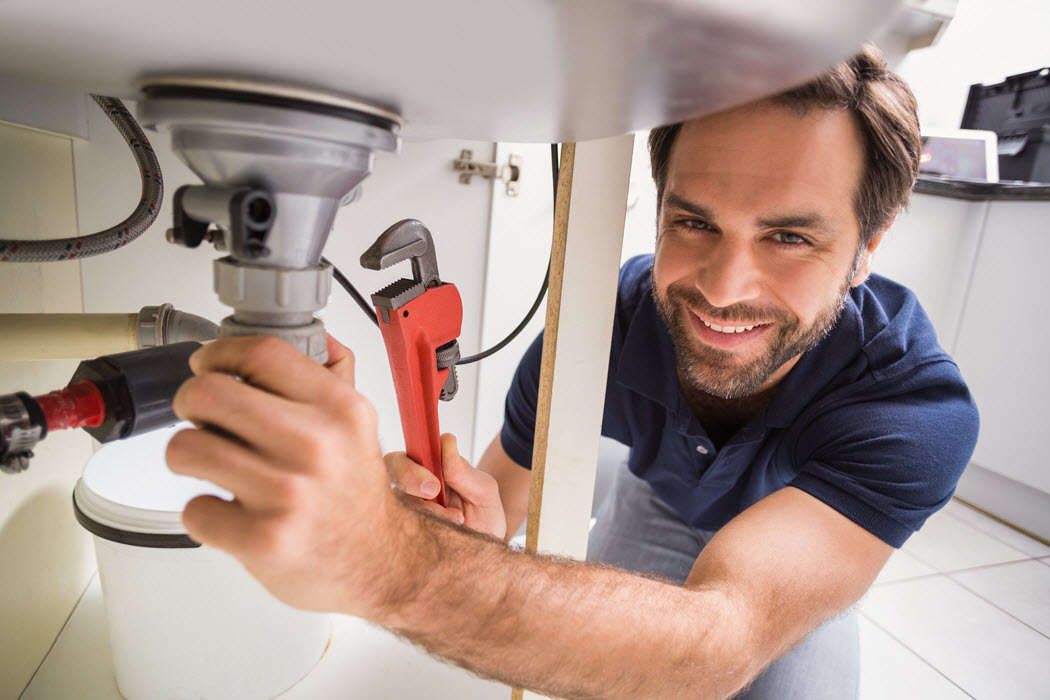
I’m sorry to report that somehow, you missed National Hug a Plumber Day on April 25.  Don’t worry.  There are many other holidays you can celebrate…and profit from.

Salespeople can celebrate holidays like hug a plumber day
Photo by WavebreakmediaMicro

Hug a Plumber Day is one of thousands of “holidays” declared by corporations, civic organizations and individuals looking for a little extra attention. They are often covered by media outlets looking to fill holes in a slow news day.

National Public Radio’s Planet Money Podcast recently devoted an episode to the business of manufactured holidays:

These events are also great opportunities for enterprising media salespeople to make contact with potential advertisers. 

The most comprehensive list of events is the Chase Calendar of Events, a 700-page doorstop of a reference guide. Planet Money’s Kenny Malone called it “the Oxford English Dictionary of holidays.” The 2017 edition goes for $75 on Amazon, and there’s a downloadable Kindle edition as well.

Money Saving Tip: This is one of those cases where an older edition can serve you just fine. The 2015 version  has the vast majority of the holidays shown in the new version. As I write this, used copies are available on Amazon starting at about three bucks plus shipping, 

There are also free online resources like National Day Calendar

Hug a Plumber Day will come around again in April, 2018. This gives you a ready-made excuse to start a conversation with your local plumbers early next year.

In the meantime, here are some August “holidays” you can be working on now.

  • August 4 will be International Beer Day — create a promotion with a brewpub!
  • Also within August: National Bargain Hunting Week (perfect for any retailer on your list); National Cleanse Your Skin Week (got an aesthetic medicine clinic?); and National Motorcycle Week
  • August is National Eye Exam Month, National Golf Month, and National Peach Month — if you’ve got an optometrist or Lasik doctor, golf course or sporting goods store, or grocery store, this gives you something to talk with them about.

Finally, a day you should mark on your calendar, even if it won’t make you any money: November 6 is Broadcast Traffic Professionals Day. This would be an excellent time to take your Traffic Department to a nice lunch. A really nice lunch. Believe me, they deserve it. 

[reminder]What’s the craziest excuse for a promotion you’ve ever seen?[/reminder]

How to Recover From a Massive Screwup

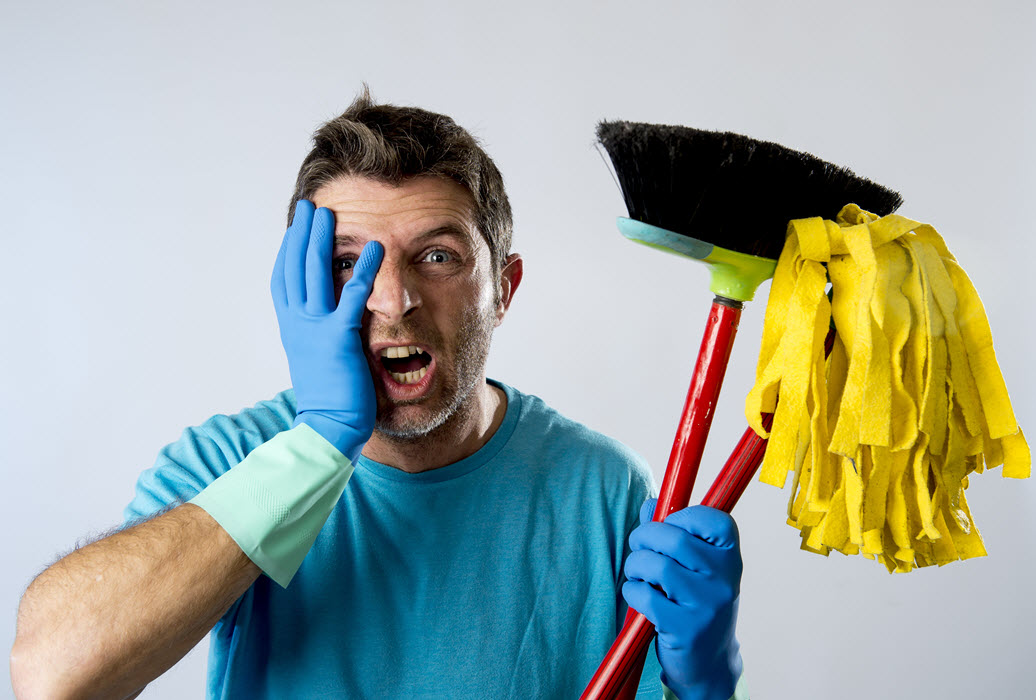
Something bad is going to happen. Maybe not today, or tomorrow, or next week. But if you sell advertising for a significant length of time, somebody will screw up and you’ll have to clean up the mess.

salespeople have to mop up the mess
Photo by Focus Pocus LTD

The dust has finally settled on the United Airlines “doctor dragged off the plane” affair of April 2017. I won’t focus here on the incident itself — pretty much everyone agrees that what happened to David Dao was outrageous. 

For those in the media sales business, the real lessons are in United Airlines’ response. 

It is unlikely that your company will ever administer a physical beating to a paying customer. But you will one day check your email and find out that something’s gone badly wrong. Such as:

  • Your client’s commercial didn’t run the week leading into their biggest sale of the year.
  • The wrong spot ran for a month — or longer — before somebody caught it.
  • The production department missed a crucial deadline.
  • Your company’s credit office — which is now a computer chip in a Cheyenne, Wyoming basement — denied credit to your big new direct account.

Handled correctly, a service failure can sometimes increase customer loyalty — a phenomenon known as the “Service Recovery Paradox”. It’s tricky to accomplish, and requires some training. 

Customer support expert Len Markidian points to Disney’s approach to service failures:

Their approach to service recovery is a five-step process, easily remembered with the acronym H.E.A.R.D:

  • Hear: let the customer tell their entire story without interruption. Sometimes, we just want someone to listen.
  • Empathize: Convey that you deeply understand how the customer feels. Use phrases like “I’d be frustrated, too.”
  • Apologize: As long as it’s sincere, you can’t apologize enough. Even if you didn’t do whatever made them upset, you can still genuinely be apologetic for the way your customer feels (e.g., I’m always sorry that a customer feels upset).
  • Resolve: Resolve the issue quickly, or make sure that your employees are empowered to do so. Don’t be afraid to ask the customer: “what can I do to make this right?”
  • Diagnose: Get to the bottom of why the mistake occurred, without blaming anyone; focus on fixing the process so that it doesn’t happen again.

It’s fair to say that in the first 24-48 hours after the incident, United didn’t bother to Hear or Empathize. They eventually got around to Apologizing and Diagnosing. They are now attempting to Resolve, but there will be lots of lawyers involved.

If you’re dealing with an angry client, and there’s even a small chance that the situation is your station’s fault, here are some “United Lessons” to heed:

  1. If you’re not sure what happened, find out before expressing your opinion. United dug itself a big hole early in the process by issuing statements that blamed the customer. No law says you have to issue a verdict right away. Promise the client you’ll get to the bottom of it… and then get to the bottom of it.
  2. Make a point of accepting all of the blame, even if it hurts. If you think your customer’s partially at fault, resist the urge to say so.  If your client goes from angry to angry-and-defensive, you lose. 
  3. Don’t point fingers. United CEO Oscar Munoz could have pointed out that the incident didn’t happen on a United Airlines flight — the United Express flight was operated by Republic Airways, a separate company. The flight crew and gate agents were Republic employees, not United employees; the people who dragged Dr. Dao off the plane worked for the Chicago Aviation Police. To his credit, Munoz understood that regardless of the legalities, this was a United Airlines problem. Your client won’t care if it’s the fault of Production, Accounting, or “Corporate.” If it happened at your station, and you’re the Account Executive,  it’s your problem to fix.
  4. Deliver the message in language your customer uses. If your response sounds like corporate-speak it will come off as insincere. When Munoz said, “I apologize for having to re-accommodate these customers,” he lost everybody.
  5.  Make it right — give the client much more in return than they lost — and do it quickly. United took three days to offer refunds to the passengers of Flight 3411, and lost the chance to generate some goodwill. If you’re not sure what will make the client happy, ask. 
  6. Figure out what caused the problem, and how you can prevent it from happening again. United has announced some significant policy changes to make sure that paying customers already in their seats can stay. If you don’t have the ability to change policies, you may have to get creative.

 Bad things happen to even the best salespeople. With the right mindset, you can correct a big mistake and position yourself as a true professional.

[reminder]What’s the worst customer service fail/mess you’ve ever had to clean up? What did you do to resolve it, and what did you learn from the experience?[/reminder]