According to Alina Dizik of the Wall Street Journal*, not very assertive at all.
Dizik’s recent column* points to a study conducted by three researchers at the University of Central Florida.
The researchers showed magazine advertisements to a total of more than 1,000 participants in a series of seven studies; 72% of the advertisements used assertive language. Responses measured how much people enjoyed the ads, their opinion of the brand and their spending intentions. The participants included consumers who felt committed to liking particular brands and others who didn’t.
In one experiment, participants were asked how much of a $25 gift card they would spend on a brand in one of the ads. Those who saw an assertive ad chose to allocate $7 of the gift card to the brand on average, compared with $14 for those who saw a nonassertive ad.
The best purchasing results came from ads that were “informative and hint at action” by the consumer, Dr. Zemack-Rugar says.
From these experiments, UCF Assistant Professor Yael Zemack-Rugar concludes that consumers don’t like to be told what to do. She recommends softening assertive language. “Now is a good time to buy,” she says, is likely to work better than “Buy now.”
The problem here is that the research measured what a pre-selected panel in artificial circumstances told the researcher they liked and intended to do — not what consumers actually do in real life.
People being interviewed often say they want one thing and then buy or do the complete opposite.
Example? Compare the polls before the 2016 Presidential Election to the actual result.
How does a strong call-to-action affect real-life consumer behavior?
Google recentlytested the results of TV advertising with and without a call-to-action end tag. Working with the manufacturers JBL and Dyson, they ran A/B tests in which some ads gave explicit instructions (such as “search Dyson V6 on Google”) and others had no CTA.
Result?
In the TV ads we tested, both Dyson and JBL saw a significant increase in search queries as a direct result of the custom CTAs prompting viewers to search for their products. Twenty-seven percent of all JBL Xtreme queries that happened in the five minutes after the spots aired can be attributed to the custom TV end tag, which generated 1.27x more searches than control ads.
In the case of Dyson, 24% of all queries that occurred in the five minutes following the spots can be attributed to the custom “Search Dyson V6 on Google” messaging, generating 1.4x more searches than control ads. “The 24% lift was much higher than we would have thought given that the only thing we were doing was adding the CTA to the end of the ad. Knowing that as a best practice was surprising and really helpful moving forward,” said Rachel Kaplan, associate marketing manager at Dyson.
Ultimately, you need to decide if you want good feelings or tangible results. As David Ogilvy once said, “Don’t tell me you liked the ad. Tell me you bought the product.”
If you want your customers to take action, tell ’em what to do.
[reminder]
*A tip of the hat to Brandon Miles of WBKO in Bowling Green for alerting me to this article.
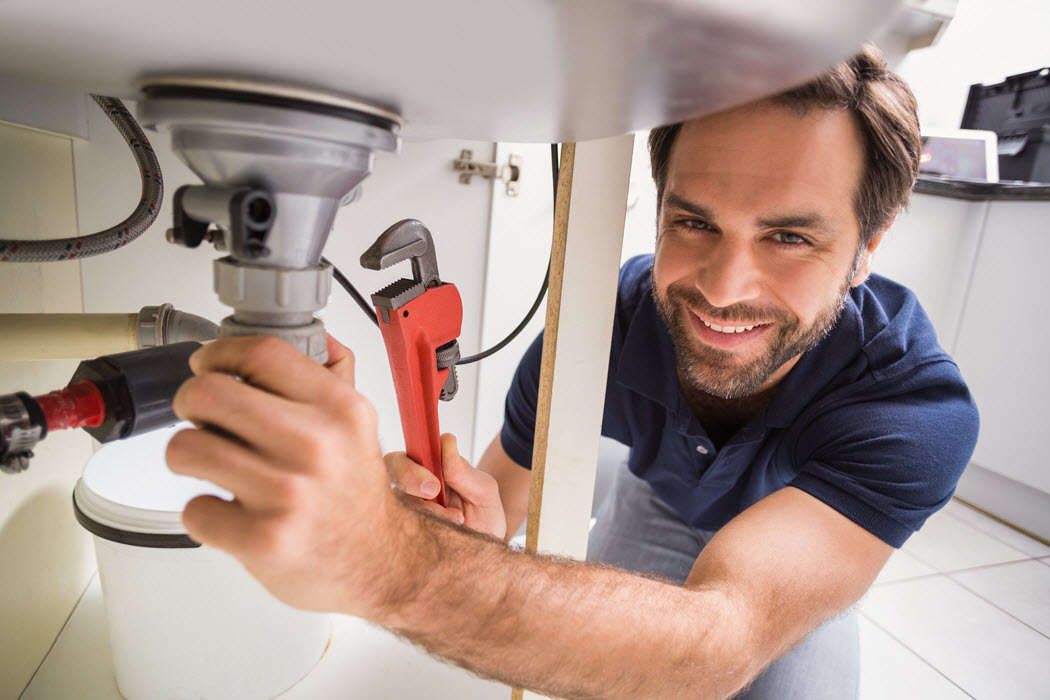
I’m sorry to report that somehow, you missed National Hug a Plumber Day on April 25. Don’t worry. There are many other holidays you can celebrate…and profit from.
Photo by WavebreakmediaMicro
Hug a Plumber Day is one of thousands of “holidays” declared by corporations, civic organizations and individuals looking for a little extra attention. They are often covered by media outlets looking to fill holes in a slow news day.
National Public Radio’s Planet Money Podcast recently devoted an episode to the business of manufactured holidays:
These events are also great opportunities for enterprising media salespeople to make contact with potential advertisers.
The most comprehensive list of events is the Chase Calendar of Events, a 700-page doorstop of a reference guide. Planet Money’s Kenny Malone called it “the Oxford English Dictionary of holidays.” The 2017 edition goes for $75 on Amazon, and there’s a downloadable Kindle edition as well.
Money Saving Tip: This is one of those cases where an older edition can serve you just fine. The 2015 version has the vast majority of the holidays shown in the new version. As I write this, used copies are available on Amazon starting at about three bucks plus shipping,
Hug a Plumber Day will come around again in April, 2018. This gives you a ready-made excuse to start a conversation with your local plumbers early next year.
In the meantime, here are some August “holidays” you can be working on now.
August 4 will be International Beer Day — create a promotion with a brewpub!
Also within August: National Bargain Hunting Week (perfect for any retailer on your list); National Cleanse Your Skin Week (got an aesthetic medicine clinic?); and National Motorcycle Week
August is National Eye Exam Month, National Golf Month, and National Peach Month — if you’ve got an optometrist or Lasik doctor, golf course or sporting goods store, or grocery store, this gives you something to talk with them about.
Finally, a day you should mark on your calendar, even if it won’t make you any money: November 6 is Broadcast Traffic Professionals Day. This would be an excellent time to take your Traffic Department to a nice lunch. A really nice lunch. Believe me, they deserve it.
[reminder]What’s the craziest excuse for a promotion you’ve ever seen?[/reminder]
A few years ago I met with the owner of an upscale ladies shop in a southeastern state. The store sold a wide variety of women’s clothing, but the biggest revenue category was shoes.
Apparently, ladies buy shoes. Who knew?
Photo by MoustacheGirl
[UPDATE 4/14, 1PM PACIFIC]: As Susan Rich points out in the comments below, this technique can be even more powerful in Instagram.]
Our conversation had turned to social media. I asked the owner how effective his Facebook page was as a marketing tool. “It’s okay, I guess,” he said. “But I’ve got a much better way to use Facebook.”
That got my attention.
“How do you do that?” I asked.
“My customers all have smartphones, which means they have a camera. Whenever a customer tries on a pair of shoes and decides to buy them, we ask if they’d like us to take their picture — with their phone. Women like to show off their new shoes, so most of them say yes.”
“Do they let you post those pictures on your Facebook page?” I asked.
“Some do, but that doesn’t really matter,” he replied. “The important thing is that as soon as they go home, they post the photo on their own Facebook page. And they usually mention that they got the shoes at my store.
So we just got a free Facebook ad, and it gets seen by 500 of her friends. Two or three times a week, someone will walk into my store and ask to try on a pair of shoes their friend posted on Facebook.
All of this costs us nothing – we don’t even pay for the camera!”
The store owner had stumbled on a great way to use Facebook in its most effective form – to accelerate word-of-mouth.
The shoe store owner had come up with a way to beat the system on a small scale. It still works.
It’s a technique that can be used in a variety of consumer settings:
A furniture store can take pictures of a customer’s new couch, in the customer’s home.
–
A car dealer can shoot a photo of a happy couple standing next to the new SUV they just bought.
–
A window company can take pictures of a homeowner posing in front of her newly-installed windows.
The key is to take the picture with the customer’s phone, not yours.
Rather than begging people to “like” your Facebook page, you can intersect with existing consumer behavior. Happy customers love the show off the things they just bought… on Facebook.
Who knew?
[reminder]What’s your best traffic-building social media hack?[/reminder]
I wish advertisers always accepted my advice and did what I told them. Alas.
Photo by pathdoc/pdc
There are some furniture store owners and auto dealers who think they know more about advertising than I do.
Sometimes they’re right. But not often. I once considered telling a funeral director that I’d let him embalm the bodies as long as he let me write the copy.
Didn’t say it. Lost my nerve.
The Client Who Won’t Listen is a topic of much conversation among well-trained advertising salespeople.
You’re held accountable for results — if the advertising doesn’t deliver, you be blamed. But you’re also on commission — if the client doesn’t run with you, you don’t get paid.
How do you handle a client who won’t listen?
As Dan O’Day points out, much depends on how your customers perceive you:
If you want to provide your clients the most for their money, you need to:
1. Educate yourself to the point where you do have genuine expertise in radio advertising.
2. Make that expertise clear to the client at the beginning of and throughout your entire relationship.
As an Account Executive, I told stories about other clients who’d used my advice and got great results. I made a point of talking about the books I’d read, the CD’s I’d listened to, and the seminars I’d attended.
I sent a monthly email newsletter to my clients that talked about marketing, not about my stations.
I started a blog in 2008 — the one you’re reading now.
In spite of the credentials I built up and trumpeted at every opportunity, I would sometimes find myself sitting across the desk from a business owner who was determined to write his own laundry-list commercial and run it on my competitor if I didn’t like it.
If you run into a situation like that, you have two choices:
1. Refuse the business. Tell the client that you would love to have the business, but cannot accept the order when you don’t think it will accomplish their goals.
2. Give the client the best advice you can, and then take the money.
Here’s the approach I settled on:
If the order was a little one, I’d refuse it. I set a minimum dollar figure (my “Evangelista Number“) below which the business wasn’t worth my time. If it was below the Evangelista Line, I was happy to let my competitor suffer.
If the dollar figure was substantial, and the only way to get the order was to air the ad my the customer insisted on running, I’d accept it — but only after saying this:
Advertising Sales Tip:
The “Two Responsibilities Gambit”
Mr. (or Ms.) Client, I have two responsibilities. The first one is to my station and my own checking account, and it’s this: if you want to give me your money, I am prepared to take it.
But I also have a responsibility to you to tell you if I think your plan isn’t going to work. And I don’t think it’ll work. If you still want to go ahead and do it, let’s go ahead.
Sometimes the campaign failed and the client ultimately agreed to try it my way. Results, and the customer’s perception of my expertise, generally improved when that happened.
Sometimes the campaign failed and the client just stopped advertising. In that case, I’d shrug and move on to someone else who was willing to listen to me.
In a perfect world, you could walk away every time a client wanted to advertise the wrong way.
Unfortunately, the world ain’t perfect.
You have bills to pay, and a budget to hit. Winning the argument might feel good, but allowing your competition to cash your commission check does not.
Under the right circumstances, the Two Responsibilities Gambit will allow you to cash the check and still sleep at night.
[reminder]What’s your best strategy for dealing with a client who won’t listen?[/reminder]