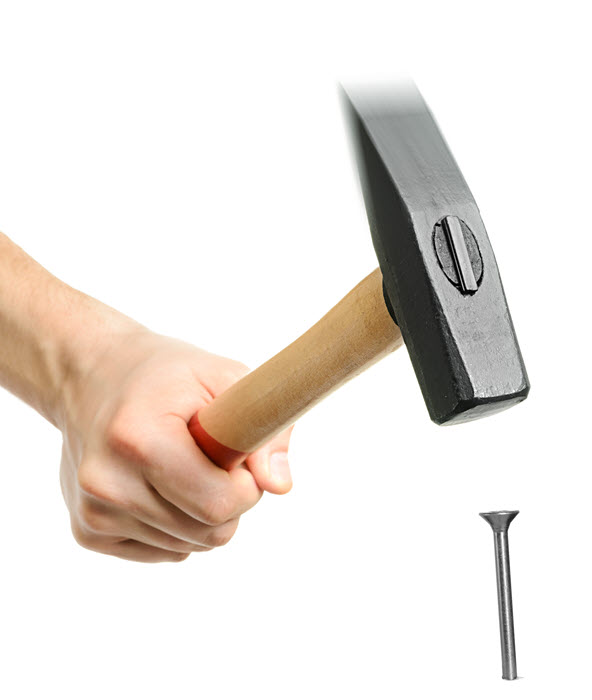
“A bed with a single nail sticking up will penetrate you the second you lie down. But a thousand nails can’t penetrate anything. The pressure of each nail is completely diffused by all the others around it.” — Bill Schley
Photo by Полина Выдумчик
If you spend any time watching television or listening to the radio, you won’t have to wait long to encounter a “laundry list” commercial — a 30- or 60-second recitation of claims:
A law firm lists every single area of practice, in the hope that one of them will interest a potential client.
A restaurant attempts to cram the entire menu into the commercial.
A dental practice wants the public to know that “we do it all!” — so checkups, implants, and laser treatments all get a mention.
When I meet an advertiser who’s running a campaign like this, I’ll ask how this “bed of nails” approach is working. In almost all occasions, it’s not working. The sales message is lost in the clutter.
[shareable]The best way to penetrate your target’s mind with a sales message is to pick a single nail.[/shareable]
For six years during my radio sales days, my biggest client was a Portland auto dealer. I wrote all of the commercials for all seven of his stores. And for most of the time during our relationship, we fought about the copy.
The dealer wanted lots of information in each commercial. He wanted a used car offer, and a new car offer, a mention of his service department, and, of course, the friendly staff.
I wanted one offer and a call to action.
Photo by ashumsky
For six years, the auto dealer fought to put more into the copy, and I fought to take details out. One day he got fed up with me and said, “Why don’t you just have the announcer talk faster?”
I said, “Joe, with our software I can make the announcer talk faster by pressing a button. But I can’t make the audience listen any faster.”
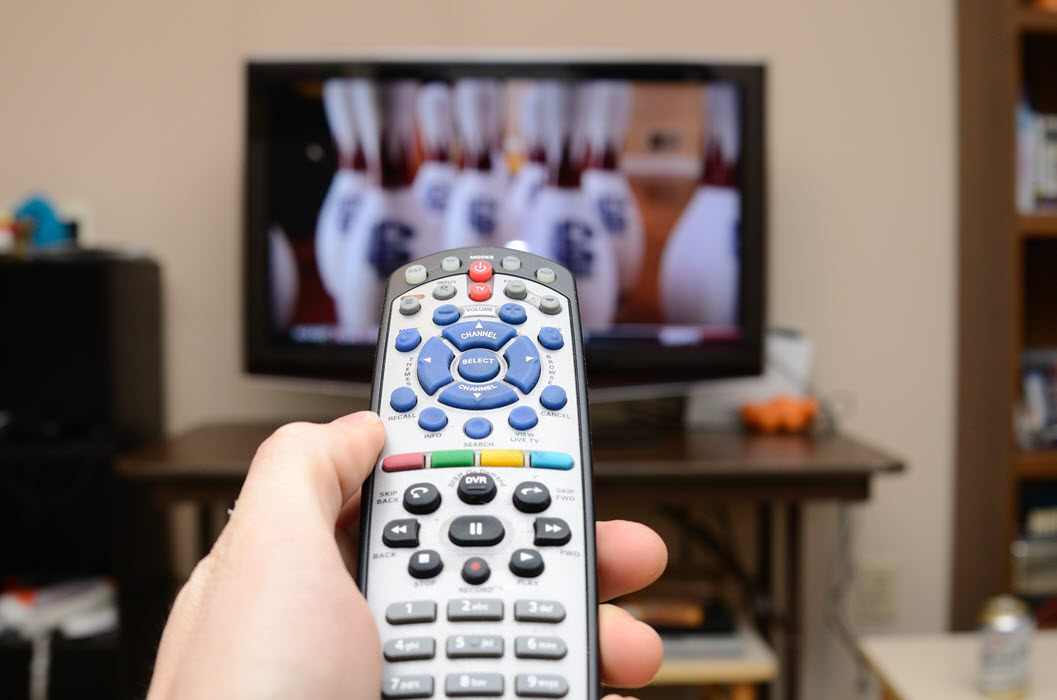
When you write a script for radio, television, or online video, think of each detail as if it’s a tennis ball.
If you toss one ball to a listener or viewer, they can probably catch it.
But if you fling a whole bucket of balls at your audience, they’ll miss ’em all.
Photo by WavebreakMediaMicro
When too much stuff flies at their heads, their minds shut down. It’s too much work.
Advertising’s the same way. Your targets are busy, tired, and distracted. They don’t have the energy or desire to wade through a bunch of details to find the one that matters to them. Too much detail makes the mind shut down.
Want an example of one-tennis-ball marketing? Think of McDonald’s.
As a restaurant, you may love it or hate it. But as a marketing company, McDonald’s has a brilliant, long-term track record of success. They know how to motivate a customer to get off the couch, drive past Burger King, Wendy’s and Taco Bell, and spend their money with them.
McDonald’s has a lot on their menu. Big Macs. Quarter Pounders. Chicken McNuggets. Egg McMuffins. Fries. Coffee.
But when you see a McDonald’s ad, it won’t be about the Bic Mac and the Quarter Pounder and the Chicken McNuggets and the Egg McNuggets.
It’ll be 30 seconds about a single product. One thought per commercial. Like this:
“The narrower you focus, the wider your message goes.”
“The more features you show, the less you are seen. The more details you provide, the more vaguely you communicate…
By capturing undisputed leadership in a single important benefit, you are most likely to be noticed, remembered, and associated with a series of other great benefits, made all the more credible because you have reached prominence in one meaningful specialty.”
Your goal, as an advertiser, as a business, is to determine what your one thing is…
Try to be as specific as possible. Think about your business, your company, and what separates you from the competition. For some of you reading this, the answer is obvious. Your company has some distinct advantage that makes you the better choice. For most reading this, the answer isn’t so obvious. You will struggle trying to pinpoint your ‘one thing.’
Answering these types of question should help you:
What do we do that no one else in our category does?
What can we claim that no one else can claim (or hasn’t yet)?
What special skill do we possess?
What piece of equipment do we have that no one else in our competitive landscape has?
What line do we carry exclusively in our market?
What’s our singular focus?
What’s our special offer?
What major designation have we achieved that none of our competitors have?
Simply put, why should someone come see you vs. anyone else in your competitive landscape?”
With so many things on their minds and so many distractions, your target won’t search the bed for the nail they’re interested in. Pick a single nail, and start pounding.
That’s how The Crow Road by Iain Banks opens. The narrator has returned home for a funeral; Chapter One begins in the chapel of a crematorium in Scotland.
Although this is from a novel and not a commercial, it’s a great example of an opening line that compels the reader — or listener, or viewer — to stick around to hear what you’ve got to say.
In a print ad, it’s the headline. In a radio or television commercial, it’s the first sentence of your ad. Copywriting guru Dan O’Day calls it the “commercial for the commercial.”
If your opening line is good enough, the viewer or listener will stay put to hear the rest of your sales message.
The opening line has to grab the your target’s attention, and give them a reason to continue to pay attention. You either need to surprise them, intrigue them, or offer them, up front, a significant benefit.
If all you’ve got to say is “Family owned and operated since 1991,” they’ll change the station.
Photo by SeanPavonePhoto
That’s Copywriting Lesson #1 of The Crow Road. The first line was so good that I absolutely had to keep reading until I found out exactly how Grandma blew up. It took 22 pages to get to the detonation.
I was hoping for an epic blast, but the actual grandmother-explosion turned out to be a minor pop.
Before I got to Page 50, I put the book down. I never opened it again.
This brings us to Copywriting Lesson #2: Your opening line is a promise, and you’d better deliver on it.
As you read this article, somebody is watching television somewhere in the United States. The show they’re watching has just gone into a commercial break. In the next five seconds, they will decide to either
1. Pay attention to the first ad,
or
2. Tune the whole thing out and update their Facebook status.
If it’s your commercial they’re watching… how strong is your opening line?
[reminder]What’s the best opening line you’ve ever seen or heard?[/reminder]
I was a radio salesperson at the time. One of my biggest clients was Beaverton Mitsubishi, owned by a guy named Joe Khorasani.
Joe had a temper that could fairly be described as “volcanic”. Fortunately, Joe also had a good sense of humor.
I decided to engage in a little newsjacking — defined by Hubspot as “the practice of capitalizing on the popularity of a news story to amplify your sales and marketing success.”
I quickly wrote a script featuring Mount Khorasani, an active volcano, and created an event called “The Eruption of Savings.” Joe liked it.
We got him into the studio to record his lines, and had the commercial on the radio while the smoke was still in the air. You can listen to it below — voices are Joe and the legendary Matt Jones of iHeart Media.
The store got some extra attention, and the “Eruption of Savings” sale was a success.
I thought about Mount Khorasani the other day when I read about a disastrous attempt at newsjacking by a mattress store in San Antonio, Texas.
As a write this, the 15th anniversary of the 9/11 terrorist attacks is approaching. Someone at Miracle Mattress thought it would be a good idea to have a few laughs.
The result was the “Twin Tower Sale”, where they offered any sized mattress for a twin mattress price.
They recorded a video. Which went viral on the Internet. And not it a good way.
SAN ANTONIO – A Texas mattress company released an ad to promote a special 9/11 sale, but it quickly took an offensive turn when it imitated the World Trade Center Twin Towers falling. Miracle Mattress posted the ad on Facebook promoting its “Twin Towers Sale” for Sept.
As they began to realize what they’d stepped in, the local folks tweeted out a half-hearted apology. A day later Mike Bonanno, the store owner, posted a much stronger apology in which he hinted that heads were going to roll in San Antonio.
Although sales data is not available, I’m guessing that they didn’t sell many mattresses.
Newsjacking is a powerful tool, but you risk unleashing the power in a negative manner that can seriously harm your brand if you exploit something in poor taste like a major storm. Kenneth Cole learned this lesson the hard way when he attempted to newsjack the revolution in Egypt.
The folks at Miracle Mattress fell into one of the most dangerous traps of the form — baldly attempting to exploit a national tragedy for financial gain. They got lots of media attention, but not the kind they wanted.
By contrast “Eruption of Savings” is remembered fondly because nobody died on Mount St. Helens in 2004.
Using current events in your advertising can be a very effective strategy… if you’re careful. Before you post, take a deep breath and think through the implications.
I recently drank a $12 bottle of water. It was pretty good.
I learned of MaHaLo Hawaii Deep Sea Water in December during a tour of the Natural Energy Laboratory of Hawaii (NELHA). MaHaLo uses one of NELHA’s pipes to draw the water out of the Pacific Ocean, and then runs it through a desalinization process.
Candee Ellsworth, the Executive Director of Friends of NELHA, told us that the water is marketed primarily in Japan, where it sells for 12 bucks a bottle.
The Deep Sea Water used for MaHaLo bottled drinking water is very old. It takes between 1,200 and 2,000 years for the water to travel from the North Atlantic Ocean through the freezing Arctic currents, under the vast glaciers of Greenland, where it gathers ancient minerals that leach down from the ice.
Then it flows around and back down toward the deep channels of the Pacific Ocean. It is there, at the Water Rejuvenation Zone just off the coast of Kona, Hawaii, that the water is at its very purest. This is why Koyo USA placed its processing and bottling plants on the Kona coast of the Big Island of Hawaii…
MaHaLo Hawaii Deep Sea® Water is drawn from 3,000 feet below the surface of the Pacific Ocean. At this depth the water is very cold, about 43° F (6°C), and is safe from surface pollutants caused by industry, farming, chemicals or human waste.
Ellsworth poured us some of this precious water, and it tasted like… water. Good water, and a huge step up from Kona tap water… but water. Although the company has gotten into some trouble for its manufacturing process, Ellsworth told us that Mahalo sells every bottle it can manufacture.
Why do people pay $12 a bottle when there is much cheaper bottled water available? Because a host who serves Mahalo water can tell a story.
For similar reasons,
a collector in Greece paid $23,000 for a saltine cracker. It wasn’t just any saltine cracker — it came from the Titanic.
The story we tell ourselves is actually what is being sold. The challenge is not how to be successful, but how do we figure out how to matter. And the way we matter is by connecting people with a story. A story that resonates, a story they care about and a story they’ll tell other people.
When you are looking for a way to set a client apart from the competition, look for a story.
How was the business founded?
How is the product made?
Is there anything compellingly different that can capture the audience’s imagination?
A few years ago I met with the owner of a restaurant in Nevada. The food was good, and the family that ran the restaurant was very nice. I was struggling to find a hook until I asked the owner what dish meant the most to him. It was the quiche.
Why the quiche?
Because the family that owned the restaurant had a farm. With chickens. And every egg that went into the restaurant’s quiche came from the family chickens.
Sometimes the commercials write themselves. It did not take me long to write this one after I got back to the hotel. The ad ran for almost two years.
Recently I got an email out of the blue from a real estate guy in California, looking for help with a radio script.
photo by aleksandr/dpc
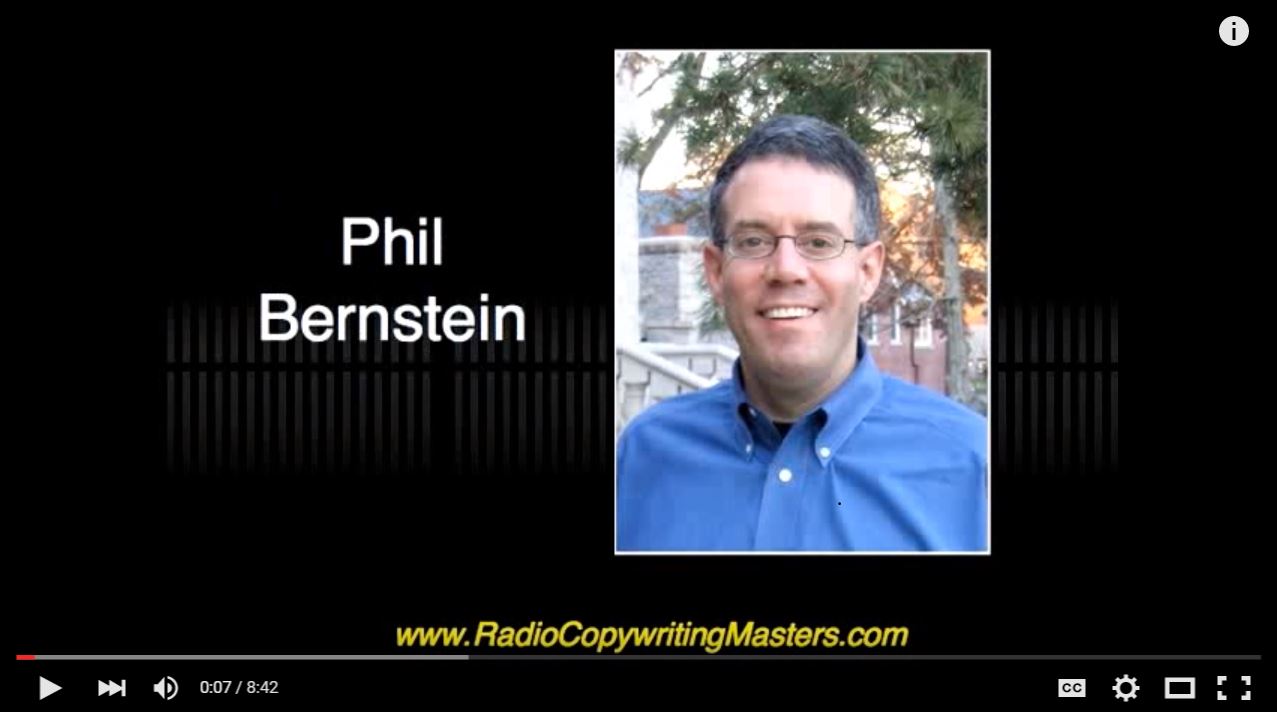
I’d never met him before, and asked how he found me. It turned out that he’d Googled “Best Real Estate Radio Ads”, and that took him to a video testimonial I’d recorded years ago after attending Dan O’Day’s Radio Copywriting Masters Class in Los Angeles.
I’d forgotten about the testimonial, but I’m reminded almost every day of the benefits that coming with being “The Salesperson Who Can Write Copy”.
5 Reasons Why You Should Be “The One Who Can Write Copy”
Your competitors can’t do it. Face it: there are a whole lot of advertising salespeople. Every day your clients and prospects are hearing from other radio, television, digital, print, and transit/outdoor sellers. If you learn to write an effective advertising message, you are likely to be the only one who does. This will immediately set you apart.
It changes the conversation. While everyone else bores your client with rankers, graphs, and fire-sale packages, you’ll be talking with them about something they care about — telling their story and making more sales.
Better Copy = Better Results = Renewals. You will talk to a lot of business people who have tried, and cancelled, lots of different media… because it didn’t work. If you bring them something that actually delivers results, they’ll stay with you forever. Renewals are where you make the real money.
Other doors will open for you. Your clients will refer you to other businesspeople they know. And the competition will think of you when they have openings at their properties. Even if you’re happy where you are, it never hurts to have other options.
It may bring you some outside income. As I became known around town as The Salesperson Who Could Write Copy, outside opportunities to write for money came my way. I was careful not to take on jobs that represented a conflict of interest — at the time I was, first and foremost, an employee of Clear Channel Radio — but over the years I picked up some nice checks on copywriting projects.
These days my time is limited, but I still take on freelance projects from time to time…because I can.
Listening to that testimonial (Dan interviewing me), I was reminded I’d spent over $2500 out of my own pocket — tuition, airfare, and hotel — to attend that class. I made a profit within a week of my return by presenting a script idea to a Portland real estate firm and banking the commission on an $18,000 new direct sale.
I’m still making money with those skills today.
You can listen to the interview here — it took place in 2007, when I was still a salesperson for Clear Channel:
[reminder]What are your best sources for copy ideas?[/reminder]