After a Huge Screw-Up, How to Handle the Aftermath

Inevitably, you or your company will screw up. Maybe today, maybe next week, maybe six months from now. How you respond will show what you’re made of.

Sales advice: take responsibility
Photo by Elnur

When Dr. David Dao was beaten and dragged off a United Express flight last April, United Airlines’ upper management very publicly botched the initial response to the incident. Their reputation has not yet recovered.

When two African-American men were asked to leave and then arrested at a Philadelphia Starbucks, that company was similarly under the microscope. Unlike United, Starbucks’ management has performed impressively.

What’s the best way to respond when things go south? Customer support expert Len Markidian points to Disney’s approach to service failures:

Their approach to service recovery is a five-step process, easily remembered with the acronym H.E.A.R.D:

  • Hear: let the customer tell their entire story without interruption. Sometimes, we just want someone to listen.
  • Empathize: Convey that you deeply understand how the customer feels. Use phrases like “I’d be frustrated, too.”
  • Apologize: As long as it’s sincere, you can’t apologize enough. Even if you didn’t do whatever made them upset, you can still genuinely be apologetic for the way your customer feels (e.g., I’m always sorry that a customer feels upset).
  • Resolve: Resolve the issue quickly, or make sure that your employees are empowered to do so. Don’t be afraid to ask the customer: “what can I do to make this right?”
  • Diagnose: Get to the bottom of why the mistake occurred, without blaming anyone; focus on fixing the process so that it doesn’t happen again.

Based on this criteria, how has Starbucks done so far? 

  • Hear: Within days of the incident, Starbucks CEO Kevin Johnson traveled to Philadelphia and met personally with the two men. He also met with Philadelphia’s mayor and police commissioner.
  • Empathize: Prior to the meeting, Johnson issued a statement saying the incident had “a reprehensible outcome.” Referring to the two men, Starbucks Chairman Howard Schultz told CBS News that “the reason the call [to the police] was made is because they were African-American.”
  • Apologize: Both Johnson and Schultz apologized publicly to the men. Johnson also did so in person.
  • Resolve: Starbucks quickly escalated the response to the highest level of the company. Schultz told Gayle King at CBS This Morning that they have asked the men, “What can Starbucks, given our resources and the capabilities we have — they have an interest in real estate — what can we do to help advise them and support their own business endeavors?…Given the resources we do have, we will provide them with a foundation of learning, and provide them with an opportunity to be part of our company, either directly or indirectly, as a result of this situation.” It’s fair to surmise that at the very least, money will be changing hands.
  • Diagnose: Starbucks has announced plans to close 8,000 company-owned stores for several hours of racial-bias training, at a cost that’s been estimated at as much as $12 million. They clearly don’t want anything like this to happen again.

Shultz also met with the store manager who called the police. Although he made it clear she is no longer with the company, Starbucks has avoided the temptation to blame the whole thing on her. 

Here are some tips to follow the next time you or your company disappoints a customer:

  1. Make a point of accepting all of the blame, even if you believe your customer is partially at fault.
  2. Don’t point fingers. Starbucks didn’t publicly blame the two men for insisting on staying, or the police for making an arrest. Your client doesn’t care that Corporate changed the policy, or that your production department was shorthanded, or that the sales assistant misfiled the paperwork.
  3. Make it right. Give the client much more in return than they lost — and do it quickly.
  4. Once the dust settles, figure out what caused the problem, and how you can prevent it from happening again. 

Your best opportunity to demonstrate your customer service chops is when something has gone horribly wrong. With the right mindset, you can correct a big mistake and position yourself as a true professional.

[reminder]What’s the worst customer service fail/mess you’ve ever had to clean up? What did you do to resolve it, and what did you learn from the experience?[/reminder]




Does the Client Believe It’s Working?

In the advertising sales game, few things are worse than an unexpected cancellation.

The agreement was signed with great fanfare a few months ago. The ad looked great, the digital campaign’s performing well, and you’ve settled in for a good, long relationship.

Then the email comes out of the blue. “It’s not working. We need to go dark for a while.”

If “it’s not working” comes as a surprise, you may need to take a look at how you communicate results.

Your perception of the campaign matters less than the advertiser’s. Does the client believe it’s working?

sales success isn't magic -- does the client believe?
Photo by luckybusiness

A Quick Medical Analogy

A recent Seth Godin blog post pointed me to a New York Times article on “sham surgery.”

Sham surgery is a research technique in which patients (who are informed about and consent to this) are led to believe they are undergoing a surgical procedure. The procedure is supposed  to treat a real medical issue such as back pain or asthma.

The malady is genuine; the surgery may not be. Some patients get the real surgery; others just get anesthetic and an incision.

2014 review of 53 trials that compared elective surgical procedures to placebos found that sham surgeries provided some benefit in 74 percent of the trials and worked as well as the real deal in about half…

…Such findings show that these procedures don’t work as promised, but they also indicate that there’s something powerful about believing that you’re having surgery and that it will fix what ails you. [Orthopedic Surgeon Stuart] Green hypothesizes that a surgery’s placebo effect is proportional to the elaborateness of the rituals surrounding it, the surgeon’s expressed confidence and enthusiasm for the procedure, and a patient’s belief that it will help.

If the patient thinks it worked, it worked.

It’s much easier to keep an advertising client when the client believes the campaign is working. Ensuring this is up to you…and the elaborateness of your rituals.

It starts with managing expectations. 

What is the advertiser hoping to achieve with the campaign? Are their goals measurable? Are they realistic?

Do you know what they are?

Find out. Before the campaign starts.

  • If it’s an increase in sales, what sales? How much of an increase? By when? Doubling sales is great, unless the client expects sales to triple.
  • If it’s traffic to the website, how much traffic? To which page? How much are they getting now? Is there a mechanism on the page to take prospects to the next step in the buying process?
  • Are there any holes in the sales funnel — places where a customer might get confused or repelled along the way? The best idea can fail if it’s implemented poorly — you can read about a promotion I botched years ago here.

Are you checking in regularly with the advertiser to to see how the campaign is producing?

Don’t be afraid to ask — the client already knows (or thinks they know) whether it’s working. You’ll be in a much better position to address the issue if you know what they’re thinking.

Are there any unusual, emotional or quirky ways the client is measuring results? For example:

  • A savvy TV rep on the West Coast told me that when clients see their own commercial, they’re much more likely to feel like its producing. He makes a point of asking new advertisers, “What’s your favorite show?”
                                                                                       .
    If the client is a loyal viewer of one particular program, the AE always figures out a way to squeeze a spot or two into that show.
  • For years, I wrote all the radio commercials for a big home improvement contractor. Sales were important to him, but even more important was the good-natured ribbing about his commercials from his friends at the country club.
                                                                                      .
    Business could be up 20%, but if the other guys at the club didn’t tell him how funny he was on the radio, he truly believed the advertising wasn’t working.
                                                                                      .
    My eventual conclusion: it was his money, this was how kept score, and Job 1 was to make his golf buddies laugh. I wasn’t proud of this, but seven years of commission checks helped ease the pain. 

You’ve got a much better chance of building a long-term relationship if you make sure your customers see the results of the campaign.

Because if the client doesn’t believe it’s working… it’s not working.

[reminder]

Please Call Your Voice Mail. Now.

Here are three salespeoples’ outgoing voice mail greetings I encountered on Tuesday, June 13. Names and numbers have been changed to protect people who should know better:

salespeople should fix their phone greetings
Photo by Drobot Dean
  • “The person you are trying to reach is not available. Please leave a message after the tone.” Delivered by an automated voice. 
  • “You have reached five, oh, three, four, seven, seven, four, nine, three, three. Please leave a message after the tone.” Delivered by an automated voice. When I tried to leave a message, the attendant informed me that the mail box was full and I would have to call back later.
  • “Hi, this is Bill. Our offices are closed for the Memorial Day holiday weekend. Please leave your name and number and I’ll call you when we reopen on Tuesday, May 30.” I was calling on June 13.

In the first two examples, I had no idea if I had called the right number. For the last one, at least I knew I’d reached good old Bill — but I was calling two weeks after Memorial Day and there was no way of knowing if he was in or out of the office.

I alerted all three of them to the problem (it was a surprise in each case) and strongly urged them to fix their greetings.

Today I strongly urge you to get on your cell phone and call your desk phone. Let it go to voice mail and listen. Try to leave a message.

Then get on your desk phone and call your cell phone. Let it go to voice mail and listen. Try to leave a message.

What did you hear? If you were a client or prospect and heard that greeting, what would you think?

Here’s what Seattle Job Recruiter Lora Poepping thinks:

I will hang up when your voicemail doesn’t give your name.

Please, please have your name mentioned in your outgoing message. Why? Because I don’t want to leave a message about wanting to speak with you about a potential new job if I don’t even know if I’ve reached the right person. If you don’t want to record something, just default to using your name. You may have missed your chance to be considered for a position.

A robotic voice mail message will send your prospects to a competitor. 

Indulge me, longtime readers. I’ve written on this subject before. Experience tells me the problem hasn’t gotten any better — and some of the people I’ve alerted in the past have never bothered to fix the problem.

My advice? Fix it. Now.

  • Record a greeting in your voice, giving your name. Don’t make your customers guess whether they got the right number.  Nothing fancy — just invite callers to leave a message and promise to call them back.
  • If you’re feeling adventurous, you can include a short positioning statement on the greeting. Example: A floor store owner did a great job selling on his voice mail.
  • If you’re going to be out of the office and unavailable, change the greeting to reflect that. But don’t forget to change it back as soon as you return.
  • If you’re one of those people who doesn’t listen to your voice mail messages and prefers to be contacted another way, your greeting should say that clearly.
  • Empty your mailbox. If callers can’t leave a message, they’ll call someone else.

A bad voice mail greeting is a big hole in your sales funnel. Fix the hole, and the money is much more likely to flow to you.

[reminder]

How to Recover From a Massive Screwup

Something bad is going to happen. Maybe not today, or tomorrow, or next week. But if you sell advertising for a significant length of time, somebody will screw up and you’ll have to clean up the mess.

salespeople have to mop up the mess
Photo by Focus Pocus LTD

The dust has finally settled on the United Airlines “doctor dragged off the plane” affair of April 2017. I won’t focus here on the incident itself — pretty much everyone agrees that what happened to David Dao was outrageous. 

For those in the media sales business, the real lessons are in United Airlines’ response. 

It is unlikely that your company will ever administer a physical beating to a paying customer. But you will one day check your email and find out that something’s gone badly wrong. Such as:

  • Your client’s commercial didn’t run the week leading into their biggest sale of the year.
  • The wrong spot ran for a month — or longer — before somebody caught it.
  • The production department missed a crucial deadline.
  • Your company’s credit office — which is now a computer chip in a Cheyenne, Wyoming basement — denied credit to your big new direct account.

Handled correctly, a service failure can sometimes increase customer loyalty — a phenomenon known as the “Service Recovery Paradox”. It’s tricky to accomplish, and requires some training. 

Customer support expert Len Markidian points to Disney’s approach to service failures:

Their approach to service recovery is a five-step process, easily remembered with the acronym H.E.A.R.D:

  • Hear: let the customer tell their entire story without interruption. Sometimes, we just want someone to listen.
  • Empathize: Convey that you deeply understand how the customer feels. Use phrases like “I’d be frustrated, too.”
  • Apologize: As long as it’s sincere, you can’t apologize enough. Even if you didn’t do whatever made them upset, you can still genuinely be apologetic for the way your customer feels (e.g., I’m always sorry that a customer feels upset).
  • Resolve: Resolve the issue quickly, or make sure that your employees are empowered to do so. Don’t be afraid to ask the customer: “what can I do to make this right?”
  • Diagnose: Get to the bottom of why the mistake occurred, without blaming anyone; focus on fixing the process so that it doesn’t happen again.

It’s fair to say that in the first 24-48 hours after the incident, United didn’t bother to Hear or Empathize. They eventually got around to Apologizing and Diagnosing. They are now attempting to Resolve, but there will be lots of lawyers involved.

If you’re dealing with an angry client, and there’s even a small chance that the situation is your station’s fault, here are some “United Lessons” to heed:

  1. If you’re not sure what happened, find out before expressing your opinion. United dug itself a big hole early in the process by issuing statements that blamed the customer. No law says you have to issue a verdict right away. Promise the client you’ll get to the bottom of it… and then get to the bottom of it.
  2. Make a point of accepting all of the blame, even if it hurts. If you think your customer’s partially at fault, resist the urge to say so.  If your client goes from angry to angry-and-defensive, you lose. 
  3. Don’t point fingers. United CEO Oscar Munoz could have pointed out that the incident didn’t happen on a United Airlines flight — the United Express flight was operated by Republic Airways, a separate company. The flight crew and gate agents were Republic employees, not United employees; the people who dragged Dr. Dao off the plane worked for the Chicago Aviation Police. To his credit, Munoz understood that regardless of the legalities, this was a United Airlines problem. Your client won’t care if it’s the fault of Production, Accounting, or “Corporate.” If it happened at your station, and you’re the Account Executive,  it’s your problem to fix.
  4. Deliver the message in language your customer uses. If your response sounds like corporate-speak it will come off as insincere. When Munoz said, “I apologize for having to re-accommodate these customers,” he lost everybody.
  5.  Make it right — give the client much more in return than they lost — and do it quickly. United took three days to offer refunds to the passengers of Flight 3411, and lost the chance to generate some goodwill. If you’re not sure what will make the client happy, ask. 
  6. Figure out what caused the problem, and how you can prevent it from happening again. United has announced some significant policy changes to make sure that paying customers already in their seats can stay. If you don’t have the ability to change policies, you may have to get creative.

 Bad things happen to even the best salespeople. With the right mindset, you can correct a big mistake and position yourself as a true professional.

[reminder]What’s the worst customer service fail/mess you’ve ever had to clean up? What did you do to resolve it, and what did you learn from the experience?[/reminder]

How Can You Make It Easier to Buy From You?

Sales Training From Amazon

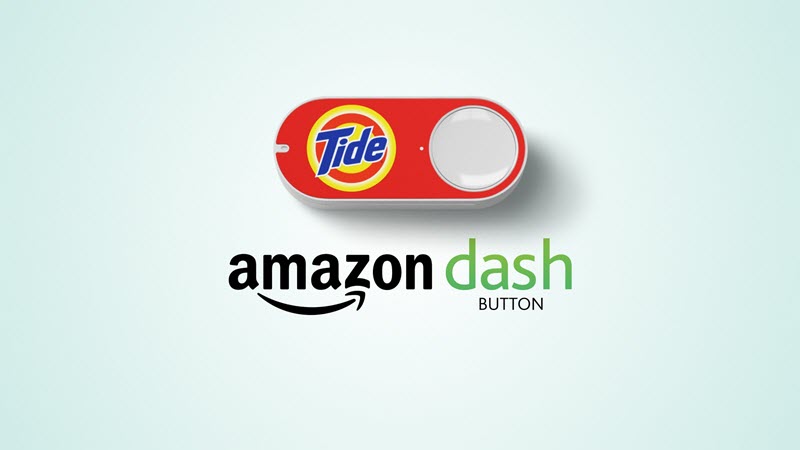
Because of the date of the announcement, it seemed like an April Fools joke. But Amazon was serious… and inspired.

Dash is a sales training lesson from Amazon
Photo: Amazon

Amazon Dash is a pack-of-gum-sized button with an adhesive strip. It connects to your Amazon mobile app, and allows you to order a pre-chosen product in a predetermined quantity, just by pushing a button. While it might seem to be a solution to a problem we don’t actually have, the genius of Dash is that it makes doing business with Amazon significantly easier.

How much easier? As Mary Nahorniak of USA Today explains:

Parents, imagine changing a dirty diaper at 2 a.m. and realizing you’re dangerously low on diapers. You may already use Amazon services to get a pallet (yep, buy enough of them, and they come in pallets) of diapers at regular intervals. But if you don’t already subscribe, or you’re going through them faster than you planned, all you have to do is hit the Dash button on the changing table when you notice there are only a few left, and they’ll be on your doorstep in two days. No further thought or energy required.

Sure, it’s not that hard to pull out your phone, open the Amazon app, search for the item, add it to your cart and check out — but that’s already four more steps than simply pushing a single, physical button. And that’s assuming you’re already an Amazon member with your credit card information and address saved — if not, add “hunting down your wallet” to the list of steps. If you’re not already an Amazon customer or ordering from another online service, you’re headed for the store, a trip you might not have otherwise been making.

I will let others ponder the significance, positive or negative, of this development (although I share Ian Crouch‘s disappointment that there is no Cheetos button). 

As a sales trainer, I look for sales lessons, and there’s one here. Amazon Dash gives us a dandy question to ask: how can we make it easier for our customers to do business with us?

[bctt tweet=”When you deliver a bound proposal, give the client an extra, loose copy of the signature page.”]

Sales Tip
3 Ways for Media Salespeople to Make It Easier

1.  Make it easier to sign. Kimberly Alexandre of the Center For Sales Strategy laments that many proposals don’t have an obvious place to sign, and recommends making sure there’s a dotted line. Great advice, but I’ll go her one better: When you deliver a bound proposal, give the client an extra, loose copy of the signature page. That way they don’t have to tear the whole thing apart to give you the John Hancock.

2. Make it easier to communicate. Listen to your voice mail messages before returning a client’s call. Seriously. Many clients over 40 (and that’s likely most of yours) still leave messages because they want you to hear them. Getting a return call from an AE who hasn’t bothered to listen forces them to repeat the whole thing. They don’t like this.

3. Make it easier to decide. Skip the “Good, Better, Best” 3-option proposal and give the prospect one well-thought-out recommendation. As Jill Konrath points out, “the more decisions a prospect has to make, the tougher it is to get them to move.” Your overwhelmed, time-deprived clients will appreciate the fact that you did the thinking for them.

These are small steps, but little hinges can swing big doors.

[reminder]What are some ways you’ve made it easier for your customers to buy from you?[/reminder]

h/t pdxknitterati