Taking Responsibility: SuperBookDeals Screws Up, Amazon.com Steps Up

If your business is a brokerage, where it’s up to another company to actually perform once you put the deal together — or if you’ve ever just referred a friend somewhere and regretted it afterwards —  you’ll sympathize with Amazon.com. Their “Marketplace” is essentially one big brokerage/referral program — “We don’t have the item you’re looking for, but these guys do.”

Unfortunately, sometimes “these guys” mess up. And even though you didn’t cause the problem, your good name is on the line. This post gives the whole sordid tale of my dealings, via Amazon.com, with an outfit called SuperBookDeals — an online store that got it wrong and really didn’t care.

By necessity, Amazon, who must deal with millions of customers, automates as much as it can. They have standard procedures for dealing with Marketplace order disputes, and the procedure normally takes several weeks.

But, I was delighted to learn, they also have an Investigations Team, staffed by real human beings. You’ve got to complain loudly to get to them, but once you do, they’re empowered go take care of business.

This evening Amazon issued me a full refund, and also gave me a credit to cover the postage costs I incurred.

Today’s customer service lesson — even if it wasn’t your fault, take responsibility for making it right. Your reputation depends on it.

___________________________________________________________________________________

Click this link to subscribe to Portland’s Finest Advertising Blog.

Got a question? Wanna argue? Email Phil Bernstein here.

Sign up for Phil Bernstein’s free advertising and marketing e-newsletter here.

Become a Phil Bernstein Portland’s Advertising Expert Facebook Fan here

Can a Blog Post Resolve a Service Issue? A SuperBookDeals Experiment

When I was a kid, my mom used to listen to Jack Carney’s show on KMOX Radio in St. Louis. Carney was the biggest personality on the biggest radio station in town, and he did endorsement commercials for a camera shop. My mom went to that store and… I can’t remember the details anymore, but she felt she was treated poorly.

She called the radio station, managed to get Carney on the phone, and told her story. Within 30 minutes of that conversation, the store manager called my mom and offered to do whatever it took to make things right.

In the age of the internet, can a blog post accomplish the same thing? We’re going to give it a try. Here’s the story.

I ordered a book from Amazon.com — actually from one of their “Marketplace Partners”, an outfit called SuperBookDeals. Here’s the book I ordered:

When the envelope from SuperBookDeals arrived, here’s what was inside:
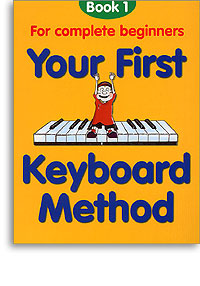
Can we agree that it’s not even close? And that anyone who reviews my Amazon order will confirm that I ordered the Ellington book?

Okay, good. Let’s continue.

I emailed SuperBookDeals and told them of the mistake — their mistake, by the way. I received an email asking for the ISBN number of the book I received. I sent them the proper number. Here’s what I got in reply:

Thank you for contacting us. We are sorry to hear that you received the wrong item. Please return the item(s) to us via USPS Media Mail with delivery confirmation, along with your full name, order number, reason for return, and a copy of the receipt for return postage, and we will reimburse the cost of return shipping. Please send the item(s) to:

SuperBookDeals Returns

Ref: [transaction or order number]

5520 Brick Road

South Bend, IN 46628

Upon receipt, we would be pleased to process a refund or order a replacement from the publisher, which would take approximately 1-2 weeks to be delivered to you. Please let us know whether you would prefer a refund or a replacement copy (if available). We apologize for any inconveniences this may have caused, and we appreciate your patience in this matter.

In other words, to correct their mistake, I have to write out a letter with a bunch of information they already have, take the book to the post office, shell out the postage myself, include the receipt with the book (God forbid I try to make an extra fifty cents in the deal), and wait for them to receive it via (extremely slow) Media Mail. Then, and only then, they will send me the book they should have sent me the first time.

I objected — both to them and to Amazon. I’m willing to return the book, but while they’re waiting for the wrong book to come back they should be sending me the right book. Eventually, I received another email from SuperBookDeals:

Thank you for contacting us. We do apologize for the confusion and that you received the wrong item, as we did indicate in our email below, to please return the wrong item via USPS Media Mail with Delivery Confirmaton and we will be happy to reimburse you for that cost. Once you have done that please email us with the delivery confirmation number and we will be happy place a new order to send you the correct item. At that time if you could also email us with us the cost of the return shipping we can start the process to send you a refund check for that amount. Again, we do sincerely apologize incorrect item sent.

Okay, better. Not great, but better. I dutifully wrote the letter, brought the package to the post office, put the receipt in the envelope, mailed the thing, and then sent the delivery confirmation number to SuperBook Deals.

And got this reply:

Thank you for your response. At of yet we have not received your return merchandise. The delivery confirmation number you provide is invalid. Please provide us with the correct delivery confirmation number. Once we have that number or the book we will immediately ship out the correct book. If you have any further questions please contact us. Thank you!

No, no, thank you, SuperBookDeals, for screwing up my order and treating me like I’m trying to pull a scam.

I now have to go back to my office, find the delivery confirmation slip, and see if perhaps I missed a number on the 20-digit delivery confirmation slip. Is it possible I got the number wrong? Sure it is. And by golly, SuperBookDeals isn’t going to fix their mistake until I jump correctly through every single hoop they’ve set up. Rules are rules, after all.

So here’s the experiment:

Now that this rant is up in the blogosphere (and a separate, shorter rant is on Amazon’s Customer Feedback), will it affect SuperBookDeals in any way?

Will a Google search of SuperBookDeals put the post on the front page?

Will SuperBookDeals find the post on their own? Will Amazon? Will either of them care?

I’ll report back.

UPDATE 5/19/08 This morning, I photocopied the delivery confirmation slip, created a pdf, and attached it to an email to SuperBookDeals — my hope was that this way they would have proof that I’d sent the book, and there would be no question as to the confirmation number. Late in the day, I received this message in reply: We are not allowed to open attachments please include the information in the email. Thank you. I have complained bitterly to Amazon.

UPDATE 5/21/09 Amazon took care of business. Details here.
Maybe Your Prices Are Too Low

It’s a reflex in many sales situations — when you’re competing with others who offer a similar product or service, the first impulse is to cut your price.

What if, instead of reducing your price, you made sure you were the most expensive option in the category?

Columnist Harold Meyerson recently discussed the concept of positional goods as it relates to… hookers. The inspiration for the discussion was an alleged prostitution ring (one of whose alleged customers was Eliot Spitzer) called the Emperors Club, whose professional companions charged up to $5500 an hour.

Positional goods are those commodities that are more valuable than their run-of-the-mill counterparts because a special status attaches to them, since only a select few can have them. Since the Web sites on which prostitutes advertise indicate that the average hourly rate is around $300, the Emperors Club maximum rate, which is roughly 18 times higher, could be justified by the particular appeals and skills of its hookers. I haven’t conducted empirical research on this one, but let me just say: I doubt it.

I suspect that what makes a prostitute worth $5,500 an hour is that she costs $5,500 an hour. The value here doesn’t dictate the price. The price, rather, dictates the value. These women are available only to the wealthy; the ability to hire them, like the ability to live on Fifth Avenue overlooking Central Park, means that you’ve made it. And even if your hour turns out to be a bit disappointing, that’s okay, because $5,500 doesn’t really mean anything to you — which just means you’ve really made it.

And there, I suppose, is the thrill. The power of being able to command the world’s priciest hooker, like the power of owning the world’s priciest real estate, could be a turn-on in itself. The power of dropping thousands and not even remembering what type of woman you’ve booked: Boy, are you ever something! Whether or not you’re getting one terrific woman, the transaction alone confirms that you’re one terrific dude.

I now charge $5500 per script. Give me a call if you’d like to get on the waiting list.

____________________________________________________________________________________

Click this link to subscribe to Portland’s Finest Advertising Blog.

Request your free copy of my white paper, The Seven Deadly Advertising Mistakes and How to Fix Them here.

“My Advertising Didn’t Work”

These words were spoken, I’ll wager, by a couple of companies who recently advertised in the Oregonian. And it wasn’t the O’s fault. Names are withheld in the hope that they decide to give radio a try — why embarrass them publicly when we could play the hero instead?

Advertiser #1 is a local clinic specializing in sclerotherapy — a treatment for spider veins. Their beautifully-laid-out display ad gave their web address in big, bold letters. Unfortunately, the address belonged to an identically-named business in Memphis, Tennessee. Two weeks later, it’s still not working properly.


Advertiser #2 is a practice specializing in elective surgery. Their ad, in a recent Sunday paper, said “To obtain information about this procedure, and the Portland-based surgeon who performs it, please call [phone number] or visit [web address].The web site had no information at all about the surgeon, and no contact information for the practice. It invited potential patients to come to a seminar, but there was no information on when or where the seminar would be. And if someone happened to call the phone number on Sunday or Monday, here’s the message they received, in its entirety:

“I am sorry, no one is here to take your call. Please leave a message.”  No business name given, or any other information at all. Not even a promise that someone would call back. Speaking as someone who recently spent some time talking to surgeons, I’d want a little more before I’d consider climbing onto the table.

Both of these businesses spent good money on advertising that might have generated results… but they forgot to check on the basics.

This is Mistake #6 in my white paper, The Seven Deadly Advertising Mistakes and How to Fix Them. If you’d like to read about all seven, click the link at the bottom of this post and I’ll send you a copy.

As you get ready to launch a campaign, you need to take some time and check your sales funnel.

·        Is the phone number correct in your ad? Pick up the phone and dial it.

·        Do you have people in place to answer the phone or check the web inquiries? Have your ad rep make an inquiry and see how quickly someone responds.

·        Is someone responsible for following up each lead in a timely fashion? Make sure that person is held accountable.

·        Do the links work on your web site? Click on them!

·        Do your people know what’s in the commercial? Are you sure? Gather the staff together and play the ad for them before it hits the air.

·        Is the featured product in stock, on display, and marked at the correct price? Go through the store and check.

A good ad campaign with poor follow-up is money wasted.

__________________________________________________________________________

Click this link to subscribe to Portland’s Finest Advertising Blog.

Request your free copy of my white paper, The Seven Deadly Advertising Mistakes and How to Fix Them here.

A Cautionary Tale

Can advertising work too well?

Yesterday’s post got me thinking about an auto collision shop I worked with in the late 90’s. The amazing Todd Tolces created a very entertaining series of commercials in which humor was wrapped around a good sales message (I contributed by playing the commercials for the client and cashing the commission checks).

It took a couple of months, but the campaign began to bring in customers. And then more customers. After a while people were driving their dented cars long distances to have them fixed by this particular shop.

The business grew, and the owner desperately needed more technicians. But with unemployment at record lows, good technicians were impossible to find. So they he hired a couple who weren’t so good, and the quality of their work dropped off. Although we continued to run their commercials, I stopped referring people there after they botched the job on my boss’s car.

Word of mouth turned bad, and the shop lost several big fleet accounts. After a while there were layoffs, and they couldn’t afford to advertise anymore. The business very nearly closed down.

All because the advertising worked, and they weren’t ready.

Are you?

__________________________________________________________________________________

Click this link to subscribe to Portland’s Finest Advertising Blog.

Request your free copy of my white paper, The Seven Deadly Advertising Mistakes and How to Fix Them here.