A Couple of Good Contact-Grabbing Apps: Tech Tool Tuesday for Salespeople

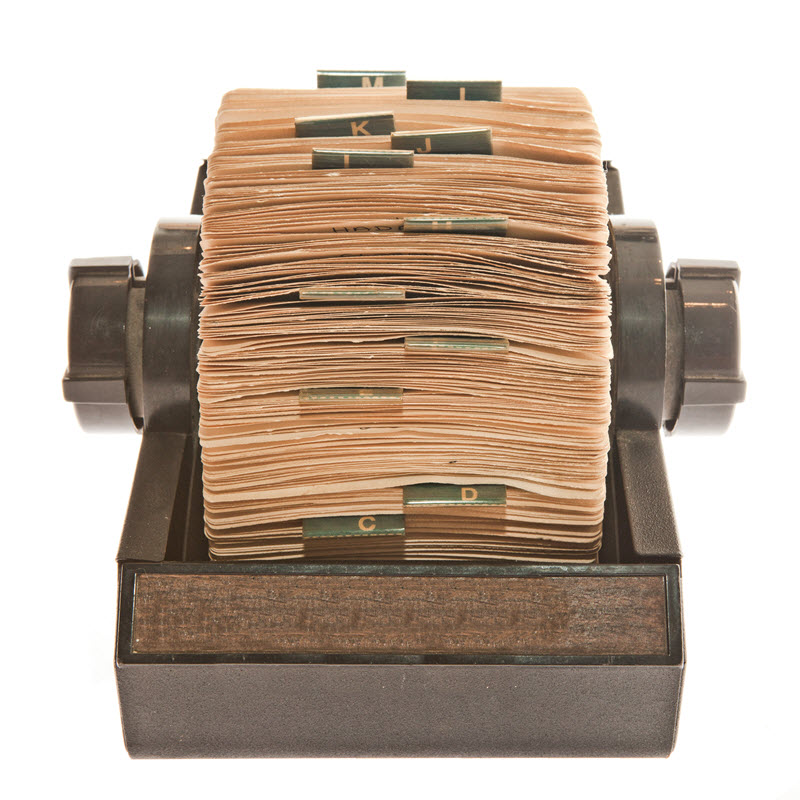
In the dark ages, we had a Rolodex. It was stuffed with business cards, which we collected everywhere we could.

When we had time, we entered the contact information manually into our computers.
Rolodex -- an obsolete sales tool
Photo by Stockninja/dpc


Automation has come to this process, and smart salespeople use it. For several years, I had two tools the got the job done:

  • CardMunch, a LinkedIn product that was, in its prime, an excellent business card scanner for the iPhone.
  • I used Gwabbit to pull contact information from emails.

Unfortunately, LinkedIn stopped supporting CardMunch, and it was eventually shut down. Meanwhile, Gwabbit never got around to supporting Outlook 2013, which ultimately made it useless. I have been looking for alternatives ever since, and have found a couple that get the job done.

A Very Good, But Spendy, PC Tool for Salespeople

I’ve been using AddressGrabber Standard for a couple of weeks on my laptop, and like a great deal. It is very simple to use – when you receive an email from a new contact, you highlight the information that needs to go into your contact manager (for me, Outlook 2013), click an icon to transfer the information, proof it, and save. It’s quick, simple to use, and pretty darn accurate. Occasionally information will go into the wrong fields, but the corrections are easy to make.

This is a huge timesaver when you start working with multiple contacts in a new company. When I start a revenue initiative with a new TV station, I ask all of the account executives and sales managers to send me an email. Then I go through the emails and drop the contact information in Outlook. The whole process for a 10-person sales staff might take me three or four minutes.

Two minor drawbacks: it will not recognize contact information from images, and if your contact doesn’t include their email address in their signature line, you have to enter it by hand. One major drawback: at $69.95 for a single machine license, AddressGrabber is expensive. But it works.


A Pretty Good Free Smartphone Tool For Salespeople

Evernote has had business card scanning built into its smartphone app for quite some time. Earlier this year it released a separate app called Scannable, which has many uses. For me, the most common use has been business card scanning.

Scannable is very simple to use – put the card on a contrasting background, and it will automatically detect the card and snap a picture. If you are an Evernote user you can upload the card to Evernote, and if not you can email or message the information. If you authorize a connection to your LinkedIn account, you can even make a LinkedIn connection right from the app.

Scannable’s major drawback is accuracy. Where CardMunch used actual human beings to double-check everything, Scannable is completely automated, and in day-to-day use I would rate it about 60% accurate. Once the information is entered, you need to proof it carefully, and it is not uncommon to need to clean up a few things. For a single card, entering by hand may be just as fast.

But if you have multiple cards to process it once, Scannable is a much faster option even when you take into account the necessary proofing. While there is significant room for improvement, Scannable is the best tool I have found since CardMunch went away.

One other note: as of this writing, Scannable is not available for Android. Evernote does have a business card scanner built into their main Android app, and there are certainly other options available.


In 2015, you shouldn’t have to enter contact information by hand. Automate the process, and use the time you save to sell.

[reminder]What are you using to capture contact info?[/reminder]

 

Survey Results – and How You Can Help a Rookie Out

The results of my 2015 Reader Survey point to an opportunity for the veterans among my readership to help the young ones.

Sales Tip: veterans can teach the rookies
Photo by djoronimo/dpc

First, a few numbers:

  • Not surprisingly, most of my readers work in media. The biggest pieces: 40.7% in TV, 29.6% in radio.
  • About half – 48.1% – are salespeople/account executives. Another 25.9% are Sales Managers or Directors of Sales.
  • Three out of every four of my readers – 74. 1% — are over 45. Almost none of you – 3.7% – are under 35.
  • It’s an experienced group. The vast majority – more than 70% – have been doing this for more than 10 years.
  • 18.5% have less than five years’ experience. 11% have been doing this for less than three years. 7.4% are in their first year.

An Opportunity for Sales Veterans to Help The Next Generation


Sales is a tough business, with a tremendous amount of turnover. Most of the big media companies provide some training, and most managers do their best to provide guidance. But there is often not enough company provided training, and not enough hours in the day for a busy manager to provide enough guidance.

The Account Executives who make it are the ones who take the opportunity to learn on their own. They just need to know where to look.

That’s where you – the 70% of my readers who have been at this for 10 years or more – can help the young ones. Even if you don’t have the time to spend one-on-one, you can certainly point them toward some resources that can help:

Resources You Can Pass Along


1. Here is a list of five essential books that every media salesperson should read. They are affordable even on a tight budget – a rookie can buy the entire set for around $100, and probably find some of them in the local public library.

2. Here is a list of five essential blogs. They are free.

3. I offer an e-book on pre-call preparation. It is also free, to anyone who subscribes to my blog. Download it here.

Take a moment to send one (or all) of the links above to an inexperienced AE who would appreciate the help.

If you already get this by email, I will make it easy for you. Just hit “Forward” and send this email to a rookie. Tell them to click on links toward the bottom.

sad salesperson
Photo by Maxim Malevich /dpc

You can help a struggling salesperson out. Or you can turn the page. Won’t you help a rookie out today?

A Crucial Double-Check to Prevent Presentation Heartache

Have you ever been blindsided during a presentation? Every now and then you can lose a sure-thing sale because of something that – it seems in hindsight – you really, really should have known about.

sales call gone bad -- man in shock
photo by icsnaps/dpc

About six years ago I presented an advertising plan to a dentist in Montana. I had met with him a couple of weeks before, and he had been open, enthusiastic, and eager to hear my ideas. Out of 27 presentations I was scheduled to do that week, this one seemed to be a slam dunk — he was primed to do something, and I had the perfect plan for him.

The meeting didn’t go the way I’d planned. Not even close.

[bctt tweet=”Sales Tip: A lot can change for the client in a couple of weeks. It pays to ask.”]

He argued with me about my overall marketing philosophy, didn’t like the strategy I proposed, and called my script “simple-minded”. His demeanor was dismissive, on the edge of downright rude. At the end of the meeting, he told us he’d “think about it”, and walked out before we could ask him anything more.

I was stunned. Usually when a meeting goes bad I know what went wrong. This time a big opportunity had blown up, and I had no idea why.

The next day the dentist’s wife, who’d been at both meetings, called the station Account Executive to apologize. A few hours before our presentation, they had met with their accountant and learned that there was more than $100,000 missing from the practice’s bank account. Embezzlement was suspected. He wasn’t going to buy anything from anyone for a while.

Today’s Sales Lesson: The World Can Change In a Couple of Weeks


Ever since that day, I start every presentation this way:

“Before we begin, I need to ask a quick question. Has anything changed since our last meeting?”

 Most of the time, nothing has, and I can launch things without a problem. But over the past five years, by asking that question I’ve learned that between the last meeting and this one:

·       The owner has just decided to sell the business.

·       The company has agreed to merge with a competitor, all decisions are on hold for the next six months, and the guy we’re meeting with will be leaving the company.

·       The store has picked up a new product line, and will be retooling its marketing substantially.

·       The medical practice has just hired an advertising agency.

Learning this information before diving in has allowed me to make adjustments on the fly. Sometimes it’s caused me to make major changes to the strategy I recommended. On two occasions, we even agreed to cancel the presentation — it was going to be a waste everyone’s time.

Things happen quickly in business, and the questions you asked on Tuesday could have completely different answers the following Monday. Asking if anything’s changed before you dive in can save you enormous heartache.

[reminder]What’s the biggest surprise you’ve gotten at a sales meeting?[/reminder]

A Good Story Will Outsell All Your Facts

Facts tell, but stories sell” — Jim Doyle

A good story is a great sales tool

It’s amusing to watch the political left and right — especially those at the extremes — argue each other. Each side has its own set of facts. Each is firmly convinced that if the other side just accepted these facts the argument would be over.

And each believes that the other side’s “facts” are lies.

[bctt tweet=”Those of us who work in marketing and sales are in the persuasion business.”]

In 2011, Seth Godin discussed “The Limits of Evidence-Based Marketing”, using as an example an acquaintance who is firmly convinced that the vaccine for polio is harmful. Stacks of information and studies from the Gates Foundation and the World Health Organization — “evidence-based marketing” — would not change the acquaintance’s mind.

“…evidence isn’t the only marketing tactic that is effective. In fact, it’s often not the best tactic. What would change his mind, what would change the mind of many people resistant to evidence is a series of eager testimonials from other tribe members who have changed their minds. When people who are respected in a social or professional circle clearly and loudly proclaim that they’ve changed their minds, a ripple effect starts. First, peer pressure tries to repress these flip-flopping outliers. But if they persist in their new mindset, over time others may come along. Soon, the majority flips. It’s not easy or fast, but it happens.”

Four years after Godin wrote those words, a measles outbreak briefly got the attention of some the public and some state legislatures. The hook wasn’t necessarily the re-emergence of a disease that had been nearly eradicated. Plenty of scientists had been predicting that something like this would happen sooner or later.

The hook was that the outbreak was linked to Disneyland. A story of measles at the Happiest Place on Earth was much more powerful than all of the statistics about herd immunity combined.

A similar phenomenon occurred during the Ebola epidemic last year. It wasn’t the thousands of deaths overseas that got America’s attention — it was a nurse climbing onto an airplane. When it became known that Amber Vinson had flown from Dallas to Cleveland and back again after being infected, panic ensued.

Schools were closed in Cleveland, kids from Rwanda were banned from a school in New Jersey, and parents in Mississippi took their children out of school because their principal had traveled to Zambia.

Zambia and Rwanda are thousands of miles away from the Ebola hot spots, but no matter. The story out-persuaded the facts.

Those of us who work in marketing and sales are in the persuasion business.

That’s why testimonial advertising works so well, and why I advise the television salespeople I coach to replace the charts and graphs with stories of clients who’ve used the station and won. 

[reminder]


“Tear up His Business Card!”

Do you have customers or prospects who are wasting your time? You don’t have to keep them.

Photo by Brian Jackson/dpc

A Liberating Exercise From My Sales Coach

About 10 years ago, when I had hit a rough patch as a radio account executive, I hired a sales and time management coach – Jeffrey Mayer, who has since passed away. Mayer was in Chicago,  I was in Portland, and we spoke by phone once a week.

I called him one day after a particularly frustrating sales call. I had met with a podiatrist – a guy who had advertised on a competing radio station. I had been chasing him for about six months, presented three proposals, and made exactly no money. The client continued to hint that he might buy, but always had another reason why now was not the right time.

As I was pouring out my tale of woe, Mayer cut me off midsentence.

Him: Are you at your desk?

Me: Yes.

Him: Do you have his business card?

Me: Yes.

Him: Pull out his business card, and put me on speaker phone.”

I did as he instructed. “Now what?” I asked?

“Hold his business card over the speaker, and tear it up. Don’t you just throw it in the trash – if you do that, you can take it out later. I want you to tear that card into little tiny pieces and then throw them away.”

“But I promised to rewrite his proposal!” I argued.

“Screw that proposal!” said Mayer. “If you really wants to see it, he will call you. I’m betting you will never hear from him again.”

I tore the card up, and threw the pieces away. Mayer and I talked for another 20 minutes, and then I went back to work. I never called the podiatrist again, and he never called me.

Tearing that business card was a surprisingly liberating experience. All of a sudden, I was free from having to waste my time on a lousy prospect. I made a very good living in radio sales for the next four years, and I’m sure the podiatrist did fine, too.

How You Can Apply Jeffrey Mayer’s Sales Lesson Today

  1. You have at least one low-dollar, high-maintenance customer – probably more than one.
  2. Choose one prospect or client who is wasting your time. Tear up his or her business card, and take a smart phone picture of the little tiny pieces.
  3. Email me the picture. If I get enough photos, I might display them in a subsequent blog post.

[reminder]Have you gotten rid of a waste-of-time client? How did you do it? And how did it make you feel?[/reminder]