
How to Find the Money: A Powerful 3-Question Process to Learn the Client’s Budget

It’s tough to ask “the budget question” on a sales call, especially with a new prospect. The client doesn’t know you, doesn’t trust you yet, and may be reluctant to give you the information.
sales find the money
Photo by vvoe/dpc

Many salespeople don’t ask at all. This is a big mistake.

If you don’t ask, you won’t know.

In my day job, I teach sales skills to radio and television station advertising salespeople. I train them to break the question into three parts.

Part 1: Ask Permission

Part 2: Ask About the Process

Part 3: Ask For the Number


Permission: “Can I ask you a few questions about your advertising plans?”

This question comes well into the meeting. By this time, we’ve already covered many other aspects of the client’s business — history, inventory, customer demographics, business philosophy — pretty much everything except that which we’ve come to sell.

If we’ve done this properly, we’ve begun to establish some rapport and trust, and the customer is beginning to let down his guard. If we just jump in and ask, “What’s your advertising budget”? the door could slam closed again.

Asking permission seems polite and considerate. The client will virtually always say yes. This obligates them to answer the next question.

Process: “Things are going pretty well for you these days, but you never know what’s coming next. You don’t know what the economy’s going to do… you don’t know what the weather’s going to do… you don’t know what the government has planned for you next.

But at some point every year, even with all this uncertainty, you have to decide how much you can spend on advertising. How do you come up with that number?”

The three factors mentioned above — economy, weather, and government — affect just about any business. Before asking for the number, we’re expressing some empathy and asking the client to open up about how they come up with the budget. We’re not ready to ask for the number yet. First we acknowledge the difficulty any company owner or executive has in predicting the future.

Some customers have a formula (usually a percentage of revenue) that they stick to. Others have a dollar figure handed to them from above. A surprising of businesses have no process at all, and just fly by the seat of their pants.

Whatever the case, knowing how they get to the dollar figure is as important as knowing the number itself.

The Number: “Okay, thanks for that. So for all the advertising you do — radio, television, digital, newspaper, magazines, billboards, Yellow Pages, and anything else — how much do you think you’ll spend this year? [Some clients won’t know a yearly figure; in that case, you can ask them to estimate how much they spend per month.]

By this time the client’s given you permission to ask, along with some insight as to the budget process. It won’t happen every time, but the odds have become much greater that they’ll tell you what you want to know.

[reminder]Do you find yourself reluctant to ask about the money? How do you deal with that?[/reminder]
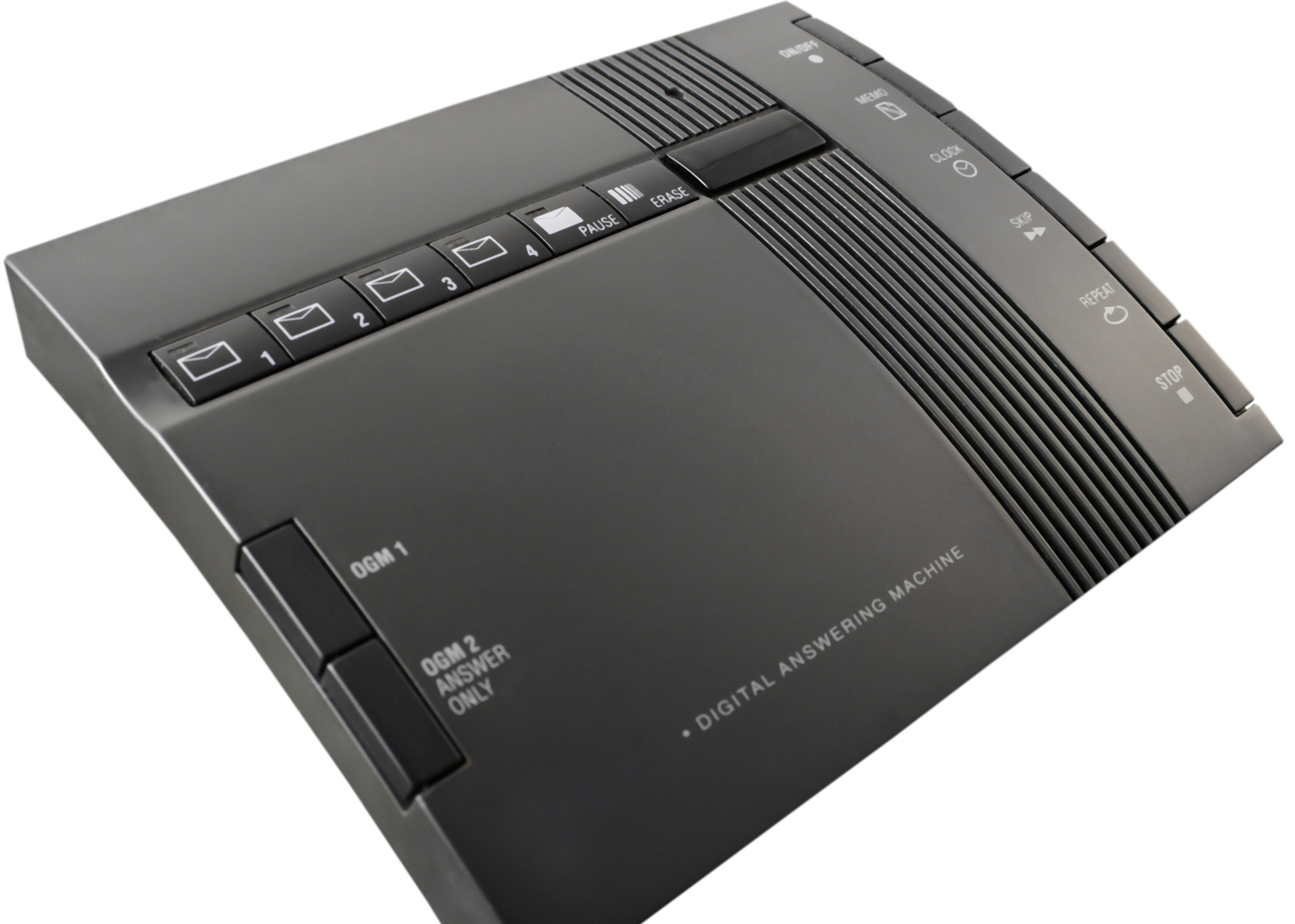


Voice Mail: Not Dead Yet? Here Are The Survey Results

According to my  readers, voice mail still has some life to it. Nearly 90% of the people who took the poll still listen to their messages at least some of the time.

[featured-image single_newwindow=”false”]
Photo by Qilux/DPC

49.28% — Almost exactly half said that they “always listen to their voice mail messages.”

40.58% –  eported that they “sometimes listen to their voice mail but sometimes just look at caller ID and call back”.

10.14% – A mere tenth of the respondents said that they never listen to their messages.

A powerful defense of voice mail comes from Leslie Horn, a writer in her 20’s who wrote an essay for Gizmodo called You’re Wrong About Voicemail. Reflecting on the unexpected death of her father, she had this to say:

…I can’t think about voicemails without bringing the whole thing back to my dad once more. The dude had a goddamn calendar full of people he would call on their birthdays. From what I’ve learned in the past couple of months, it numbered in the hundreds. If he knew your birthday, he would call you on it and sing happy birthday. He had what I would call a church choir voice. Which is to say, not great, but he would belt it out nonetheless. If you picked up, he’d sing your ear off. If you screened, he’d sing it to your voicemail.

In the past three months, I’ve had untold numbers of people approach me and tell me they had messages from my dad on their phones singing them happy birthday. Happy birthday to Mark! Happy birthday to Suzanne! Happy birthday to Margaret! Happy birthday to family and friends and to people I don’t know from Adam! Shoot, I’d think every time, why didn’t I listen to my voicemails more? Until one day, I poked around in my deleted folder and found my happy birthday message from last year, saved. There it was! I hadn’t meant to save it, but there it was.

A personal note: my parents have sung to me over the phone on my birthday for years. Possibly decades. They’ve done it “live” if I answered the phone, on voice mail if not. I’ve always rolled my eyes good-naturedly as it happened. It never occurred to me to save the messages. Until now.

[reminder]Got a story of voice mail in your life? A drunk dial, perhaps. Or an “I didn’t realize it was recording” tale of woe. You know the story I mean. [/reminder]


29 (Mostly) Dirt-Cheap Apps, Gadgets and Downloads I Use: A Salesperson’s Toolbox

I’ve been selling long enough to remember the days when only senior executives had “car phones.” Back then, if somebody wanted to reach me they left a message at my office with the receptionist, and I returned the call after I got back.

[featured-image size=”featured” single_newwindow=”false”]

Now, I’m connected 24/7. Smartphone, tablet, laptop, desktop, Kindle. It’s rare that I’m not operating at least one of these devices, and sometimes more than one. It’s a challenge to manage a constant flow of information coming at us from all angles in a wide variety of formats.

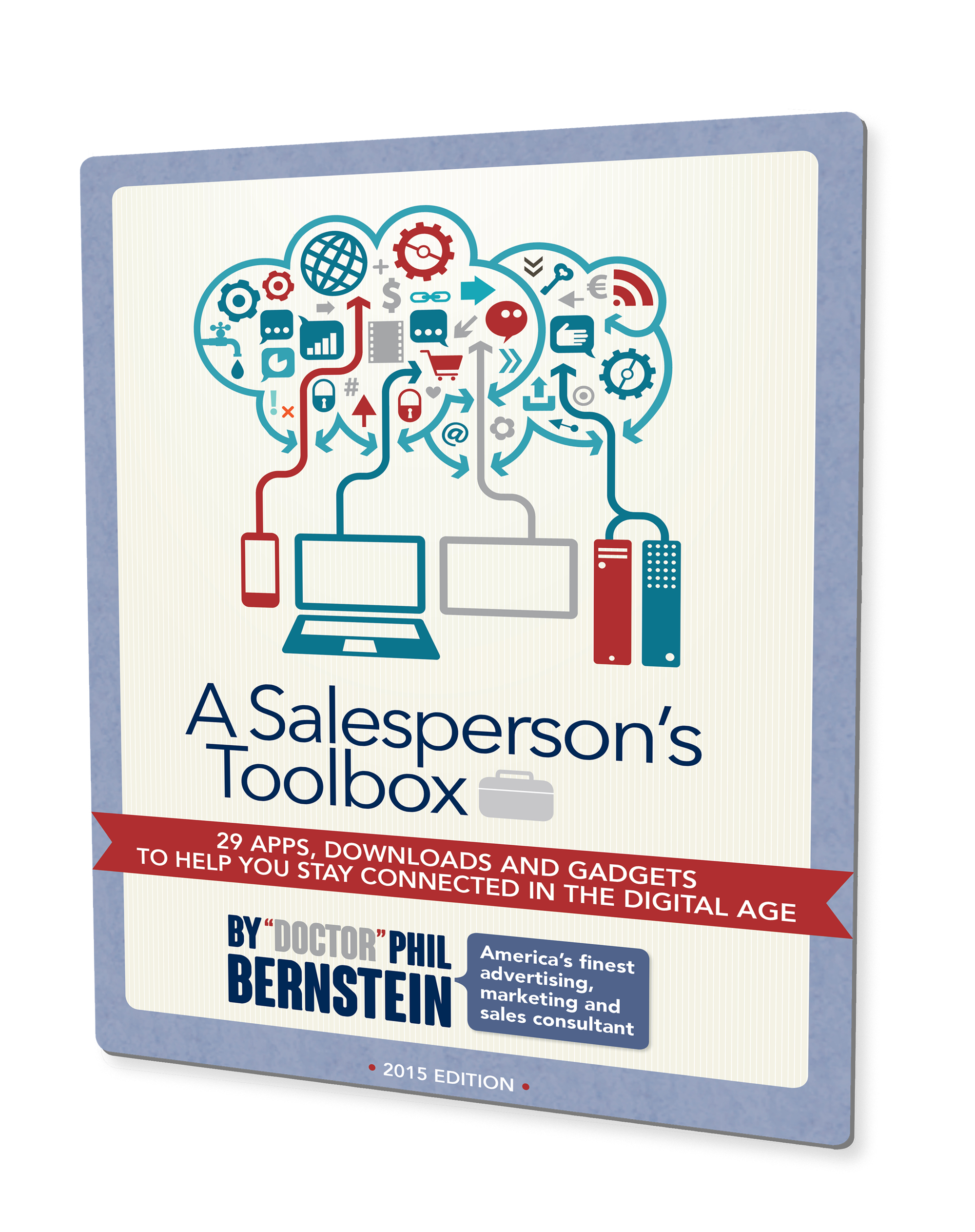
I’ve written an e-book called A Salesperson’s Toolbox, featuring 29 apps, gadgets and downloads I use to stay on top of it all. Some only work on one platform; some work on all of them. Among the items are:

  • An online calendar service that lets me share my appointment availability with multiple clients, keep all of them automatically updated as my schedule changes, and avoid double-booking.
    .
  • Two great sources of fully-licensed stock photos — one free, and one dirt-cheap.
    .
  • A phone app that tracks my expenses and prepares reports — and makes sure I never lose a receipt.
    .
  • … and a $15 piece of software I use when I need to disconnect and get my work done.

At the time of this writing, I am using every single one of these regularly — and am always on the lookout for something better.

A Salesperson’s Toolbox isn’t for sale. The only way for you to get it is to subscribe to my free email newsletter. Here’s what you need to do:

If you are not already a subscriber, click on the button below, fill in your email address, confirm your subscription, and download your copy of A Salesperson’s Toolbox.

Easy? Easy! Here’s the button:

Click Here to Get Your E-Book

Whenever I put up a post, I’ll send you an email so you don’t have to keep returning to this blog. You can unsubscribe at any time, and my feelings won’t be hurt… much.

Already a subscriber? Don’t worry…. there’s a button for you, too! It’ll let you send me a quick email, and I’ll send you back a link to the e-book.

[button href=”mailto:phil@philbernstein.com” primary=”true” centered=”true” newwindow=”true”]Already a Subscriber? Click Here and Ask Me For The Book![/button]

PS: Your work goes much faster when you have the right tools for the job.

Get A Salesperson’s Toolbox today, and be more productive tomorrow. You can thank me later.


Protect Your Data With a Personal VPN: Tech Tool Tuesday for Salespeople

How safe is your data when you’re online at Starbucks?

[featured-image size=”featured” single_newwindow=”true”]Photo by tiero/DPC

Any time we log onto a public network in a library, a coffee shop, an airport or hotel, we’re putting our data at risk. Anything we send out can be captured by a nefarious stranger bent on misusing it. A Personal VPN prevents much of this malfeasance by encrypting everything before it goes hits the public airwaves.

Here, according to Lifehacker, is how a VPN works:


When you connect to a VPN, you usually launch a VPN client on your computer (or click a link on a special website), log in with your credentials, and your computer exchanges trusted keys with a far away server. Once both computers have verified each other as authentic, all of your internet communication is encrypted and secured from eavesdropping.

The most important thing you need to know about a VPN: It secures your computer’s internet connection to guarantee that all of the data you’re sending and receiving is encrypted and secured from prying eyes.


There are many free and paid VPN services available. I’ve been using Witopia for about three years. It’s easy to download, easy to engage, and works on a variety of devices. The first thing I do when I log onto a public network is turn on the VPN — it takes an extra 15 seconds, and is a reflex now.

Downsides: a VPN can cost some money (Witopia charges $50-$70 per year, with a license usable on two devices at once), and can occasionally slow down a network. It can be a pain in the butt sometimes on an already-slow hotel internet connection.

Having said that, the pain and expense of a data breach — somebody getting your passwords, credit card info, or Social Security Number, for example — are exponentially greater than what it takes to protect yourself. If you spend any time at all on public networks, a VPN is a no-brainer.

[reminder]What tools do you use to protect your sensitive information?[/reminder]


5 Great Books Every Advertising Salesperson Must Read (Or Re-read) in 2017

We work in the persuasion industry. As advertising sellers, first we must persuade a prospect to meet with us… and then consider our proposal… and then buy. Then we must design a campaign that persuades our client’s prospects to take action.

Here are five books that will help you develop the sales skills to persuade… and sell.

5 Great Advertising, Marketing and Sales Books

The Accidental Salesperson by Chris Lytle: I read the original version of this book more than a decade ago. It was early in my selling career. I was looking for anything that could teach me the sales skills I needed.  This book taught me enormous amount. When the new edition came out, I took it out of the library — being a cheapskate, I didn’t feel like paying for it a second time. Two chapters in, I returned the library copy and bought my own. I wanted to read it and highlight the hell out if it. For example, this:

If you work on straight commission, you prospect for free. You do a customer needs analysis for free. You do the research for free. Then you write the proposal for free… At least you don’t have to pay to make your presentation to the prospect.

What if you did have to pay to make your presentation? You obviously would put more time and thought into it. You probably would even rehearse it a few times…”

I’ve gone from being a salesperson to a combination salesperson/sales trainer role.  I have read that passage repeatedly to groups of radio and television advertising sellers all over the country. It gets through.

Slow Down, Sell Faster! by Kevin Davis: This is one of the rare sales skills books that has actually given me a new perspective on the process of selling. The author’s contention is that we spend so much time focusing on our needs and our timetable that we forget what’s important to the client. He sums it up this way:”Every sales leader wants fast sales; the trouble is, there aren’t many fast buyers…They are unlikely to change their buying process to match your selling process, so your only option is to be the one who switches.”

Influence: The Science of Persuasion by Robert B. Cialdini A classic in the field — enough science to demonstrate that the author knows what he’s talking about, but accessibly written for salespeople (like yours truly) who didn’t pay attention in science class. Cialdini, who holds professorships in Marketing and Psychology at Arizona State University. The principles he teaches in this book will help you do a better job convincing clients to buy, and can also help make you a better marketer and copywriter.

Advertising Headlines That Make You Rich by David Garfinkel: Although this book is aimed at those who sell with the written word — direct mail, print publications, and web pages — the techniques can help marketers in any medium. However your prospects see or hears your sales message, you have a very short window in which to convince them to pay attention. The headline in a print ad, or the opening five seconds of a radio or TV commercial, will cause your target to either pay attention to the rest of the message or tune you out. Garfinkel gives you a series of headline templates that have worked for selling a wide range of products and services, discusses why each one has been effective, and lists several variations on each headlines. When I’ve hit a wall while writing copy, I’ve gone to this book to help get unstuck.

Dan O’Day’s Guaranteed 5-Step System For Creating 30-Second Radio Commercials That Get Results: Another good cure for (copy)writer’s block, and an excellent companion to the Garfinkel book. I bought this when I was working in radio; now that my primary platforms are television and digital, I still use it regularly. Like Garfinkel, O’Day teaches a headline-based approach to designing a campaign. Besides the headlines, the true benefit of O’Day’s system is in the exercise of settling on a Unique Selling Proposition before starting the script. It’s not a long book, but it’s a powerful one.

[reminder]What’s the best advertising, marketing, or sales book you’ve read in the past 12 months?[/reminder]