How Can You Make It Easier to Buy From You?

Sales Training From Amazon

Because of the date of the announcement, it seemed like an April Fools joke. But Amazon was serious… and inspired.
Dash is a sales training lesson from Amazon
Photo: Amazon

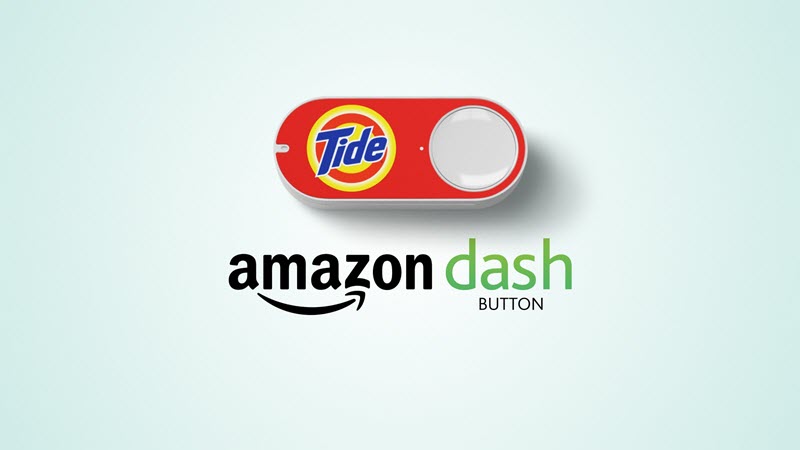
Amazon Dash is a pack-of-gum-sized button with an adhesive strip. It connects to your Amazon mobile app, and allows you to order a pre-chosen product in a predetermined quantity, just by pushing a button. While it might seem to be a solution to a problem we don’t actually have, the genius of Dash is that it makes doing business with Amazon significantly easier.

How much easier? As Mary Nahorniak of USA Today explains:

Parents, imagine changing a dirty diaper at 2 a.m. and realizing you’re dangerously low on diapers. You may already use Amazon services to get a pallet (yep, buy enough of them, and they come in pallets) of diapers at regular intervals. But if you don’t already subscribe, or you’re going through them faster than you planned, all you have to do is hit the Dash button on the changing table when you notice there are only a few left, and they’ll be on your doorstep in two days. No further thought or energy required.

Sure, it’s not that hard to pull out your phone, open the Amazon app, search for the item, add it to your cart and check out — but that’s already four more steps than simply pushing a single, physical button. And that’s assuming you’re already an Amazon member with your credit card information and address saved — if not, add “hunting down your wallet” to the list of steps. If you’re not already an Amazon customer or ordering from another online service, you’re headed for the store, a trip you might not have otherwise been making.

I will let others ponder the significance, positive or negative, of this development (although I share Ian Crouch‘s disappointment that there is no Cheetos button). 

As a sales trainer, I look for sales lessons, and there’s one here. Amazon Dash gives us a dandy question to ask: how can we make it easier for our customers to do business with us?

[bctt tweet=”When you deliver a bound proposal, give the client an extra, loose copy of the signature page.”]

Sales Tip
3 Ways for Media Salespeople to Make It Easier

1.  Make it easier to sign. Kimberly Alexandre of the Center For Sales Strategy laments that many proposals don’t have an obvious place to sign, and recommends making sure there’s a dotted line. Great advice, but I’ll go her one better: When you deliver a bound proposal, give the client an extra, loose copy of the signature page. That way they don’t have to tear the whole thing apart to give you the John Hancock.

2. Make it easier to communicate. Listen to your voice mail messages before returning a client’s call. Seriously. Many clients over 40 (and that’s likely most of yours) still leave messages because they want you to hear them. Getting a return call from an AE who hasn’t bothered to listen forces them to repeat the whole thing. They don’t like this.

3. Make it easier to decide. Skip the “Good, Better, Best” 3-option proposal and give the prospect one well-thought-out recommendation. As Jill Konrath points out, “the more decisions a prospect has to make, the tougher it is to get them to move.” Your overwhelmed, time-deprived clients will appreciate the fact that you did the thinking for them.

These are small steps, but little hinges can swing big doors.

[reminder]What are some ways you’ve made it easier for your customers to buy from you?[/reminder]

h/t pdxknitterati

Does Relentless Advertising Work?

One answer to this question comes from a study conducted a few years ago by the Stanford University School of Medicine and Packard Children’s Hospital.

child and fast food -- result of relentless advertising
Photo by Andrey Armyagov/dpc

According to AdAge.com, kids 3 to 5 years old were fed two sets of identical foods — some in McDonald’s wrappers and some wrapped in plain paper.

They overwhelmingly preferred the stuff when it came with a Mickey-D’s logo.

“Each child was given chicken nuggets, a hamburger and french fries from McDonald’s, and baby carrots and milk from the grocery store… With one exception, significantly more children said the McDonald’s-labeled product tasted better.”

McDonald’s spends an enormous amount of money to advertise to children, and apparently they have purchased brand loyalty beginning at a very early age. If you’ve ever driven past a McDonald’s at lunchtime with a car full of kids, you’ve seen brand loyalty translate into sales. And although they’ve hit some bumps in the road recently, they’ve got a 60-year track record of sales dominance — without question, they belong in the advertising training textbook.

McDonald’s has enough money to be seen and heard just about everywhere; the rest of us have to be more selective in choosing market segments and media opportunities we can afford to dominate. But even without a huge marketing budget, you can still follow the basic principles that have kept McDonald’s at the top of their category:

1. Have a consistent theme and spokesperson — the Golden Arches logo has been there forever, and Ronald McDonald has been a significant part of the marketing effort for decades.

2. Establish a long-term plan, and stick with it. The most successful markets map out a year at a time, and they don’t cancel their ads after a bad weekend.

3. Make an offer. A small portion of McDonald’s advertising is for image, but most of it gives the target consumer a specific benefit — a coupon, a new product, a movie tie-in — for doing business with them today.

[bctt tweet=”The basic techniques for generating action haven’t changed. Start early, keep going.”]

It takes careful planning, patience, and money to establish a dominant position in your market. Attention spans are shorter than they’ve ever been.

But the basic techniques for gaining the consumer’s attention, interest, desire, and action haven’t changed. Start early, keep going.

[reminder]

How Customer-Focused Are You… Really?

Everyone says they’re customer-focused. The stark reality is that most of us aren’t.

radio sales tip: be customer-focused
photo by uismolinero/dpc

Sales coach Gavin Ingham recently expressed a frustration common to those of us in the sales training business — our clients want advice on how to close sales, but don’t seem interested in earning the right to make the sale in the first place:

As a sales speaker, I often get asked by sales directors what they should do to make more sales. How do we convince the client? How do we demonstrate value over price? How do we negotiate a better deal? How do we shorten buying cycles? Etc etc. All of these have one thing in common and that is that they are all about you. They are not all about the client.

I rarely (for rarely read never) get asked for help that is client focused. People do not call me and ask how they can better understand their clients, they call me and ask how they can close more sales. People do not call me to understand why their clients went elsewhere, they call me to ask how they can convince their clients to buy from them. People do not call me to ask me help them understand why they did not engage their clients, they call me to ask how they can persuade and influence more effectively.

This may sound like semantics but it is a BIG deal.”

 It is a big deal. Salespeople already know what they want to sell, and why they want to sell it. What many of them never bother to find out is what their customer wants to buy, and why they would want to buy it.

Two Easy Customer-Focus Tests For Salespeople

 1. Look at the last couple times a customer turned you down and went to the competition. Do you know why — from their perspective, not yours — they did it? (Advice on what to do about that is here.)

2. Think about the last couple of times a customer cancelled an order in mid-campaign. Do you know why — from their perspective, not yours — they cancelled?

I often hear from salespeople who just took a big cancellation and want advice on how to change the client’s mind. Unfortunately, it’s too late by then.

The best time to reverse a cancellation is before the cancellation happens. Click To Tweet This  

Cancellation prevention requires knowing what the customer’s goals are for the campaign. Knowing about challenges to implementing the campaign, and working with the client to address those challenges. Constantly checking in to make sure that results are meeting expectation.

In short, cancellation prevention requires true focus on the customer

If you don’t know why the client cancelled, or went with the competitor, you may not be as customer-focused as you think you are.

What did you miss, and how can you do better next time?

___

Keep the conversation going — share this post on Facebook, LinkedIn, and Twitter!

[reminder]

A Free Tool To Make it Easier For People to Tweet Your Content

This is particularly good for bloggers, but can work for other online platforms as well. And you can’t beat the price — it’s free!

radio sales tip: get people to tweet your wisdom
phot by luismolinero

Tech Tool Tuesday for Salespeople

ClickToTweet is a website that makes it easy for readers to tweet sentences from your blog or web post. It does so by generating a link that you can add to the post. You need to choose the sentence — keep it to 120 characters or less to enable retweeting.

I learned about ClickToTweet from a recent Heinz Marketing blog post, and have had occasion to use the feature on my blog and also a couple of LinkedIn posts. I don’t know how Matt Heinz uses it, but I’ve found that the “Basic Link” feature is the easiest way to go.

Here’s a video of me producing a “Tweet This” link.

https://www.youtube.com/watch?v=kOkz_kJgH90


The tweet: From the @philbernstein Sales Blog, a free tool to make your content tweetable.   Tweet This!

If you want to see if it worked, click the “Tweet This!” above. You’ll need to be logged into Twitter to see it in action. Go ahead, Tweet It!  I’ll wait here.

Of course, in order for it to work, the message needs to be something that your readers want to tweet. 

Try it for yourself and let me know how it worked for you. Then keep the conversation going — share this post on LinkedIn!


How To Handle Losing a Sale to a Competitor

You thought the sale was yours. From the initial contact through the proposal stage, the customer was engaged, interested, and open to your suggestions. The contract seemed to be just a formality.

Instead, client gave the business to a competitor.

radio advertising sales tip: don't beg
Photo by Minerva Studio/dpc

Sales Tip: What’s your next move?

 Never blame your customers when they don’t buy from you. Tweet This.

It’s your responsibility to convince them. Learn something. What can you do differently next time? 

Resist the urge to argue, even if you think the customer’s making a mistake. You won’t win the argument; going into attack mode guarantees that you’ll never have a chance to win the account back.

You need to ask some questions, starting with this one: Is the decision final?

If it’s final, accept that you’ve lost this round. Your job now is to gather enough information so you know what went wrong, and can position yourself more effectively when the opportunity next arises. What can you change to generate a different result?

Say this:

“Thanks for considering us. I’m sorry it didn’t work out, but my competitor’s going to do a great job for you. [It may be painful to say this. Say it anyway.] I respect your decision, and I won’t try to change your mind. Could I ask you a couple of questions?”

Asking permission first lowers resistance. Tweet This.

Once permission is granted, the client is obligated to answer. Here are your questions:

1. “What made you decide to go with the other guys?”

2. “If we had offered the same thing, would you have gone with us?”

No matter what the answer is, resist the urge to try to reopen the sale—you promised.

Back at the office, review the whole sales process in your mind. What did you miss? What questions can you add to your process to make sure you won’t miss it again?

A lost sale hurts. Make sure you learn something from each one. Turn lost income into tuition on your sales education.

[reminder]What’s the toughest sales defeat you’ve faced? How did you handle it?[/reminder]


A version of this article originally appeared in The Paint Contractor, where I write the Sales Doctor column.