Taking Responsibility: SuperBookDeals Screws Up, Amazon.com Steps Up

If your business is a brokerage, where it’s up to another company to actually perform once you put the deal together — or if you’ve ever just referred a friend somewhere and regretted it afterwards —  you’ll sympathize with Amazon.com. Their “Marketplace” is essentially one big brokerage/referral program — “We don’t have the item you’re looking for, but these guys do.”

Unfortunately, sometimes “these guys” mess up. And even though you didn’t cause the problem, your good name is on the line. This post gives the whole sordid tale of my dealings, via Amazon.com, with an outfit called SuperBookDeals — an online store that got it wrong and really didn’t care.

By necessity, Amazon, who must deal with millions of customers, automates as much as it can. They have standard procedures for dealing with Marketplace order disputes, and the procedure normally takes several weeks.

But, I was delighted to learn, they also have an Investigations Team, staffed by real human beings. You’ve got to complain loudly to get to them, but once you do, they’re empowered go take care of business.

This evening Amazon issued me a full refund, and also gave me a credit to cover the postage costs I incurred.

Today’s customer service lesson — even if it wasn’t your fault, take responsibility for making it right. Your reputation depends on it.

___________________________________________________________________________________

Click this link to subscribe to Portland’s Finest Advertising Blog.

Got a question? Wanna argue? Email Phil Bernstein here.

Sign up for Phil Bernstein’s free advertising and marketing e-newsletter here.

Become a Phil Bernstein Portland’s Advertising Expert Facebook Fan here

Not Even Cocktail Napkins Are Safe

It used to be you could escape the outside world by going to the bar. Then somebody put a neon “Budweiser” sign in the window, and another enterprising chap realized that the bathroom walls could be an advertising medium.

And now, “Welcome to Napkin Advertising.” So says Nap Ads. The bar owner gets free napkins, the advertiser gets drunk prospects, and the world gets just a little more cluttered.

The entrepreneur who would sketch out the next Microsoft on the back of a cocktail napkin? Fuhgeddiboutit.

___________________________________________________________________________________

Click this link to subscribe to Portland’s Finest Advertising Blog.

Request your free copy of my white paper, The Seven Deadly Advertising Mistakes and How to Fix Them here.

Got a question? Call me at 503-323-6553.

A Free Tool to Calculate Your Ad Budget

Courtesy of Roy Williams, The Wizard of Ads. Rather than just taking a set industry percentage or range, this method requires some actual thought, and some research on your part. Here’s the basic point of view:

The purpose of advertising is to increase the exposure of a business beyond what’s provided by its physical location. An extremely high Cost of Occupancy (rent) for a landmark location is often the least expensive advertising available. Businesses who save money by investing in weak locations always have to advertise much more heavily.

Find the calculator here, and an explanation of the thought process here.

___________________________________________________________________________________

Click this link to subscribe to Portland’s Finest Advertising Blog.

Request your free copy of my white paper, The Seven Deadly Advertising Mistakes and How to Fix Them here.

Got a question? Call me at 503-323-6553.

Can a Blog Post Resolve a Service Issue? A SuperBookDeals Experiment

When I was a kid, my mom used to listen to Jack Carney’s show on KMOX Radio in St. Louis. Carney was the biggest personality on the biggest radio station in town, and he did endorsement commercials for a camera shop. My mom went to that store and… I can’t remember the details anymore, but she felt she was treated poorly.

She called the radio station, managed to get Carney on the phone, and told her story. Within 30 minutes of that conversation, the store manager called my mom and offered to do whatever it took to make things right.

In the age of the internet, can a blog post accomplish the same thing? We’re going to give it a try. Here’s the story.

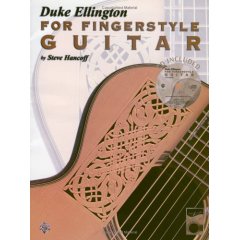
I ordered a book from Amazon.com — actually from one of their “Marketplace Partners”, an outfit called SuperBookDeals. Here’s the book I ordered:
When the envelope from SuperBookDeals arrived, here’s what was inside:
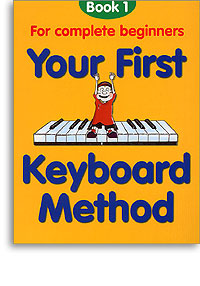
Can we agree that it’s not even close? And that anyone who reviews my Amazon order will confirm that I ordered the Ellington book?

Okay, good. Let’s continue.

I emailed SuperBookDeals and told them of the mistake — their mistake, by the way. I received an email asking for the ISBN number of the book I received. I sent them the proper number. Here’s what I got in reply:

Thank you for contacting us. We are sorry to hear that you received the wrong item. Please return the item(s) to us via USPS Media Mail with delivery confirmation, along with your full name, order number, reason for return, and a copy of the receipt for return postage, and we will reimburse the cost of return shipping. Please send the item(s) to:

SuperBookDeals Returns

Ref: [transaction or order number]

5520 Brick Road

South Bend, IN 46628

Upon receipt, we would be pleased to process a refund or order a replacement from the publisher, which would take approximately 1-2 weeks to be delivered to you. Please let us know whether you would prefer a refund or a replacement copy (if available). We apologize for any inconveniences this may have caused, and we appreciate your patience in this matter.

In other words, to correct their mistake, I have to write out a letter with a bunch of information they already have, take the book to the post office, shell out the postage myself, include the receipt with the book (God forbid I try to make an extra fifty cents in the deal), and wait for them to receive it via (extremely slow) Media Mail. Then, and only then, they will send me the book they should have sent me the first time.

I objected — both to them and to Amazon. I’m willing to return the book, but while they’re waiting for the wrong book to come back they should be sending me the right book. Eventually, I received another email from SuperBookDeals:

Thank you for contacting us. We do apologize for the confusion and that you received the wrong item, as we did indicate in our email below, to please return the wrong item via USPS Media Mail with Delivery Confirmaton and we will be happy to reimburse you for that cost. Once you have done that please email us with the delivery confirmation number and we will be happy place a new order to send you the correct item. At that time if you could also email us with us the cost of the return shipping we can start the process to send you a refund check for that amount. Again, we do sincerely apologize incorrect item sent.

Okay, better. Not great, but better. I dutifully wrote the letter, brought the package to the post office, put the receipt in the envelope, mailed the thing, and then sent the delivery confirmation number to SuperBook Deals.

And got this reply:

Thank you for your response. At of yet we have not received your return merchandise. The delivery confirmation number you provide is invalid. Please provide us with the correct delivery confirmation number. Once we have that number or the book we will immediately ship out the correct book. If you have any further questions please contact us. Thank you!

No, no, thank you, SuperBookDeals, for screwing up my order and treating me like I’m trying to pull a scam.

I now have to go back to my office, find the delivery confirmation slip, and see if perhaps I missed a number on the 20-digit delivery confirmation slip. Is it possible I got the number wrong? Sure it is. And by golly, SuperBookDeals isn’t going to fix their mistake until I jump correctly through every single hoop they’ve set up. Rules are rules, after all.

So here’s the experiment:

Now that this rant is up in the blogosphere (and a separate, shorter rant is on Amazon’s Customer Feedback), will it affect SuperBookDeals in any way?

Will a Google search of SuperBookDeals put the post on the front page?

Will SuperBookDeals find the post on their own? Will Amazon? Will either of them care?

I’ll report back.

UPDATE 5/19/08 This morning, I photocopied the delivery confirmation slip, created a pdf, and attached it to an email to SuperBookDeals — my hope was that this way they would have proof that I’d sent the book, and there would be no question as to the confirmation number. Late in the day, I received this message in reply: We are not allowed to open attachments please include the information in the email. Thank you. I have complained bitterly to Amazon.

UPDATE 5/21/09 Amazon took care of business. Details here.
The Line Between Targeted and Creepy

When I take off my direct marketing hat and think about mobile marketing from a consumers’ perspective, it can be a little frightening. Marketers can know where I am at all times. Essentially, they can track me. It does seem like an invasion of my privacy…

Boy, howdy, does it ever. Speaking as a cranky old guy, I can say without equivocation that I don’t want ads on my cell phone. I don’t want personalized ads to show up in my email. I don’t want to be followed around.

But that may be generational — I grew up in an age of mass media, and mass advertising. I don’t mind commercials on the radio (in fact, I create them and sell them), or on television. Newspaper and magazine ads don’t bother me, either. There’s an implicit, decades-old contract at work: you deliver me news/music/entertainment, and I “pay” for it by putting up with your ads.

There are signs that the contract is breaking down on both sides — spam and greatly increased clutter on the advertiser’s side, TIVO on the consumer’s — and it’s not surprising that advertisers are looking for any technological advantage they can get.

To stay on the good side of the “creepy divide”, the key is going to be permission. Offer something of value to the consumer in return for permission to contact them.

My company is now involved in cell phone text-message advertising, but listeners must opt-in to get the messages, and can opt out easily at any time. I’m just finishing up a program with the Oregon Elections Division that starts with a contest: text the word “vote” to 81530 for a chance to win an Ipod Touch. When people enter the contest, they’re invited to sign up for text-message voter reminders on things like registration deadlines and the last day to put a ballot in the mail. You don’t have to get the reminders to enter the contest, and you can stop them at any time. More than three hundred people have chosen to get the reminders.

Asking permission cuts down on the number of people who will get our message. But it keeps us honest, and it forces us to make sure our messages are of value to the consumer. It’s one way to stay away from “creepy”.

___________________________________________________________________________________

Click this link to subscribe to Portland’s Finest Advertising Blog.

Request your free copy of my white paper, The Seven Deadly Advertising Mistakes and How to Fix Them here.

Got a question? Call me at 503-323-6553.