How to Judge Super Bowl Advertising: Follow The Money

Let me tell you why I am not a fan of Super Bowl advertising… it sends the wrong message to our LOCAL advertisers. – Tom Ray, Jim Doyle & Associates
how to judge Super Bowl television advertising
Photo by Nomad_Soul.DPC

As the Super Bowl approaches, the advertising critics are out in force. Most of them will miss the point. When you’re deciding whether the ad you just saw is “good” or “bad”, consider the case of Salesgenie.

In 2007, Salesgenie, a sales-lead-by-subscription service, ran a commercial that was disliked by the vast majority of the media’s judges. Bob Garfield of Advertising Age called it “monumentally brainless and amateurish.” The commercial finished dead last in USA Today’s Ad Meter.

It lives on in cyberspace — enjoy it courtesy of YouTube, and then tell me if it’s a good commercial or a bad commercial:

A few days after the game, USA Today had this to report:

•Salesgenie.com. The sales-lead website generated more than 10,000 new customer subscriptions by late Monday, far more than the 700 it said it needed to break even on its ad cost. “Our ad wasn’t supposed to be funny or clever,” InfoUSA CEO Vin Gupta says. “It was supposed to bring in subscribers, and it’s been successful beyond our wildest dreams. We’re already working on next year’s ad.”

They needed 700 subscriptions to break even on the ad, and they got 10,000. This would seem to be a very nice ROI.

If you were to accuse Gupta and the others involved in producing the commercial of being obnoxious, offensive human beings, you’d get no argument from this blog. But the commercial is an awfully impressive piece of direct-response advertising.

Salesgenie chose a specific target — lazy male salespeople — identified what they really wanted, presented their product as a way for those salespeople to get what they really wanted, and then gave them a specific action to take. The company cheerfully ignored all of the out-of-the-target people who didn’t like the ad, and took their money to the bank.

As Tom Ray points out, Super Bowl advertising often causes otherwise-intelligent local businesspeople to judge their own advertising using the wrong criteria.

If the ad works, it’s a great ad – no matter how many rules are broken or how bad it may look, smell or taste. If the ad is not working, it is wretchedly bad – no matter how clever the production.” — Don Fitzgibbons, the Guru of Ads


Most of the Super Bowl television advertisers have a product or service to sell. The commercial must somehow advance the sales process to be effective. As you watch the advertising this Sunday, ask yourself what each advertiser is trying to accomplish.

  • What do they want the audience to do  as a result of seeing the commercial?
  • Did the commercial cause the audience to do it?

If it did, the commercial worked, and it’s a good ad. If not, it’s a bad one. Salesgenie wasn’t counting USA Today Ad Meter votes — they were counting subscriptions. Like it or not, there were more than 10,000 reasons to say that the ad worked. 

If you are a local radio or television advertising salesperson, or someone who advertises on local radio or TV, don’t let the Super Bowl media judges take your eyes off the prize. Artistic merit doesn’t matter — businesses advertise because they have something to sell.

Follow the money. The prize that counts is awarded in dollars.

[reminder]What’s the best Super Bowl television commercial you’ve ever seen — and why?[/reminder]


.


Voice Mail: Not Dead Yet? Here Are The Survey Results

According to my  readers, voice mail still has some life to it. Nearly 90% of the people who took the poll still listen to their messages at least some of the time.

[featured-image single_newwindow=”false”]
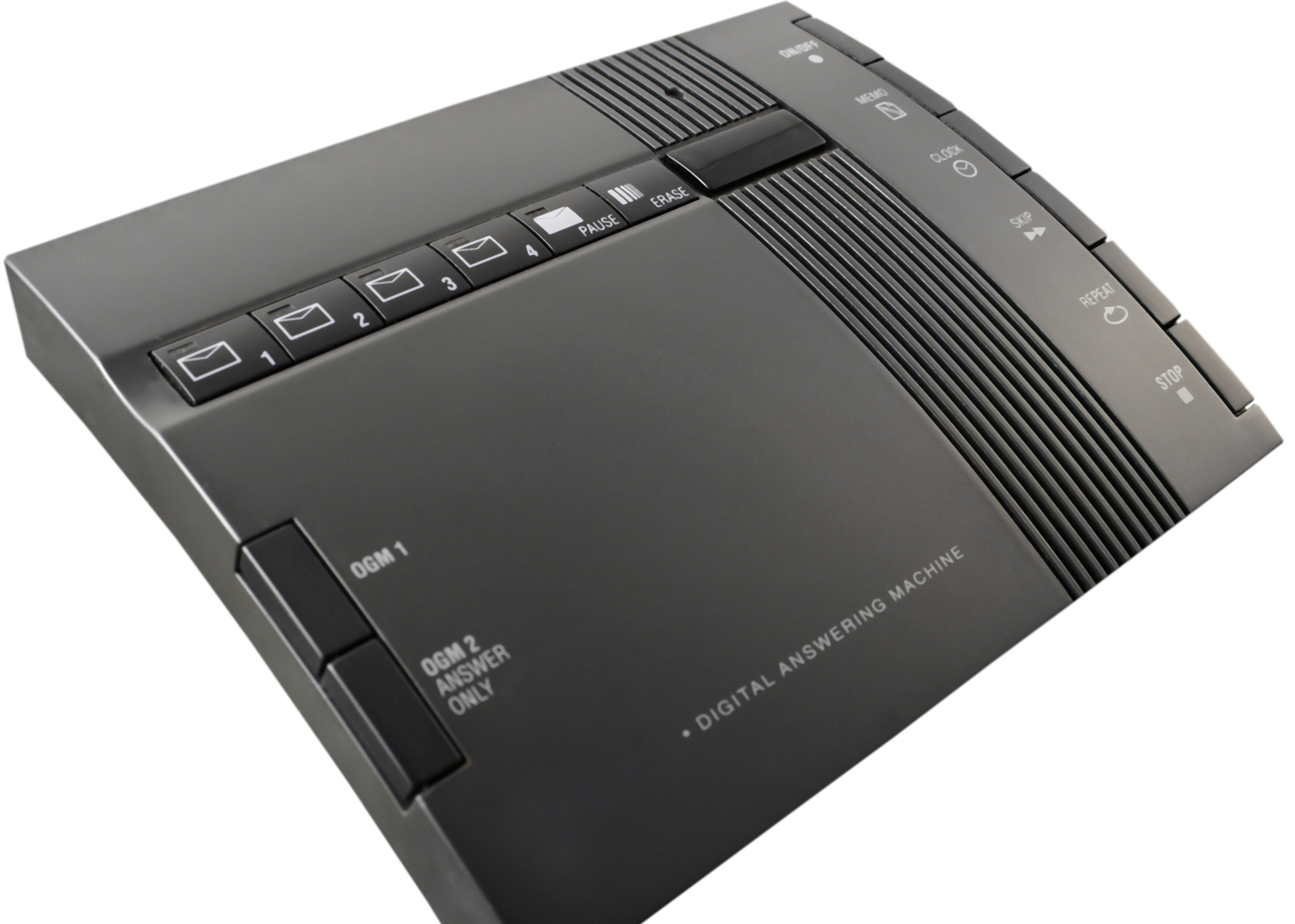
Photo by Qilux/DPC

49.28% — Almost exactly half said that they “always listen to their voice mail messages.”

40.58% –  eported that they “sometimes listen to their voice mail but sometimes just look at caller ID and call back”.

10.14% – A mere tenth of the respondents said that they never listen to their messages.

A powerful defense of voice mail comes from Leslie Horn, a writer in her 20’s who wrote an essay for Gizmodo called You’re Wrong About Voicemail. Reflecting on the unexpected death of her father, she had this to say:

…I can’t think about voicemails without bringing the whole thing back to my dad once more. The dude had a goddamn calendar full of people he would call on their birthdays. From what I’ve learned in the past couple of months, it numbered in the hundreds. If he knew your birthday, he would call you on it and sing happy birthday. He had what I would call a church choir voice. Which is to say, not great, but he would belt it out nonetheless. If you picked up, he’d sing your ear off. If you screened, he’d sing it to your voicemail.

In the past three months, I’ve had untold numbers of people approach me and tell me they had messages from my dad on their phones singing them happy birthday. Happy birthday to Mark! Happy birthday to Suzanne! Happy birthday to Margaret! Happy birthday to family and friends and to people I don’t know from Adam! Shoot, I’d think every time, why didn’t I listen to my voicemails more? Until one day, I poked around in my deleted folder and found my happy birthday message from last year, saved. There it was! I hadn’t meant to save it, but there it was.

A personal note: my parents have sung to me over the phone on my birthday for years. Possibly decades. They’ve done it “live” if I answered the phone, on voice mail if not. I’ve always rolled my eyes good-naturedly as it happened. It never occurred to me to save the messages. Until now.

[reminder]Got a story of voice mail in your life? A drunk dial, perhaps. Or an “I didn’t realize it was recording” tale of woe. You know the story I mean. [/reminder]


5 Great Books Every Advertising Salesperson Must Read (Or Re-read) in 2017

We work in the persuasion industry. As advertising sellers, first we must persuade a prospect to meet with us… and then consider our proposal… and then buy. Then we must design a campaign that persuades our client’s prospects to take action.

Here are five books that will help you develop the sales skills to persuade… and sell.

5 Great Advertising, Marketing and Sales Books

The Accidental Salesperson by Chris Lytle: I read the original version of this book more than a decade ago. It was early in my selling career. I was looking for anything that could teach me the sales skills I needed.  This book taught me enormous amount. When the new edition came out, I took it out of the library — being a cheapskate, I didn’t feel like paying for it a second time. Two chapters in, I returned the library copy and bought my own. I wanted to read it and highlight the hell out if it. For example, this:

If you work on straight commission, you prospect for free. You do a customer needs analysis for free. You do the research for free. Then you write the proposal for free… At least you don’t have to pay to make your presentation to the prospect.

What if you did have to pay to make your presentation? You obviously would put more time and thought into it. You probably would even rehearse it a few times…”

I’ve gone from being a salesperson to a combination salesperson/sales trainer role.  I have read that passage repeatedly to groups of radio and television advertising sellers all over the country. It gets through.

Slow Down, Sell Faster! by Kevin Davis: This is one of the rare sales skills books that has actually given me a new perspective on the process of selling. The author’s contention is that we spend so much time focusing on our needs and our timetable that we forget what’s important to the client. He sums it up this way:”Every sales leader wants fast sales; the trouble is, there aren’t many fast buyers…They are unlikely to change their buying process to match your selling process, so your only option is to be the one who switches.”

Influence: The Science of Persuasion by Robert B. Cialdini A classic in the field — enough science to demonstrate that the author knows what he’s talking about, but accessibly written for salespeople (like yours truly) who didn’t pay attention in science class. Cialdini, who holds professorships in Marketing and Psychology at Arizona State University. The principles he teaches in this book will help you do a better job convincing clients to buy, and can also help make you a better marketer and copywriter.

Advertising Headlines That Make You Rich by David Garfinkel: Although this book is aimed at those who sell with the written word — direct mail, print publications, and web pages — the techniques can help marketers in any medium. However your prospects see or hears your sales message, you have a very short window in which to convince them to pay attention. The headline in a print ad, or the opening five seconds of a radio or TV commercial, will cause your target to either pay attention to the rest of the message or tune you out. Garfinkel gives you a series of headline templates that have worked for selling a wide range of products and services, discusses why each one has been effective, and lists several variations on each headlines. When I’ve hit a wall while writing copy, I’ve gone to this book to help get unstuck.

Dan O’Day’s Guaranteed 5-Step System For Creating 30-Second Radio Commercials That Get Results: Another good cure for (copy)writer’s block, and an excellent companion to the Garfinkel book. I bought this when I was working in radio; now that my primary platforms are television and digital, I still use it regularly. Like Garfinkel, O’Day teaches a headline-based approach to designing a campaign. Besides the headlines, the true benefit of O’Day’s system is in the exercise of settling on a Unique Selling Proposition before starting the script. It’s not a long book, but it’s a powerful one.

[reminder]What’s the best advertising, marketing, or sales book you’ve read in the past 12 months?[/reminder]

Is Your Website Killing Your Campaign?

Is your website working against the rest of your advertising? A poorly-conceived site can stop the traffic dead in its tracks.

Old Window Grid

Photo Credit: Free HDR & Photomanipulations – www.freestock.ca
via Compfight cc


I met recently with a personal injury attorney in the south. His practice handles the usual PI stuff — car wrecks, product liability, medical malpractice, etc. But he has a special expertise in one particular area: oilfield injuries.

He graduated college with a degree in petroleum engineering, and spent several years working on the rigs before going into law. An oil worker injured on the job might be very interested in an attorney who knew the industry, and this guy knows it.

The attorney’s TV commercial does a great job telling the story. He appears in a workshirt and hard hat. There are powerful images of oil rigs, workers in baskets hanging from a crane, helicopters.

The commercial invites viewers to go to his website to find out more. And that’s where everything he’s gained with the TV ad begins to evaporate.

  • Instead of oil rigs, there’s a picture of a generic courtroom.
  • Instead of workers hanging in baskets, there’s a photo of a gavel.
  • Instead of the story of a guy who worked on the rigs right out of college, there’s a generic “About Our Firm” page.

The TV ad was working — it drove people to the website — but that’s where the traffic stopped. Viewers wanted to hire the guy in the hardhat, but the guy in the hardhat was nowhere to be found. I’ve advised him to work with his web developer to make sure the message on the site matches the message on the TV ad.

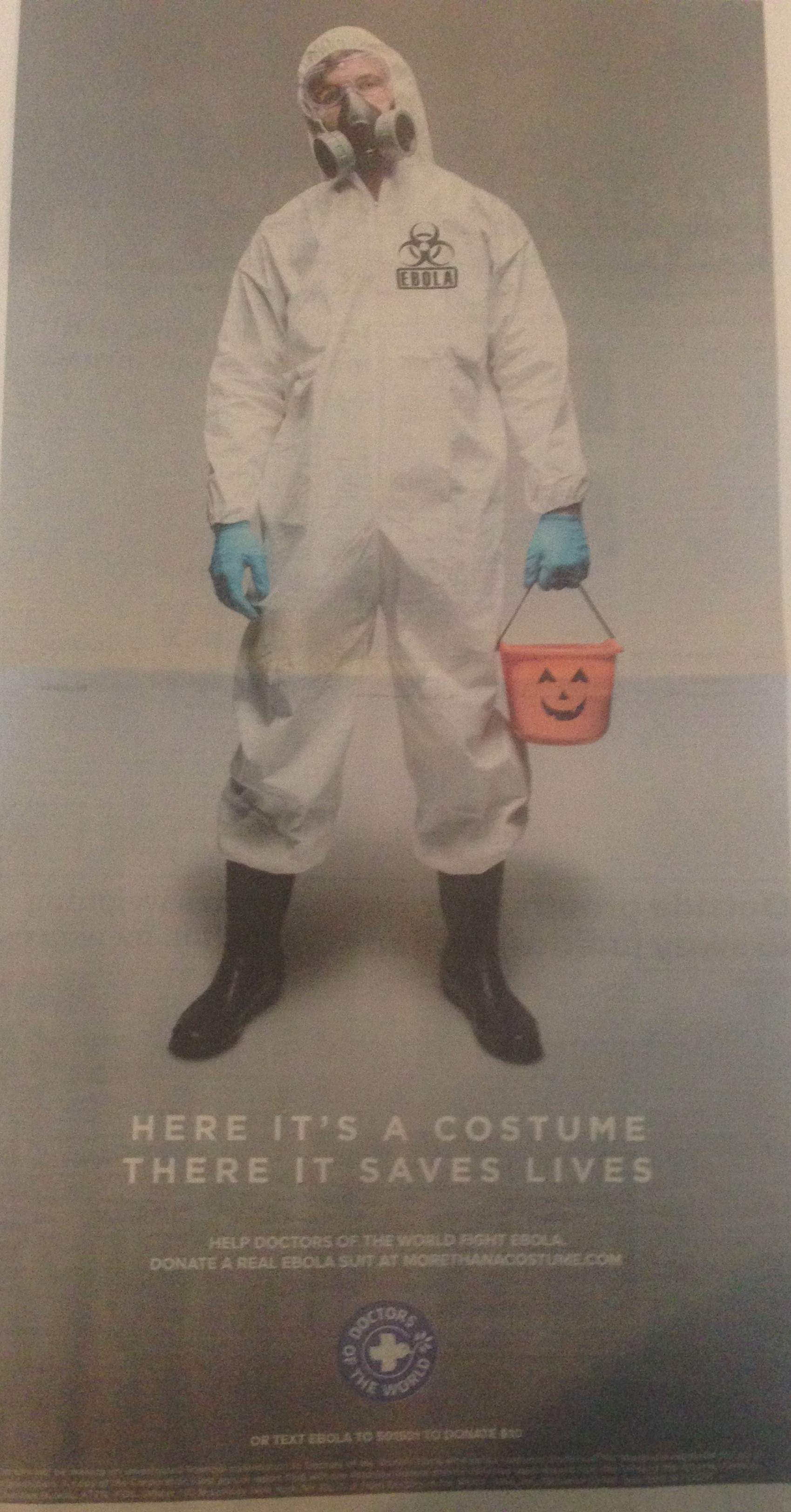
By contrast, Doctors of the World recently did a fabulous job of matching offline and online marketing. As I discussed in this space last week, the humanitarian organization tapped into the “Ebola Costume” craze by encouraging people to donate money to buy real Ebola gear for real doctors. The print ad looked like this:

Ad appearing in USA Today October 30, 2014

Ad appearing in USA Today October 30, 2014


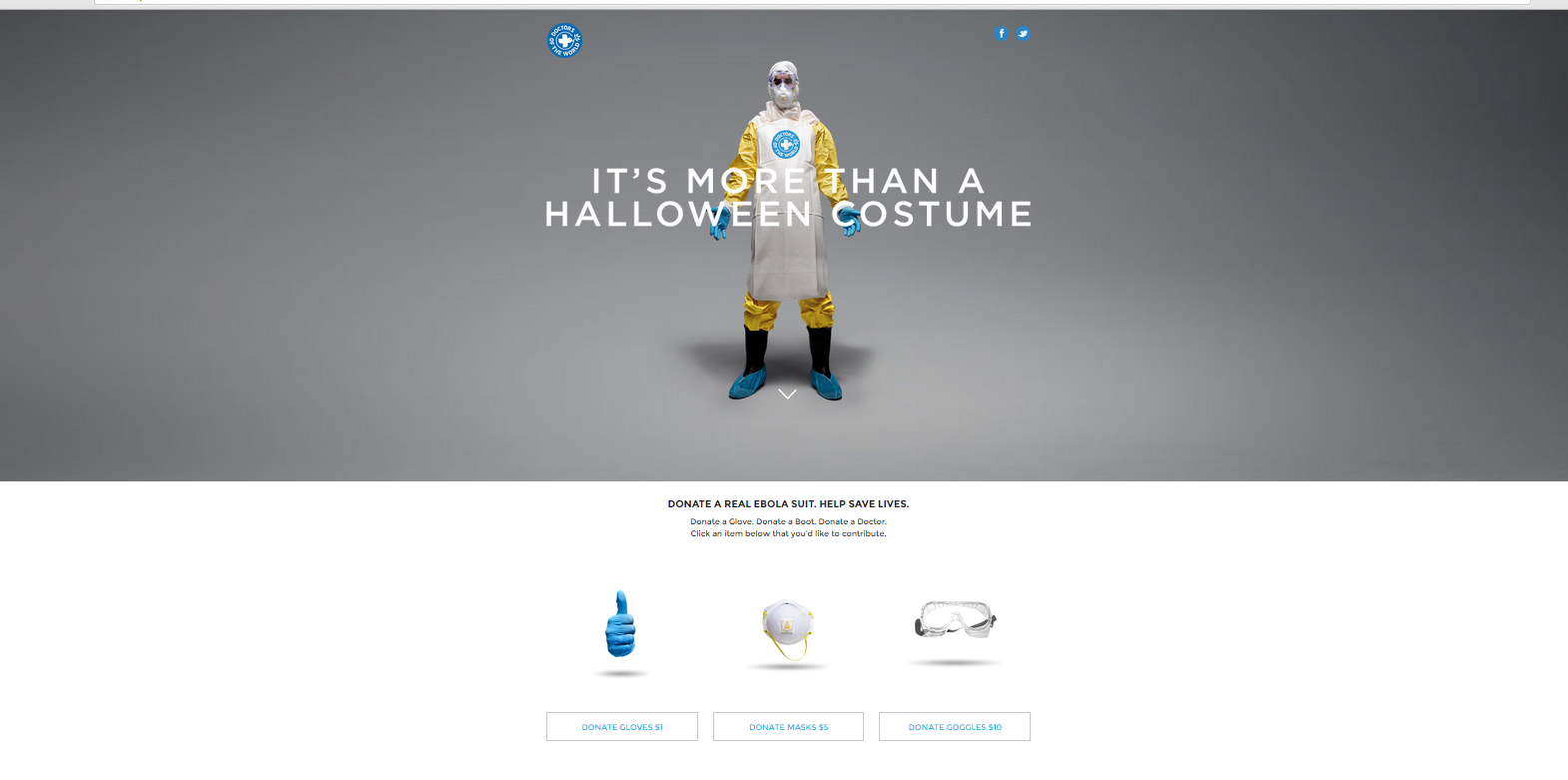
Readers were directed to an online direct-response landing page. You can see it below.

 Doctors of the World Ebola landing page.

The photo on the site immediately notifies readers they’ve come to the right place. Below the photo is an easy way to take action — a simple set of “click to donate” buttons with amounts cleverly matched to specific pieces of equipment.

[reminder]What’s the best message-matching website you’ve encountered? What’s the worst?[/reminder]

How to Raise a Buck on Halloween and Ebola

Here is a terrific example of advertising that enters the conversation America is already having in its head.

What are we thinking about on October 30, 2014? Ebola and Halloween, that’s what. Many fine American entrepreneurs are offering “Ebola costumes” this year.

An organization called Doctors of the World* has set up a fundraising landing page at www.MoreThanACostume.com, and is using the current American zeitgiest to raise some money and do some good.

They have cleverly tied donation levels to particular pieces of equipment — you can “donate gloves” for a buck, goggles for $10, etc. At the high end, you can “donate a doctor” for $2500.”

The ad below appeared in USA Today on October 30. It is awesome.


Ad appearing in USA Today October 30, 2014


*I am not familiar with this organization, which claims to be “fighting Ebola in Liberia and Sierra Leone, engaging with local communities to prevent Ebola’s spread, raise awareness and deliver essential protective equipment”  and am not endorsing it in any way. Except for their advertising approach, which I endorse as heartily as it is possible to do so.