Opportunity Missed

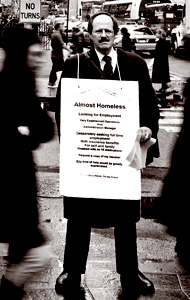
The cover story in the current Business Week contains a powerful photograph of a man in New York’s Times Square. I don’t know him or anything about his situation, and hope he finds a job soon. But I can’t help but lament the opportunity he may have missed.

Within that missed opportunity is a copywriting lesson for all advertisers.
0851_jobless1

In case the text is too small to read, here’s what the sign said:

Almost Homeless

Looking for Employment

Very Experienced Operations
and
Administration Manager

Desperately seeking full time
employment
with insurance benefits
for self and family
Disabled wife on 15 medications

Request a copy of my resume!

Any kind of help would be greatly appreciated

That sign was seen by hundreds, if not thousands, of people walking by as he stood on the street. This week, it will be seen by hundreds of thousands of business people who read the magazine. Some of those people might be in a position to hire him.

If only the sign had given those hiring managers a reason to interview him, and a way to get in touch.

The man has something of value to sell — his time and labor. He’s the advertiser, his sign is his advertising medium, and hiring managers are his prospects. Unfortunately, the copy is all about him, and not about his prospects.

That same sign could have contained some basic information about his experience and skills. It could have talked about the value he could deliver, and the problems he could solve, for a potential employer. It could have contained a phone number or email address — that contact information would now be in the hands of every Business Week reader.

I don’t mean to make light of his situation — I feel awful for him and his family, and sincerely hope that as I write this post, he’s getting ready for his first day at a new job.

Copywriting guru Dan O’Day puts it this way: “Don’t tell me about your grass seed. Tell me about my lawn.”

Your odds of success will increase when you make the message about your prospect, not about you.

___________________________________________________________________________________

Click this link to subscribe to Portland’s Finest Advertising and Marketing Blog.

Request your free copy of Phil Bernstein’s white paper, The Seven Deadly Advertising Mistakes and How to Fix Them here.

Got a question? Call Phil Bernstein at 503-323-6553.

When Bad Metaphors Happen to Good Companies

Metaphors can be a very powerful persuasive tool — used properly, you can help your prospects take a mental shortcut and create a positive association in their minds.

But you have to think carefully about how they may connect the dots. Portland copywriter Susan Rich thinks Ford may not have considered all of the implications of a creative idea. Take a look and let me know if you agree.

___________________________________________________________________________________

Click this link to subscribe to Portland’s Finest Advertising Blog.

Request your free copy of my white paper, The Seven Deadly Advertising Mistakes and How to Fix Them here.

Got a question? Call me at 503-323-6553.

Advertising Lesson from Professor O’Day

If you write copy for a living — or otherwise depend on ad results to put food on the table — you should check in on Dan O’Day’s blog. Monday is my favorite day of the week, because it’s “Commercial Smackdown” day.

Once a week, Dan deconstructs an actual radio commercial. And he’s not shy about letting you know exactly how he feels.

This week it’s a Lasik commercial. Enjoy, and learn.

___________________________________________________________________________________

Click this link to subscribe to Portland’s Finest Advertising Blog.

Request your free copy of my white paper, The Seven Deadly Advertising Mistakes and How to Fix Them here.

Got a question? Call me at 503-323-6553.

Great Reason for a Sale

In Influence, the Science of Persuasion, Robert Cialdini cites experiments demonstrating that people are more likely to comply with your request if you give a reason. The reason doesn’t even have to make much sense. Copywriting instructors have incorporated the “Reason Why” technique into their lessons.

Mr. Toskana’s obviously been studying up on this stuff — and his “Reason Why” makes all the sense in the world.

Special thanks to Rick Lewis of Clear Channel for tipping me off.

___________________________________________________________________________________

Click this link to subscribe to Portland’s Finest Advertising Blog.

Request your free copy of my white paper, The Seven Deadly Advertising Mistakes and How to Fix Them here.

Got a question? Call me at 503-323-6553.